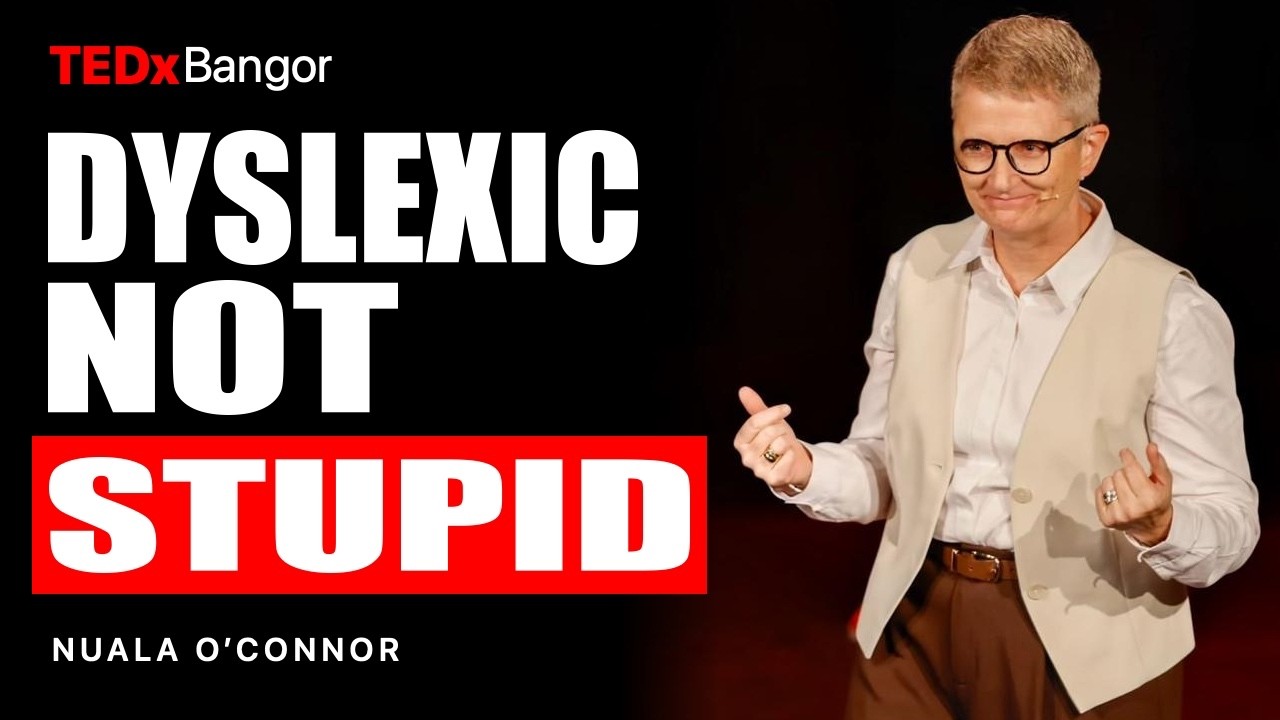
Dyslexic Not Stupid | Nuala O'Connor | TEDxBangor
Title history
- Dyslexic Not Stupid | Nuala O'Connor | TEDxBangor — observed on 20261109-1737 UTC (YouTube)
Keywords
Summary
158 words
Critical Evaluation
Value of the Information & Strength of the Argument
The value lies in offering a first-hand account that humanizes dyslexia, moving beyond clinical definitions to emotional realities. The argumentation is primarily anecdotal, relying on narrative to persuade. While not scientifically rigorous, it effectively challenges common misconceptions. The speaker uses rhetorical devices, such as the recurring ‘rant’, to structure her story and make a compelling case for self-reflection. The lack of empirical evidence is compensated by the power of personal testimony, which can resonate with many.
Scientific Rigor, Source Quality, Title Accuracy
The talk shows moderate scientific rigor; it mentions WHO statistics and the historical term ‘word blindness’ without providing explicit references. The low technical level makes it accessible, but it limits depth. The title ‘Dyslexic Not Stupid’ is spot-on, reflecting the core message. However, the content is more motivational than educational, offering minimal practical strategies for dyslexic learners. The talk would benefit from citations to support its claims, yet the personal context lends authenticity.
164 words
Title / Content Match
The title is highly appropriate, encapsulating the central message that dyslexia does not mean lack of intelligence. The talk stays true to this claim.
Quality & Reliability
6/10
The talk is a personal testimony on dyslexia, offering emotional insight but limited scientific depth. It references WHO statistics and historical contexts without providing direct citations. The speaker's experience lends authenticity, but the overall reliability is moderate.
Key Moments
Markers derived by PSI from the transcript: the creator did not define chapters.
- Introduction: pose about having a rant
- Back to college decision and weekly bus rant
- Little voice reveals the underlying belief of proving not stupid
- Childhood memory: father's anger and failing reading
- Adult achievements and eventually revealing dyslexia difficulty
- Conclusion: quote from Pema Chödrön and final message
Cited Sources
- TEDx Program — The talk was given at a TEDx event, independently organized, with this link providing information about the TEDx program.
Contribution & Novelties
The talk’s novelty lies in personalizing dyslexia through a narrative of self-discovery, emphasizing that dyslexia is a form of ‘word blindness’ rather than a lack of intelligence. It also highlights the prevalence of undiagnosed cases, suggesting that the actual numbers may exceed WHO estimates. The speaker’s journey from internalized shame to self-acceptance offers a fresh perspective on coping with learning differences.
Pour aller plus loin :
- Dyslexia — Provides a comprehensive overview of dyslexia, its symptoms, and causes.
- Neurodiversity — Explores the concept of neurological differences as natural variations rather than disorders.
- Growth Mindset — Carol Dweck’s research on fixed vs. growth mindsets, relevant to overcoming the belief of being ‘stupid’.
111 words
Radar Profile
The radar profile shows low technical level, moderate quality and quantity of information, and moderate reliability. This suggests a talk strong on emotional appeal but weak on academic rigor, fitting a personal testimony.