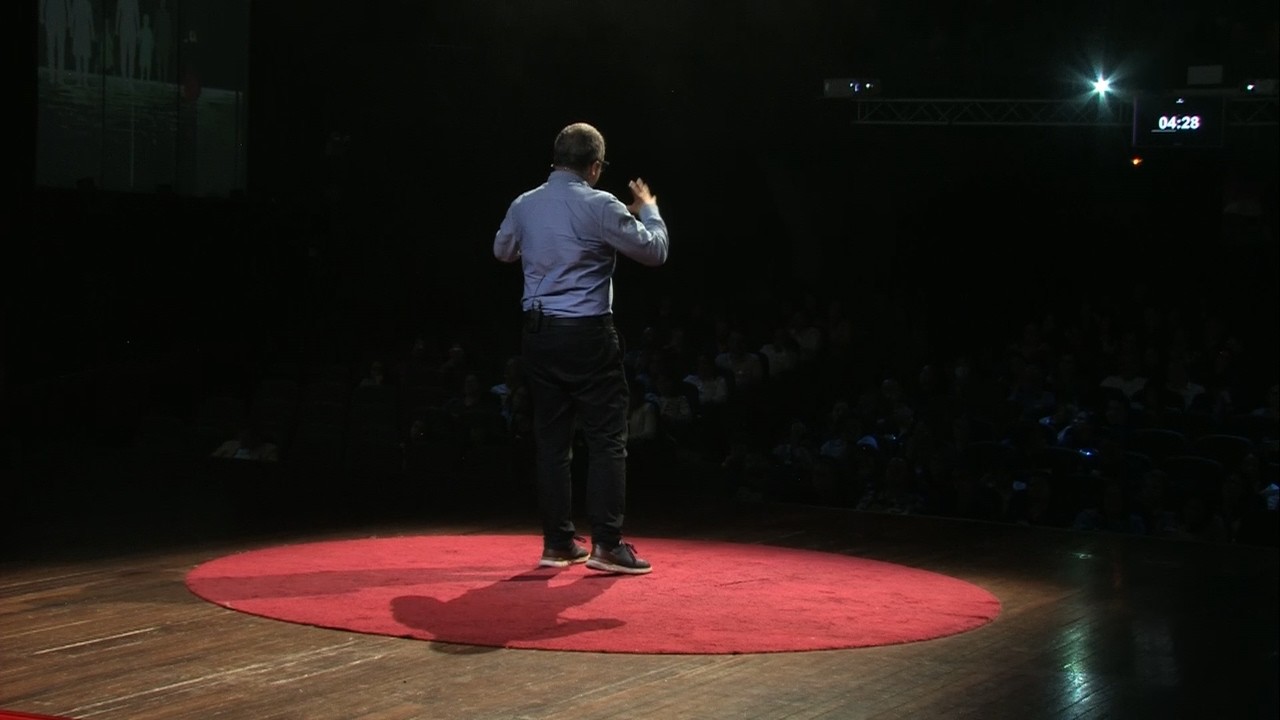
¡Todos somos primos! | Carlos Santamaría | TEDxPuraVidaSalon
We are all cousins! | Carlos Santamaría | TEDxPuraVidaSalon
Title history
- ¡Todos somos primos! | Carlos Santamaría | TEDxPuraVidaSalon — observed on 20261112-1730 UTC (YouTube)
Keywords
Summary
170 words
Critical Evaluation
Value of the Information & Strength of the Argument
The talk provides valuable public health information about genetic predisposition to cancer, specifically highlighting a unique epidemiological finding in Costa Rica (BRCA2 dominance). The argumentation is logically structured, moving from population genetics to specific gene mechanisms and real-world examples. The speaker effectively uses Angelina Jolie’s story to humanize the risk, and his emphasis on preventive medicine is scientifically sound. However, the evidence presented is mostly anecdotal and lacks detailed data or peer-reviewed references within the talk itself, which weakens the persuasive strength for a scientific audience. Nonetheless, the core message about the importance of family history aligns with medical consensus.
Scientific Rigor, Source Quality, Title Accuracy
The speaker is a credible expert (Microbiologist, PhD, head of a molecular diagnostics lab), which lends authority. However, the talk does not cite any specific studies or sources; only the generic TEDx link is provided. The content appears consistent with known genetics principles, but without direct citations, the scientific rigor is moderate. The title is engaging and accurately reflects the theme of common ancestry, though it does not allude to the specific genetic findings, so it is only partially informative. The talk does not include any obvious factual errors, and the caveats about hereditary versus sporadic cancer are appropriately nuanced.
215 words
Title / Content Match
The title 'We are all cousins' effectively captures the central message about common ancestry and genetic disease prevalence in Costa Rica, though it undersells the specific BRCA findings.
Quality & Reliability
7/10
The talk is delivered by a PhD microbiologist with strong credentials in molecular genetics and oncology; however, no specific scientific references or data sources are cited during the presentation, and the population statistics are not detailed. The claims align with established genetic principles, but the lack of direct citations reduces verifiability.
Key Moments
Markers derived by PSI from the transcript: the creator did not define chapters.
- Introduction: we are all family, everyone is a cousin
- Costa Rica's short genetic background due to few early inhabitants
- Explanation of rare genetic diseases and why Costa Rica is a world leader
- Role of BRCA genes in DNA repair and cancer risk
- Angelina Jolie case study illustrating high cancer risk with BRCA mutation
- Costa Rica's finding: BRCA2 is 8 times more frequent than BRCA1
- Advice: know family history and practice empathy and tolerance
Cited Sources
- TEDx official page — Provided in video description as standard TEDx event reference
Contribution & Novelties
The talk contributes a unique regional perspective on hereditary cancer genetics, highlighting an uncommon inversion in BRCA mutation frequencies in Costa Rica. This suggests a pronounced founder effect, offering a distinct case study for genetic epidemiology. The speaker also integrates modern AI use in clinical genetics, though briefly.
Pour aller plus loin :
- BRCA2 gene (Wikipedia) — Essential for understanding the gene’s role in DNA repair and cancer.
- Founder effect (Wikipedia) — Explains how small populations lose genetic diversity, directly relevant to Costa Rica’s situation.
- Rare disease (Wikipedia) — Provides context on prevalence and challenges of orphan diseases.
98 words
Radar Profile
The radar profile shows balanced scores, with qualitative information and scientific reliability slightly higher than technical depth and volume. This reflects a presentation that is accessible but grounded in professional expertise, though limited in the depth of cited evidence.