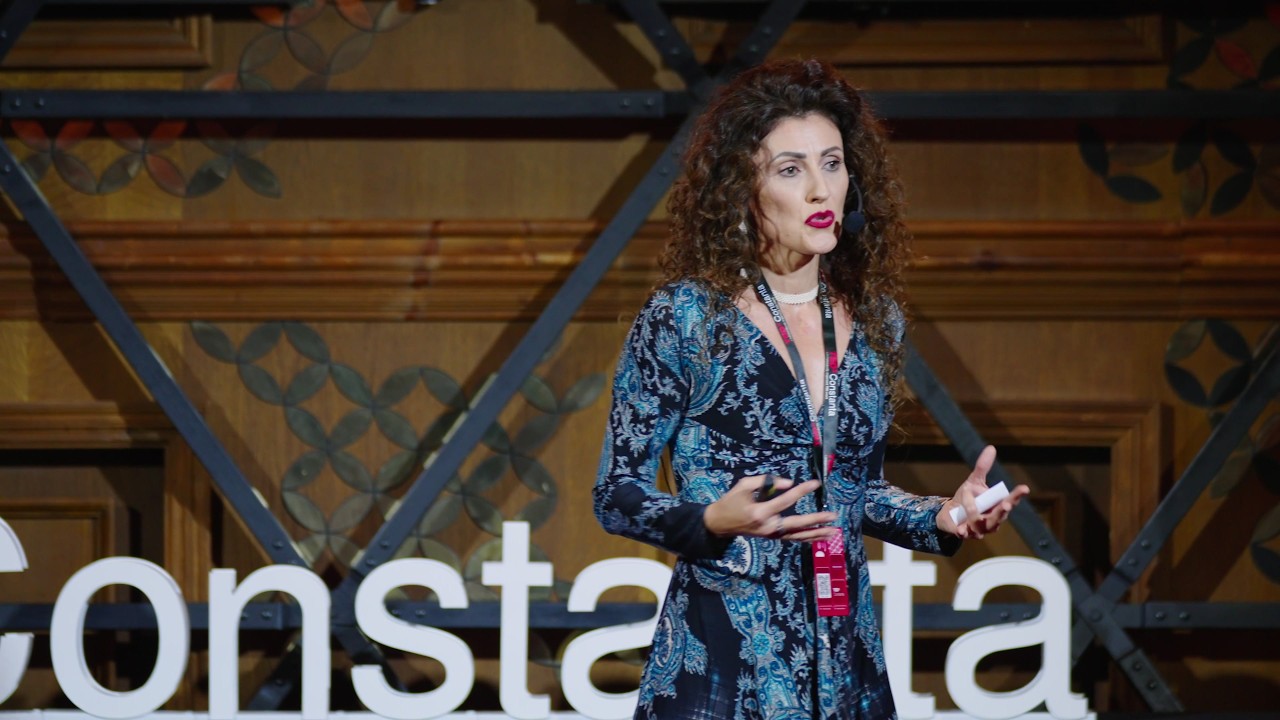
Istoria ca verb: cum acționează trecutul | Georgiana Țăranu | TEDxConstanta
History as a Verb: How the Past Acts | Georgiana Țăranu | TEDxConstanta
Title history
- Istoria ca verb: cum acționează trecutul | Georgiana Țăranu | TEDxConstanta — observed on 20261114-0309 UTC (YouTube)
Keywords
Summary
177 words
Critical Evaluation
Value of the Information & Strength of the Argument
The talk offers valuable insights into how history persists in everyday life and shapes identity and trauma, supported by compelling narratives and personal observations. The argumentation is coherent but largely anecdotal, relying on illustrative stories rather than systematic evidence. The speaker’s expertise as a historian adds credibility, yet the reasoning is more evocative than rigorous, and the conclusion (skepticism) is a philosophical stance rather than a proven thesis.
Scientific Rigor, Source Quality, Title Accuracy
The talk is well-structured and aligns with the title. It does not provide formal citations, but references two books (Sabina Fati’s travelogue and Nicolae Iorga and the Seduction of Italian Fascism) and mentions colleagues’ work, though without URLs. The lack of concrete sources limits the scientific rigor, though the historical facts presented are generally accurate. The adequacy between title and content is strong, with the metaphor of history as a verb made explicit throughout. No notable discrepancies exist.
161 words
Title / Content Match
The title accurately reflects the content, which presents history as an active force shaping present attitudes and conflicts, rather than a passive list of dates.
Quality & Reliability
6/10
The talk is a personal and narrative-driven reflection by a historian, with concrete historical examples but without detailed citations. Claims are broadly supportable but lack specific references. The speaker's authority lends credibility, but the content remains largely opinion and anecdote.
Key Moments
Markers derived by PSI from the transcript: the creator did not define chapters.
- The surgeon asks for a specific historical reign; the speaker sets up history as more than dates.
- Objects with a story command higher prices; history as a certificate of nobility.
- Constanța's diverse heritage; the confessional octagon of the peninsula.
- Story of Mario and the inherited fear from Transnistria deportation.
- The Odessa music teacher episode and the unresolved trauma.
- Political misuse of history: Macedonia naming dispute and Putin's essay.
- Concluding appeal: remain skeptical when history is invoked to justify action.
Cited Sources
- TEDx official page — Reference to the TEDx program and the independent organization of the event.
Concurring Sources
- Historical trauma - Wikipedia — Supports the idea of transgenerational effects of atrocities.
Dissenting Sources
- No direct discordant sources found — The talk is opinion-based; no conflicting evidence presented, but also no formal verification.
Contribution & Novelties
The talk uniquely frames history as an active agent, using local and personal case studies to ground abstract ideas. It connects historical memory to trauma transmission and political manipulation, urging skepticism. For further exploration, one can look into the concepts of historical trauma, collective memory, and the politics of history.
Pour aller plus loin :
- Historical trauma — Relevant to intergenerational transmission of suffering.
- Collective memory — Core concept in how groups remember the past.
- Politics of memory — Discusses how history is used politically, as in the examples cited.
90 words
Radar Profile
The radar shows moderate scores across dimensions, with qualitative information slightly higher than technical depth. This reflects a narrative-driven, accessible talk with social/historical focus rather than technical or quantitative data.