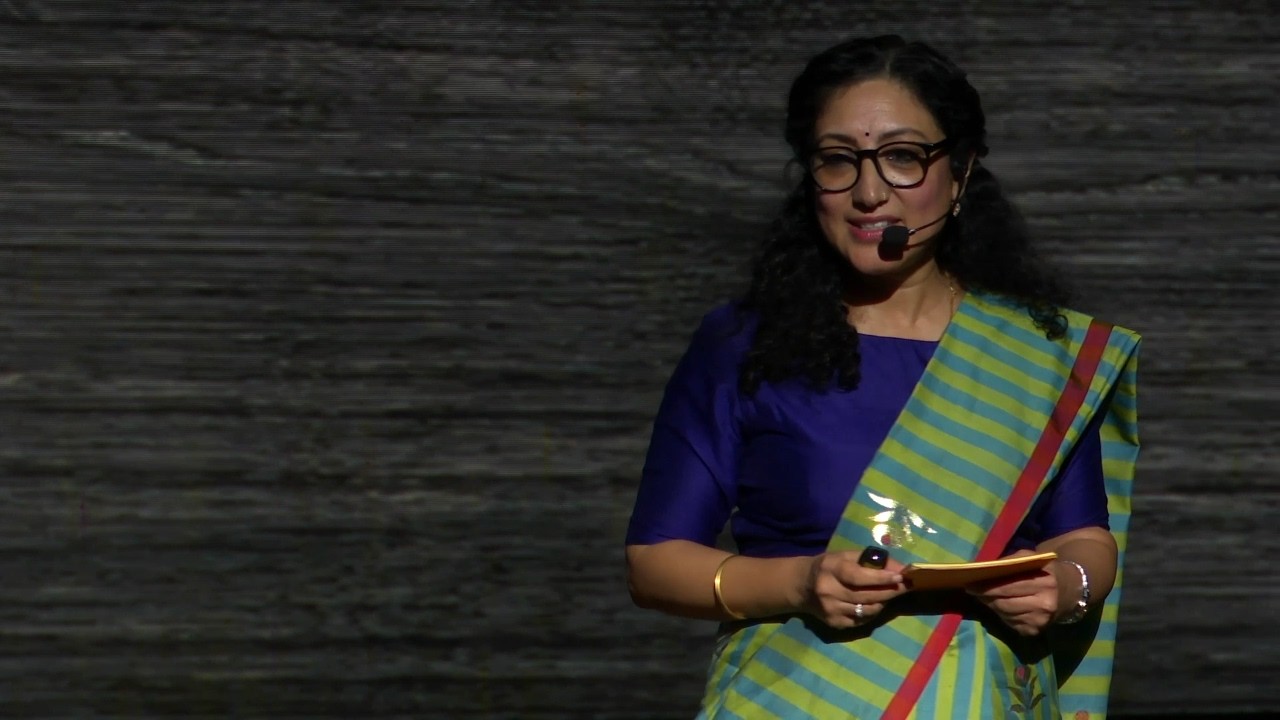
The Infrastructure of Imagination - Anuradha Sehgal | Anuradha Sehgal | TEDxAmity University Lucknow
Title history
- The Infrastructure of Imagination - Anuradha Sehgal | Anuradha Sehgal | TEDxAmity University Lucknow — observed on 20261120-1642 UTC (YouTube)
Keywords
Summary
147 words
Critical Evaluation
Value of the Information & Strength of the Argument
The talk provides strong value in framing libraries as essential social infrastructure, backed by inspiring narratives and concrete metrics. The argument is coherent: it starts with the historical precedent of Carnegie, establishes the current deficit in India, and describes a solution through thoughtful design and community engagement. The speaker’s passion and credibility (as a marketing executive) add persuasive weight, though the evidence is mainly anecdotal rather than systematic. The emphasis on conditions (choice, space, community) rather than individual willpower is a valuable insight.
Scientific Rigor, Source Quality, Title Accuracy
The talk cites no specific academic sources but references historical facts about Carnegie and provides statistics on Indian libraries (e.g., 46,700 vs 148,000 needed). The description includes only TEDx guidelines and a TED.com link, which are not substantive sources. The title accurately matches the content, highlighting libraries as an infrastructure for imagination. The absence of commented feedback prevents an analysis of audience reception, so no conclusions are drawn.
166 words
Title / Content Match
Le titre reflète parfaitement le contenu : la construction de bibliothèques comme infrastructure de l'imagination et du savoir public.
Quality & Reliability
7/10
The talk presents credible personal experience and some statistics, but lacks rigorous scientific sourcing. The argument is persuasive yet based primarily on anecdotal evidence and general observations.
Key Moments
Markers derived by PSI from the transcript: the creator did not define chapters.
- Introduction to Andrew Carnegie's story and his library philanthropy.
- The speaker introduces herself and the Coforge Public Library initiative.
- Argument on why books and language are essential, distinguishing information from knowledge.
- The importance of choice, space, and community as conditions for reading.
- Description of the ideal library design and the Coforge library example.
- Outreach to underserved communities and the impact of community building.
- Statistics on library footfall, books issued, and children reached.
- Philosophical conclusion: knowledge as a public good and libraries as infrastructure of imagination.
Cited Sources
- TEDx Content Guidelines — Reference for TEDx event organization standards.
- TEDx Program — Official TEDx page, likely context for the talk's origins.
Concurring Sources
- TEDx Content Guidelines — Reinforces the credibility of the talk as a legitimate TEDx event.
Contribution & Novelties
The talk contributes a compelling case for redesigning public libraries as beautiful, inclusive spaces that foster community and imagination, based on real-world implementation. It challenges the notion that reading decline is solely a discipline issue, advocating for environmental design.
Pour aller plus loin :
- Andrew Carnegie libraries — Historical background on Carnegie’s library philanthropy.
- Public libraries in India — Overview of the Indian public library system and its challenges.
- Reading and comprehension — Research on how reading habits affect comprehension and knowledge acquisition.
- Knowledge as a public good — Economic concept underlying the talk’s core message.
96 words
Radar Profile
The profile shows moderate scores across all dimensions, with slightly higher quality and reliability relative to technical level. The talk is strong on narrative and inspiration but lacks technical depth, reflecting its non-specialist audience.