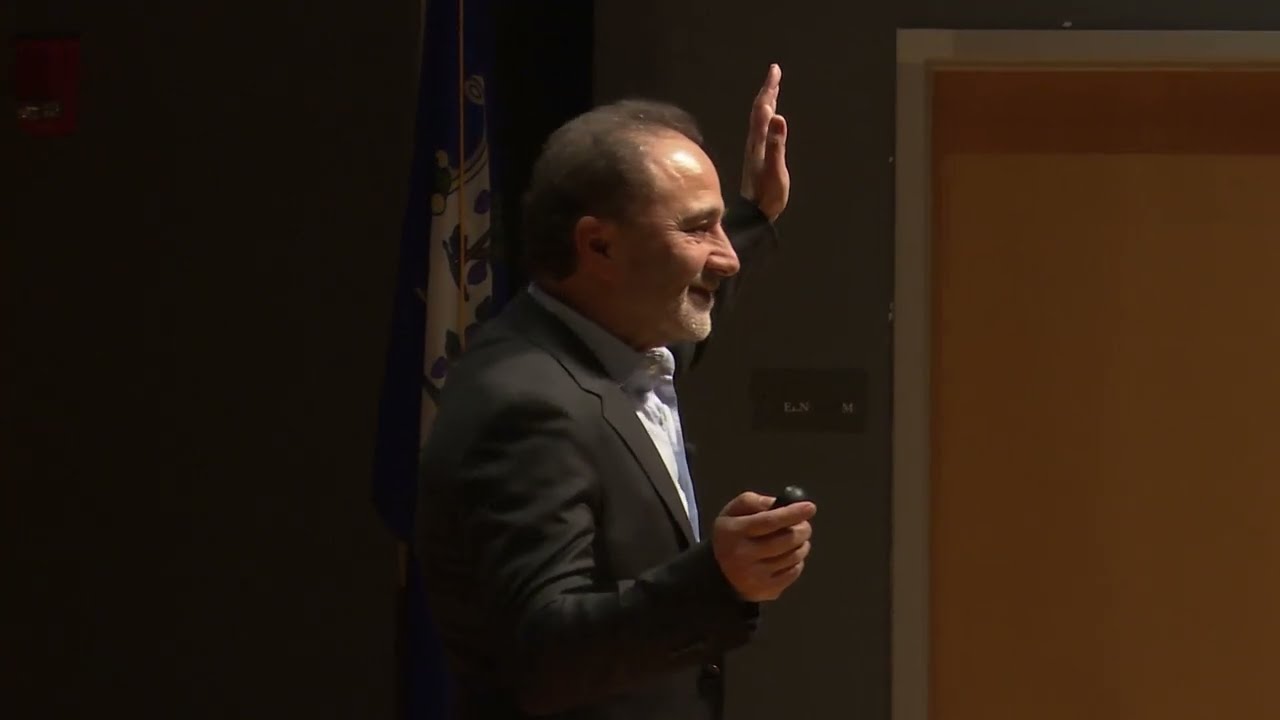
Whole-mouth care: Rethinking dental health habits | Dr. Kami Hoss | TEDxUConn
Title history
- Whole-mouth care: Rethinking dental health habits | Dr. Kami Hoss | TEDxUConn — observed on 20261114-0309 UTC (YouTube)
Keywords
Summary
152 words
Critical Evaluation
Value of the Information & Strength of the Argument
The talk provides a compelling, accessible argument for overhauling dental routines, anchored by a strong personal narrative that makes the science relatable. The speaker’s dual perspective as a father and practitioner adds emotional weight, and the idea that prevention requires understanding the mouth as an ecosystem is valuable. However, the argumentation relies heavily on anecdote and general assertions; many claims are presented without citing specific research, and the causal links between oral health and systemic diseases are stated as fact without nuance. The logical appeal is effective, but the scientific evidence is not systematically presented, leaving the robustness of the argument moderate.
Scientific Rigor, Source Quality, Title Accuracy
The talk is a TEDx presentation, which typically includes a disclaimer (present in the description) that the content is the speaker’s own view and not medical advice. The speaker references his own book and clinical experience but does not cite peer-reviewed studies during the talk. The description provides links to TEDx guidelines and the TEDx main page, which are not direct sources for the claims. The title adequately reflects the content—rethinking dental habits through a whole-mouth lens—and does not overstate what is covered. Overall, scientific rigor is limited by the absence of verifiable references within the talk itself, although the topic is aligned with emerging research trends.
224 words
Title / Content Match
Title accurately reflects the content: the talk focuses on rethinking oral care habits and adopting a whole-mouth, prevention-oriented approach to dental health.
Quality & Reliability
6/10
The talk is an expert opinion with some scientific references, but it is primarily a personal and advocacy-driven presentation. The speaker cites no specific studies, and TED's own note warns that the research is debated and not a substitute for medical advice. Nonetheless, the claims are broadly consistent with emerging knowledge on the oral microbiome and systemic health, though oversimplified.
Key Moments
Markers derived by PSI from the transcript: the creator did not define chapters.
- Introduction of the prevalence of dental disease as the most common disease on Earth, affecting 3.5 billion people.
- Challenge to the standard care formula (brush, floss, avoid sugar) and the claim that the problem lies in the system, not the people.
- Assumption 1: The mouth is separate from the body—evidence of links to heart disease, diabetes, and inflammation spreading via the bloodstream.
- Assumption 2: The mouth is a dirty surface to disinfect—arguing for balancing the oral microbiome instead of sterilizing it, using the garden analogy.
- Assumption 3: Single ingredients like fluoride or 'natural' labels are insufficient—critique of 'non-fluoride' and 'natural' as marketing terms.
- Personal story of his son's cavity-free life and explanation of brushing before breakfast to protect enamel from acid.
- Final call to action: brush before breakfast, rethink autopilot habits, and treat the mouth as the gateway to overall health.
Cited Sources
- TEDx Content Guidelines — Provided in the video description as a note about the talk's adherence to TEDx guidelines.
- TEDx Program — Mentioned in the description as the organization behind the TEDx event.
Contribution & Novelties
The talk contributes a pragmatic, prevention-focused framework for oral care, challenging common practices by reframing the mouth as a connected ecosystem rather than an isolated cavity-prone surface. It introduces the concept of ‘whole-mouth care’ and personal evidence of its effectiveness, which may inspire viewers to reconsider daily habits. The originality lies less in new science and more in consolidating existing knowledge into a simple, actionable message for the public.
Pour aller plus loin :
- Oral microbiome — Provides background on the microbial community in the mouth and its role in health and disease.
- Periodontal disease — Details the inflammatory condition that can affect systemic health, a key point in the talk.
- Dental caries — Explanation of tooth decay, the most common dental disease mentioned by the speaker.
127 words
Radar Profile
The radar profile shows a talk with moderate scores across all dimensions, with quantity of information slightly higher than quality and technical level. This reflects a broad but not deeply technical presentation, consistent with a TEDx talk aimed at a general audience. The balance suggests a persuasive rather than purely academic piece.