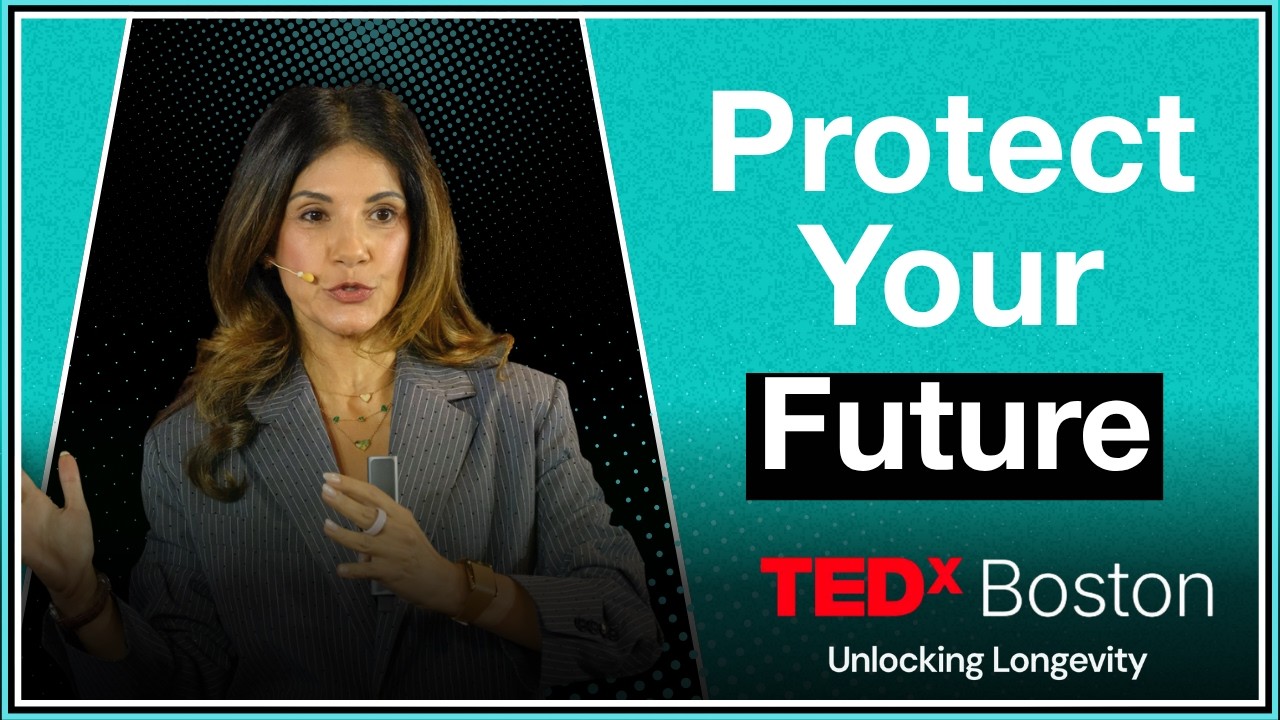
What menopause reveals | Jila Senemar | TEDxBoston Salon
Keywords
Summary
204 words
Critical Evaluation
Value of the Information & Strength of the Argument
The talk provides a compelling reframing of menopause as a diagnostic and preventive opportunity, supported by two specific studies (JAMA and SWAN) that give concrete numbers (36% cardiovascular risk increase, 10.6% lumbar spine bone loss) and a clear timeline. The argument is logically structured: from individual symptoms to population-level data, then to actionable advice. The speaker’s clinical anecdotes add authenticity. However, the evidence is presented in a simplified manner, and no direct references or URLs are given for the cited studies, which reduces the ease of verification. The emphasis on lifestyle measures (muscle building, knowing numbers) is reasonable but not novel, and the recommendation to consider hormone therapy is appropriately condition-specific.
Scientific Rigor, Source Quality, Title Accuracy
The scientific rigor is moderate: the speaker cites reputable studies (JAMA, SWAN) and adheres to established medical understanding, but she does not provide detailed methodology or citations accessible to the audience. The only external link in the description is to TEDx, not to the studies. The title is well aligned with the content, as the talk indeed reveals menopause as a predictive window. There is no apparent exaggeration or misleading claim; the statistics are presented accurately, though the relative risk increase might be misinterpreted without base rates. The adequacy between title and content is excellent, adding to the overall credibility.
226 words
Title / Content Match
The title accurately reflects the content: the speaker reframes menopause as a revealing window for future health protection.
Quality & Reliability
8/10
The talk cites specific studies (JAMA, SWAN) and draws on the speaker's clinical experience, presenting information in an accessible way without major distortions. The claims align with current medical consensus on menopause as a transition affecting multiple systems.
Key Moments
Markers derived by PSI from the transcript: the creator did not define chapters.
- Introduction: reframing the ovary from a clock to a window.
- A patient case illustrates the interlinked symptoms of menopause.
- Citing the JAMA study: 36% increased relative risk of cardiovascular disease for early menopause.
- SWAN study results: bone loss accelerates around the final period, 10.6% in lumbar spine.
- Call to action: notice earlier, look wider, protect forward.
- Conclusion: using the window of opportunity to preserve quality of life.
Cited Sources
- TEDx Talk page — General TEDx resource where the talk is hosted.
- JAMA Study on early menopause and cardiovascular risk — Mentioned in the talk: over 144,000 women, 36% increased relative risk of CVD for menopause before age 40.
- SWAN Study (Study of Women's Health Across the Nation) — Mentioned in the talk: bone loss around the final period, 10.6% lumbar spine loss over 10-year menopause window.
Concurring Sources
- SWAN Study publication on bone loss — The study cited by the speaker is part of the SWAN research, which confirms bone loss patterns.
- North American Menopause Society — Provides evidence-based guidelines on menopause management that align with the talk's recommendations.
Contribution & Novelties
The talk contributes a holistic perspective on menopause, integrating cardiovascular, bone, and metabolic health into a single narrative and urging earlier preventive action. It shifts the paradigm from seeing menopause as an end to a proactive window.
Pour aller plus loin :
- Menopause - Wikipedia — Provides a comprehensive overview of menopause physiology and symptoms.
- Cardiovascular risk after menopause — Summaries the association between menopause and cardiovascular health.
- SWAN Study — The official site of the Study of Women’s Health Across the Nation, offering detailed data on the menopause transition.
- Osteoporosis prevention — NIH resource on bone health and osteoporosis prevention.
101 words
Radar Profile
The profile shows moderate to high scores across the board, with a slight dip in technical level, reflecting an accessible talk that balances scientific evidence with practical advice. The fiabilite and qualité are strong, while quantitative information is somewhat limited.