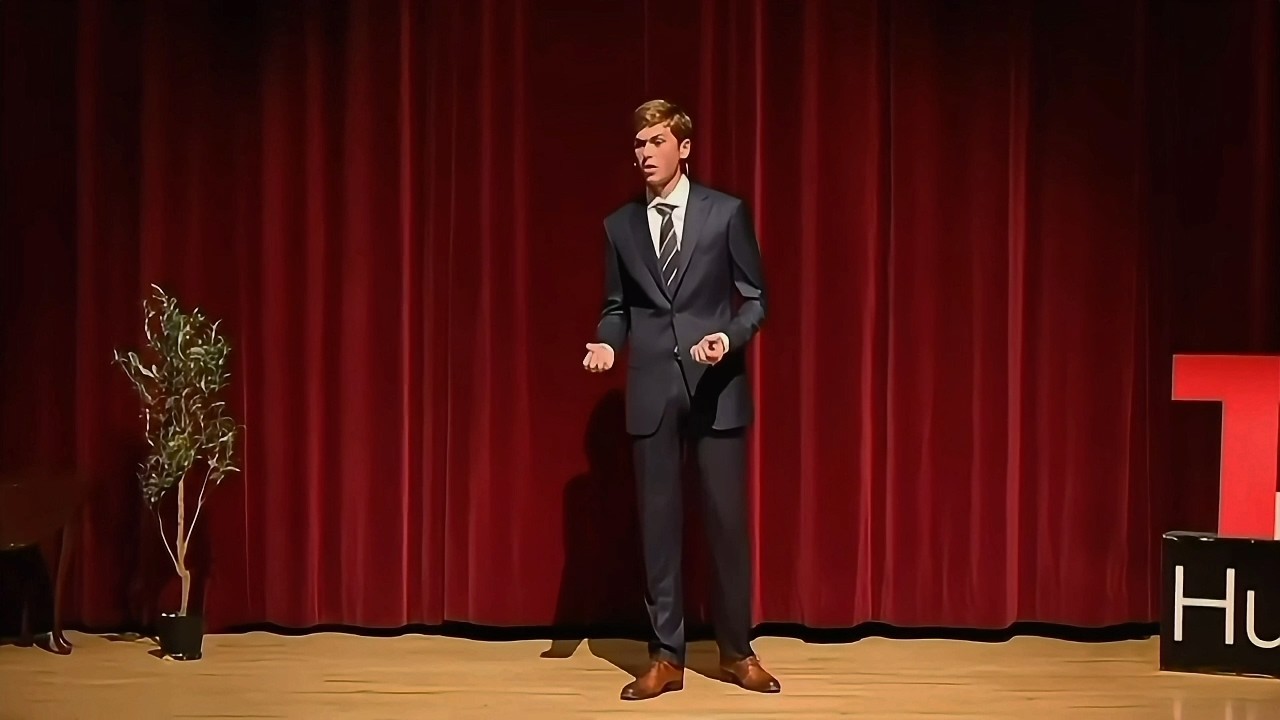
Feed billions, kill millions: The tragedy of Fritz Haber | Jackson Sarver | TEDxHunting Valley
Keywords
Summary
167 words
Critical Evaluation
Value of the Information & Strength of the Argument
The talk provides a compelling narrative connecting historical events to contemporary issues, effectively arguing that technological breakthroughs have dual-use potentials. It builds a strong case by linking the guano crisis to population growth, then to Haber’s invention, and sequentially exposing its dark sides—chemical warfare, industrial accidents, and environmental degradation. The argumentation is coherent and persuasive, though it simplifies technical details and relies on anecdotal evidence rather than deep analysis. The ethical reflection is thought-provoking, framing the story as a cautionary tale without falling into technological pessimism.
Scientific Rigor, Source Quality, Title Accuracy
The talk cites no explicit academic sources, relying on common historical knowledge and well-documented facts. The information appears largely accurate, but some numbers (e.g., 600,000 premature deaths) are presented without citation and may be approximations. The title exactly matches the content, emphasizing the dual legacy. The speaker’s credibility is enhanced by the TEDx format, but the lack of references limits verifiability. The public comments (not provided) would offer further insight, but none are available. Overall, the title is truthful and the content is reliable enough for a general audience, though not exhaustive.
193 words
Title / Content Match
The title accurately reflects the dual impact of Fritz Haber's work: feeding billions while enabling mass destruction. The content matches this dichotomy perfectly.
Quality & Reliability
7/10
The talk presents a well-structured narrative of historical and scientific facts, with plausible claims, but relies on general knowledge without direct citations. It is compelling and broadly accurate, though simplifications occur for dramatic effect.
Key Moments
Markers derived by PSI from the transcript: the creator did not define chapters.
- Introduction: Napoleon's invasion of Spain and the chain of events leading to the guano wars.
- Explanation of guano's importance as a nitrogen-rich fertilizer and the conflict over the Chincha Islands.
- The nitrogen problem: nitrogen in the air is inaccessible; Haber's 1909 breakthrough in synthesizing ammonia.
- Haber's nationalist response to WWI, conversion of fertilizer plants to arms factories, and development of chlorine gas.
- Personal tragedy: Clara Haber's suicide, Zyklon B development, and Haber's flight from Nazi Germany.
- The Nobel Prize controversy and the lingering impacts: ammonia's role in carbon emissions, health risks, and explosives accidents.
- Environmental consequences: agricultural runoff causing dead zones like in Lake Erie and the Gulf of Oman.
- Ethical conclusion: humanity's race between technological and moral progress, with the lesson that inventions carry dual potentials.
Cited Sources
- TEDx Program Overview — Official page explaining the TEDx format under which this talk was independently organized.
Contribution & Novelties
This talk offers a renewed synthesis of Fritz Haber’s legacy, linking his ammonia synthesis to contemporary environmental issues like agricultural dead zones and the potential for ammonia-based fuels. It frames the narrative as a moral parable, emphasizing the dual-use nature of scientific breakthroughs and the urgency of ethical foresight. The talk’s originality lies in its accessible blend of history, chemistry, and ethics, making it a compelling call to reflect on technological responsibility.
Pour aller plus loin :
- Haber–Bosch process — The core industrial process behind ammonia synthesis, its history and global significance.
- Fritz Haber — Biography of the chemist, including his contributions and controversies.
- Chincha Islands War — Historical conflict over guano, illustrating its strategic value.
- Dead zone (ecology) — Scientific explanation of oxygen-depleted zones caused by nutrient pollution, as discussed in the talk.
- Zyklon B — The pesticide derived from Haber’s work, used in the Holocaust, highlighting the dark side of invention.
153 words
Radar Profile
The radar shows high scores for quantity and reliability, moderate for technical depth, and slightly lower for innovation, indicating a talk that is informative and trustworthy but not breaking new scientific ground. The balance suggests a general audience piece that excels in narrative and ethical framing rather than technical nuance.