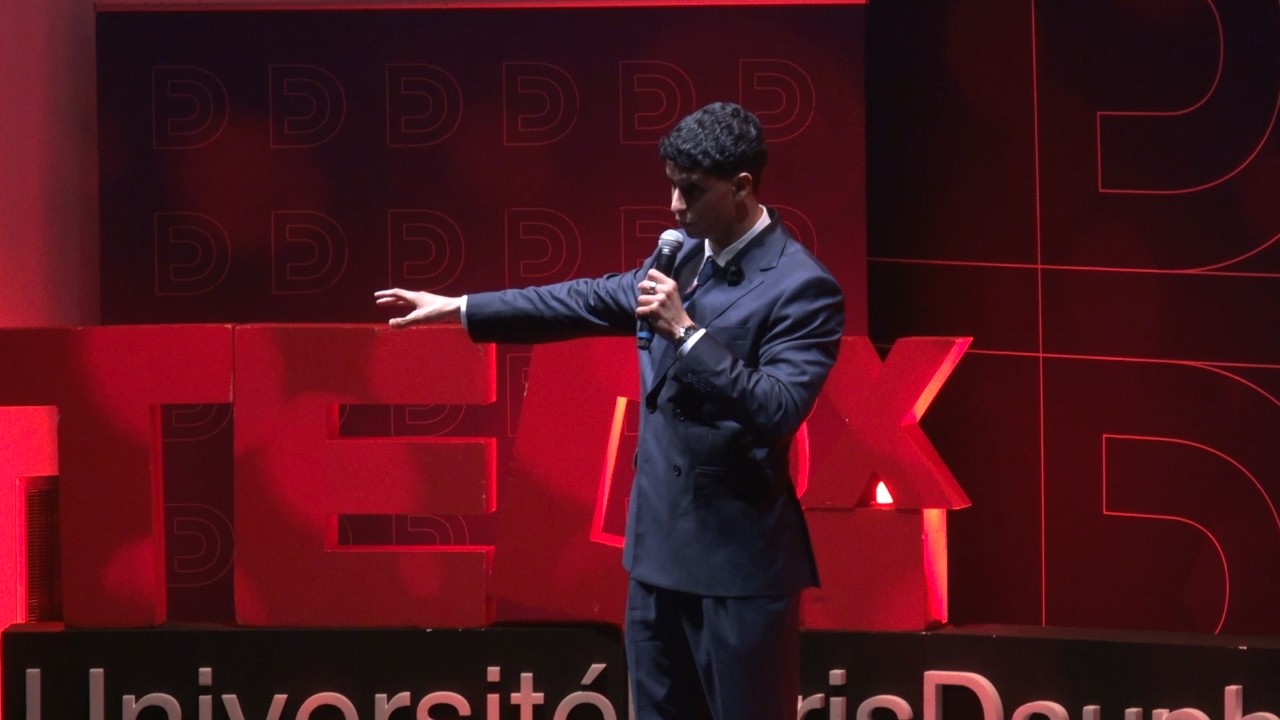
La peur du jugement, l'effet des regards | Naim Khelif | TEDxUniversitéParisDauphine
The fear of judgment, the effect of looks | Naim Khelif | TEDxUniversitéParisDauphine
Keywords
Summary
184 words
Critical Evaluation
Value of the Information & Strength of the Argument
The value of the information lies in its practical, relatable message: it synthesizes well-known psychological concepts (spotlight effect, glossophobia, primacy effect) into an accessible narrative. The argumentation is built on a combination of personal testimony and cited studies, which strengthens its persuasive power. However, the scientific depth is limited; the speaker does not cite specific references beyond broad mentions, and the interpretation of Darwin’s evolution of gaze is simplified. The progression from problem to solution is clear, but the reasoning relies heavily on anecdotal evidence and motivational rhetoric rather than a rigorous analytical framework.
Scientific Rigor, Source Quality, Title Accuracy
The talk demonstrates moderate scientific rigor: it references the spotlight effect (likely from a 2000 study) and glossophobia, but without naming authors or providing formal citations. The story about Barry Manilow t-shirts accurately reflects a known experiment on the spotlight effect, but the speaker omits specifics. Darwin’s mention is used loosely without direct citation. The title accurately reflects the central theme, and the content aligns with it, ensuring a coherent narrative. The talk is more inspirational than scientific, with a strong emphasis on personal growth and overcoming fear.
197 words
Title / Content Match
The title accurately reflects the content, which focuses on the fear of judgment and the influence of others' gazes, as discussed through personal experience and psychological concepts.
Quality & Reliability
6/10
The talk blends personal anecdotes with references to established psychological concepts (spotlight effect, glossophobia, primacy effect) and cites Darwin, but does not provide precise scientific sources or rigorous citations. The information is broadly accurate and accessible, but presented in a motivational rather than scientifically exhaustive framework.
Key Moments
Markers derived by PSI from the transcript: the creator did not define chapters.
- Introduction: first impressions and the 7-second rule, the speaker's emphasis on meticulous preparation.
- Personal story: being mocked for thinness in school and how it led to long-term insecurity.
- The central question: 'What will others think of me?' and the impact of Sartre's quote.
- Explanation of glossophobia as social death and the spotlight effect bias.
- The interactive exercise with black and white objects to illustrate attention and perception.
- Anecdote of waiting a year to post his first video, before realizing he must act despite fear.
- Concluding message: focus on the gaze of those who love you and act with courage.
Cited Sources
- TEDx program — Description of the talk provides a link to the official TEDx program, which explains the event format and organization.
Contribution & Novelties
The talk’s original contribution lies in personalizing and humanizing the fear of judgment, bridging psychological concepts with a compelling autobiographical narrative. It offers a practical reframe: instead of trying to eliminate fear, one should act in its presence and prioritize the gazes that elevate. The interactive exercise provides a tangible illustration of perception bias.
Pour aller plus loin :
- Spotlight effect — This concept is central to the talk, explaining the tendency to overestimate others’ attention.
- Glossophobia — Detailed description of the fear of public speaking, which the speaker discusses.
- Primacy effect — Related to the idea that first impressions form quickly, as mentioned in the opening.
107 words
Radar Profile
The radar profile shows a balanced but moderate set of scores, with slightly higher values for quantity and quality of information, and lower for technical level and global reliability. This indicates a talk that is informative and reasonably well-argued but lacks deep scientific rigor and technical sophistication.