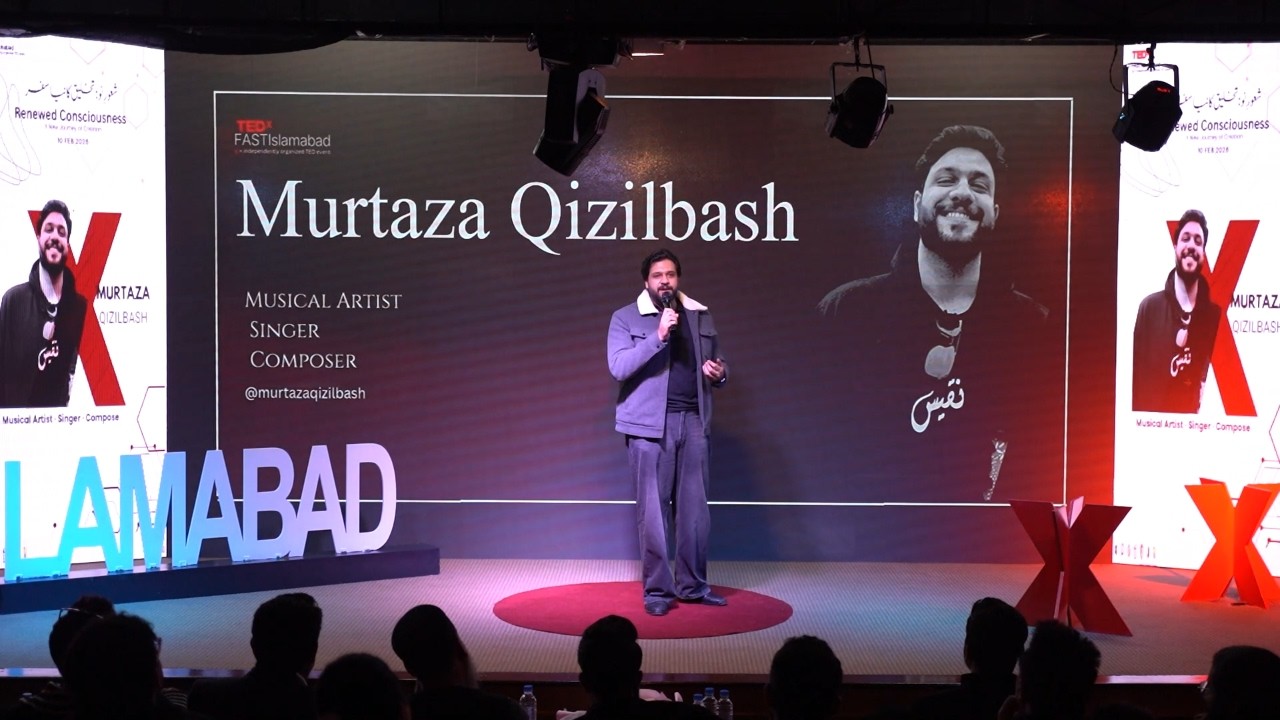
Finding Connection Through Music | Murtaza QizIlbash | TEDxFASTIslamabad
Keywords
Summary
139 words
Critical Evaluation
Value of the Information & Strength of the Argument
The talk offers genuine value in its honest portrayal of an artist’s internal world and the universal experience of yearning. Qizilbash’s argumentation is based on personal anecdotes and emotional storytelling rather than empirical data, making it compelling on a human level but not scientifically rigorous. He effectively uses musical performances to illustrate his points, which strengthens the emotional impact and authenticity of his message. However, the logical structure is loose, as the conversation naturally meanders between songs and audience interactions, limiting the depth of any single idea.
Scientific Rigor, Source Quality, Title Accuracy
The talk lacks scientific rigor; it is an artistic presentation rather than a research-based analysis. The only source cited is the organizational link to TEDx itself, and no external references or data are provided. The title is well-matched to the content, as the theme of connection through music is consistently addressed. However, the absence of verifiable sources or systematic method means the reliability is low from a scientific standpoint, though it is high in authenticity and personal truth.
180 words
Title / Content Match
The title accurately reflects the content: the talk explores how music creates emotional connections and personal bonds, as demonstrated through the artist's songs and audience interaction.
Quality & Reliability
5/10
The talk is a personal narrative and artistic reflection, not a scientific study. The speaker shares subjective experiences and emotional insights without empirical evidence or external validation.
Key Moments
Markers derived by PSI from the transcript: the creator did not define chapters.
- Minute of silence for a tragic event
- Introduction and welcoming remarks
- Musical performance of 'Dil Mera' with audience
- Discussion on yearning and the inspiration behind the song
- Singing 'Tum' and explaining its lyrics
- Reflection on healing and the metaphor of kintsugi
- Performance of 'Hum' and its story of self-shattering
- Q&A session and closing with a verse by Allama Iqbal
- Final song 'Mahi' and appreciation to the audience
Cited Sources
- TEDx Talks - About — Description link to the TEDx platform for further information about the event format.
Contribution & Novelties
The talk provides a unique glimpse into the creative and emotional world of a Pakistani artist, illustrating how music can articulate personal and collective identity. It offers an original perspective on the role of Urdu poetry in contemporary music, bridging traditional and modern expressions. The discussion of kintsugi as a metaphor for emotional healing adds a cross-cultural layer, making the talk relatable beyond its local context.
Pour aller plus loin :
- Kintsugi - Wikipedia — Background on the Japanese art of repairing broken pottery with gold, used as a metaphor for resilience and healing.
- Urdu poetry - Wikipedia — Overview of the rich tradition of Urdu poetry and its cultural significance in South Asia.
- Allama Iqbal - Wikipedia — Information about the philosopher-poet whose verse the speaker quotes, influencing themes of selfhood and identity.
- Music therapy - Wikipedia — Explores the therapeutic potential of music in fostering emotional well-being and connection.
151 words
Radar Profile
The radar profile shows moderate scores in information quantity and quality, with a low technical level, reflecting the talk's personal and emotional nature. The reliability score is moderate, aligned with subjective experiences. This indicates a talk that is engaging and insightful but lacks scientific depth.