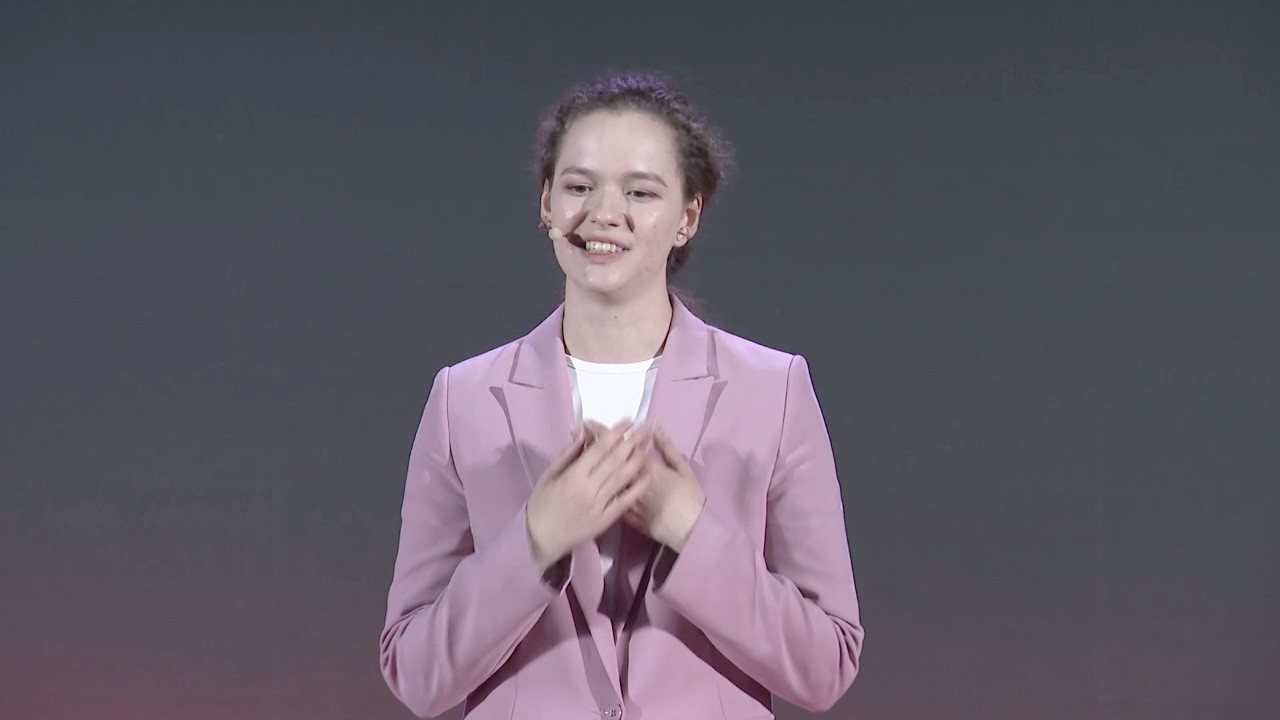
How does the clumsy bird fly? | Polina Bibchenko | TEDxBHI
Keywords
Summary
177 words
Critical Evaluation
Value of the Information & Strength of the Argument
The talk offers practical, relatable insights about taking action despite fear, supported by vivid personal stories that illustrate the benefits of acting before feeling confident. The argumentation is coherent and builds logically from the initial saying to its reinterpretation. While the evidence is purely anecdotal, the message is motivational and applicable, making it valuable for personal development. The speaker’s honesty about her failures (e.g., poor coffee, nervous singing) strengthens credibility, and the turning point with the assistant conductor provides a memorable and persuasive anecdote.
Scientific Rigor, Source Quality, Title Accuracy
The talk is based on personal experience rather than scientific sources, so rigorous external validation is absent. The only source cited is the general TEDx platform link. The title ‘How does the clumsy bird fly?’ is metaphorically appropriate and directly addresses the core theme. Content matches the title well, with the saying serving as a recurring motif. No external scientific claims are made, so the lack of citations does not undermine the internal logic, but it limits the generalizability of the advice.
181 words
Title / Content Match
Title aptly reflects the metaphor of the clumsy bird flying first, which is central to the speaker's message about acting before feeling ready.
Quality & Reliability
5/10
Personal testimony with anecdotal evidence, lacks scientific rigor but offers practical insights.
Key Moments
Markers derived by PSI from the transcript: the creator did not define chapters.
- She asks herself 'What am I doing here?' backstage at singing competition, setting up the core question.
- Introduces the Chinese saying '笨鸟先飞' (the clumsy bird flies first) and her initial interpretation.
- Story about moving to China at 17, realizing fear doesn't stay behind at the airport.
- Shares the coffee-making class failure and the lesson of staying a beginner to improve.
- Internship application story: applying to a competitive hotel despite insecurity, later becoming best intern.
- Choir audition moment where the conductor pushes her to sing higher, redefining her self-imposed limits.
- Signs up for top 10 singers competition, practices daily, and advances to finals.
- Conclusion: don't wait to feel ready, trust others who see potential, and never give up.
Cited Sources
- TEDx Talks — General TEDx program information provided in the video description.
Contribution & Novelties
The talk reframes a common Chinese proverb from a paradigm of working harder to one of acting before feeling ready, linking it to personal growth. It emphasizes the role of mentors who see potential beyond self-imposed limits, offering a fresh perspective on confidence building. The ‘scarier than’ mindset—where one unnecessary challenge makes necessary ones easier—is a practical takeaway.
Pour aller plus loin :
- Growth mindset — Carol Dweck’s concept that abilities can be developed, aligning with the speaker’s shift from fixed limits to improvement.
- Self-efficacy — Bandura’s theory that believing in one’s ability to succeed influences action, relevant to the talk’s central idea of acting before confidence.
- Comfort zone — The psychological state where activities are familiar, and stepping outside it (as the speaker does) leads to growth.
128 words
Radar Profile
The profile shows a moderate level of information quantity and quality, low technical level, and moderate reliability, reflecting a motivational talk based on personal experience rather than scientific evidence. The radar is balanced but skewed toward practical insight over rigorous data.