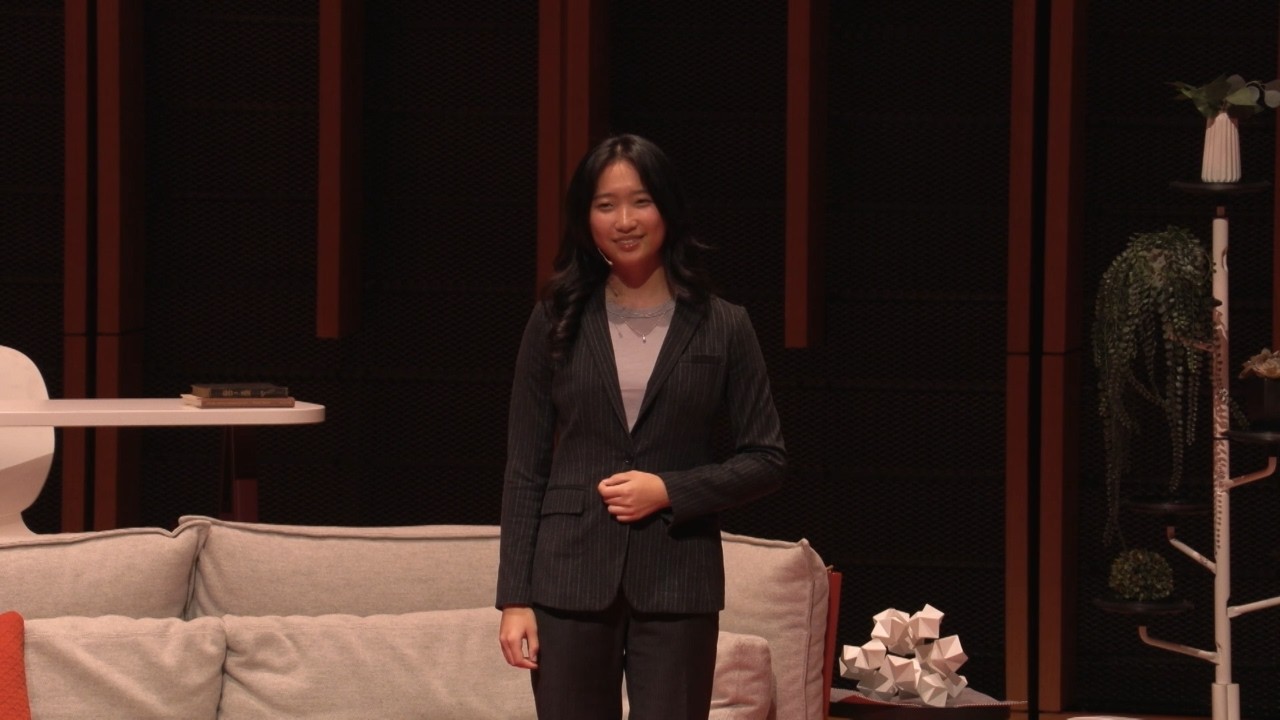
When Intelligence Becomes Artificial, What Makes Us Human? | Nina Shaye | TEDxMacatawa
Title history
- When Intelligence Becomes Artificial, What Makes Us Human? | Nina Shaye | TEDxMacatawa — observed on 20261111-1825 UTC (YouTube)
Keywords
Summary
188 words
Critical Evaluation
Value of the Information & Strength of the Argument
The talk offers a meaningful contribution by shifting the AI conversation from capability to purpose, emphasizing that intelligence without intention is incomplete. The argument builds logically from personal tragedy to a broader philosophical framework, using concrete examples such as the AI model and the art camp story to illustrate each of the three pillars. The speaker’s genuine experience adds authenticity, though the reasoning is largely anecdotal. The distinction between purpose and capability is particularly well articulated, and the emphasis on protecting curiosity in children is a timely and compelling point.
Scientific Rigor, Source Quality, Title Accuracy
Scientific rigor is moderate: the speaker references real-world statistics (e.g., 80% late diagnosis, 3.2% five-year survival) but provides no citations. Her method of self-taught machine learning is credible but not detailed. The only external source mentioned is the TEDx platform itself, which is not a scientific reference. The title accurately reflects the talk’s central inquiry and is well matched to the content. No comments were provided to analyze public reception.
175 words
Title / Content Match
The title poses a broad question that the talk directly addresses through three pillars: purpose, choice, and wonder, making it well aligned with the content.
Quality & Reliability
6/10
Personal narrative with some anecdotal evidence; few concrete statistics are mentioned but no explicit sources provided. The speaker is a student researcher, not an established expert, and the talk is largely philosophical. The argument is coherent but relies on individual experience rather than systematic evidence.
Key Moments
Markers derived by PSI from the transcript: the creator did not define chapters.
- Introduces the idea that the worst gift is an immediate answer, linking to cognitive development.
- Shares the story of her aunt Sylvia and the motivation to fight pancreatic cancer.
- Explains learning machine learning from YouTube and the challenges faced in building a detection model.
- Highlights the model's 94.3% accuracy but inability to know the human significance, leading to the concept of purpose.
- Describes the art camp and the story of Olivia, illustrating how choice defines humanity.
- Discusses wonder as the foundational human trait and the importance of preserving curiosity in children.
Cited Sources
- TEDx Talks — The talk is part of independently organized TEDx events; the description links to TEDx general information.
Contribution & Novelties
The talk brings a fresh perspective on AI by focusing on what it cannot replicate: purpose, choice, and wonder. It personalizes the debate with a real-world application in medical imaging, showing that even highly accurate AI lacks the human drive behind its use. The emphasis on protecting curiosity in children as a counterbalance to instant answers is a thought-provoking and somewhat original contribution.
Pour aller plus loin :
- Artificial intelligence — Overview of AI, its capabilities, and limitations, relevant to understanding the context.
- Curiosity — Psychological and philosophical perspectives on curiosity, which underpins the concept of wonder.
- Machine learning in medicine — Exploration of how AI is applied in healthcare, including cancer detection, connecting to the speaker’s project.
- Human-centered AI — Design philosophy that emphasizes human values and purposes, directly related to the talk’s thesis.
135 words
Radar Profile
The radar profile shows moderate performance across all axes, with information quality and technical level slightly higher than quantity and reliability, reflecting a thoughtful but not deeply evidence-based talk.