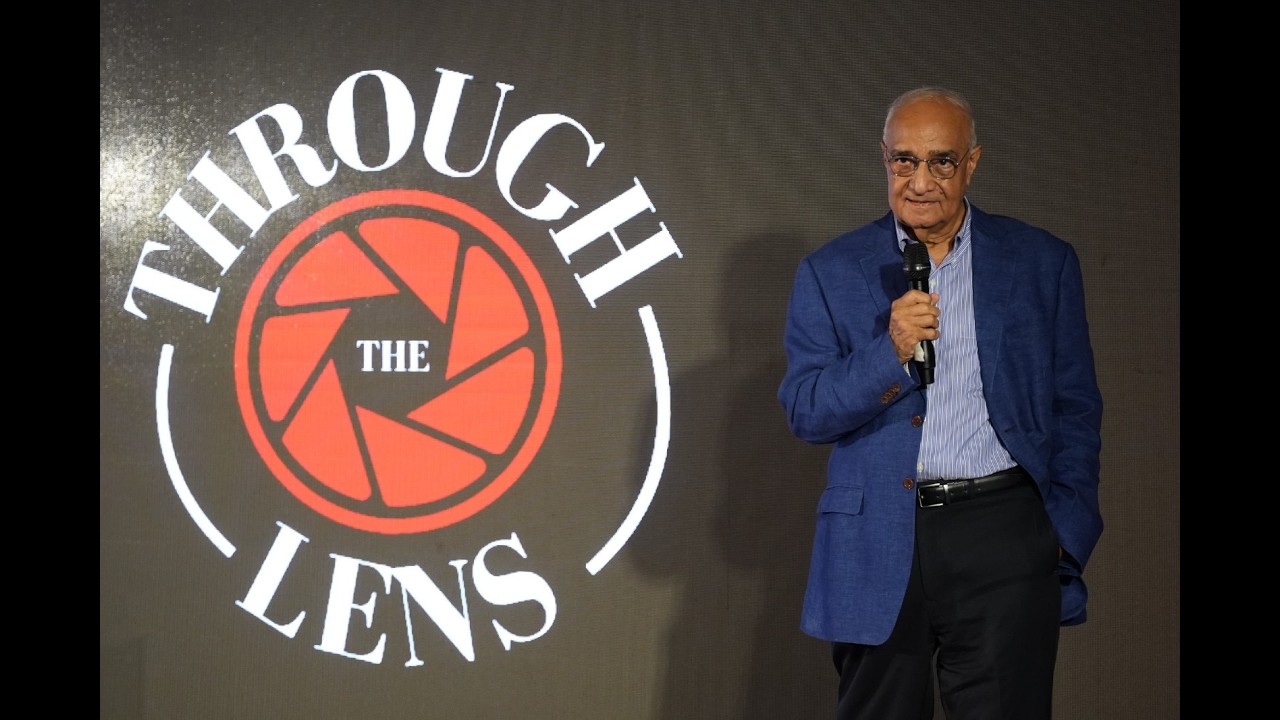
The Lens You Didn't Know You Were Wearing | LC Singh | TEDxBocconiUMumbai
Keywords
Summary
160 words
Critical Evaluation
Value of the Information & Strength of the Argument
The talk’s value lies in its accessible and compelling illustrations of how emotions shape perception, presented through vivid personal narratives that make abstract psychological concepts relatable. Singh’s argument is built on a logical progression from personal anecdotes to generalizable insights, and he effectively bridges these to practical applications in leadership and technology. However, the argumentation relies on anecdotal evidence and philosophical references rather than empirical research, which limits its scientific robustness. The idea that emotional awareness can be enhanced through AI and protocols is intriguing but presented without detailed evidence or questioning of ethical implications.
Scientific Rigor, Source Quality, Title Accuracy
The talk lacks formal scientific citations, relying on the speaker’s own experiences and a reference to Tulsidas’s Ramcharit Manas as a literary illustration. No peer-reviewed sources are mentioned, and the description only links to the TEDx general page. While the speaker’s background in technology provides some credibility, the content is more of an expert opinion than a scientifically rigorous exposition. The title is apt, as it captures the central metaphor of the lens, and the video content directly aligns with that metaphor, discussing how unnoticed emotional filters affect our interactions and decisions. The absence of citations and empirical data means the talk is better suited as an inspirational or thought-provoking piece than a source of verifiable scientific knowledge.
228 words
Title / Content Match
The title metaphorically captures the core message about perception shaped by emotions, which is accurately reflected in the talk.
Quality & Reliability
6/10
The talk offers a personal, anecdotal perspective on emotion and perception, with some references to Emotion AI and a planned protocol, but lacks empirical evidence or citations from scientific literature.
Key Moments
Markers derived by PSI from the transcript: the creator did not define chapters.
- Speaker introduces his experience in Tehran during the revolution and the need to leave without an exit visa.
- Recall of arriving in Karachi without a visa and the immigration officer noticing LPs, leading to a shared love of ghazals.
- Reflection on how the record changed both their perceptions, introducing the concept that reality is constructed through emotional 'lens'.
- Recounting a severe turbulence experience on a flight, where he observes the flight attendant praying.
- Realization that emotions make us irrational and blind, leading to thoughts of writing a last letter.
- Mention of applying AI to measure emotions objectively and the upcoming CPR protocol.
- Story from Ramcharit Manas about Sita's Ashok Vatika and the conflict over flower color, illustrating emotional bias.
- Conclusion: encourage listeners to observe their own emotional lens and question whether they see reality or just their emotions.
Cited Sources
- TEDx program information — The talk was given at a TEDx event independently organized by a local community.
Concurring Sources
- Emotion — Supports the central claim that emotions influence perception and behavior.
- Cognitive bias — Relates to the idea that emotional states can lead to biased interpretations of reality.
Contribution & Novelties
The talk offers a personal and narrative-driven perspective on the intersection of emotion, perception, and leadership, emphasizing the practical need for emotional awareness in decision-making and the potential of AI to externalize subjective emotional states. Its originality lies in blending autobiography with a call for emotional intelligence as a core leadership skill, and in introducing a forthcoming AI-based protocol (CPR) to monitor emotions—an application that is still nascent in the public discourse.
Pour aller plus loin :
- Emotional intelligence — The concept of emotional awareness and regulation, central to the talk’s thesis.
- Affect heuristic — Psychological research showing how emotions influence judgment and decision-making.
- Emotion recognition — The technological basis for the Emotion AI mentioned by the speaker, relevant to the CPR protocol.
123 words
Radar Profile
The radar profile shows moderate information quality and reliability, with low technical depth, reflecting the talk's nature as a personal and philosophical narrative rather than a rigorous scientific exposition.