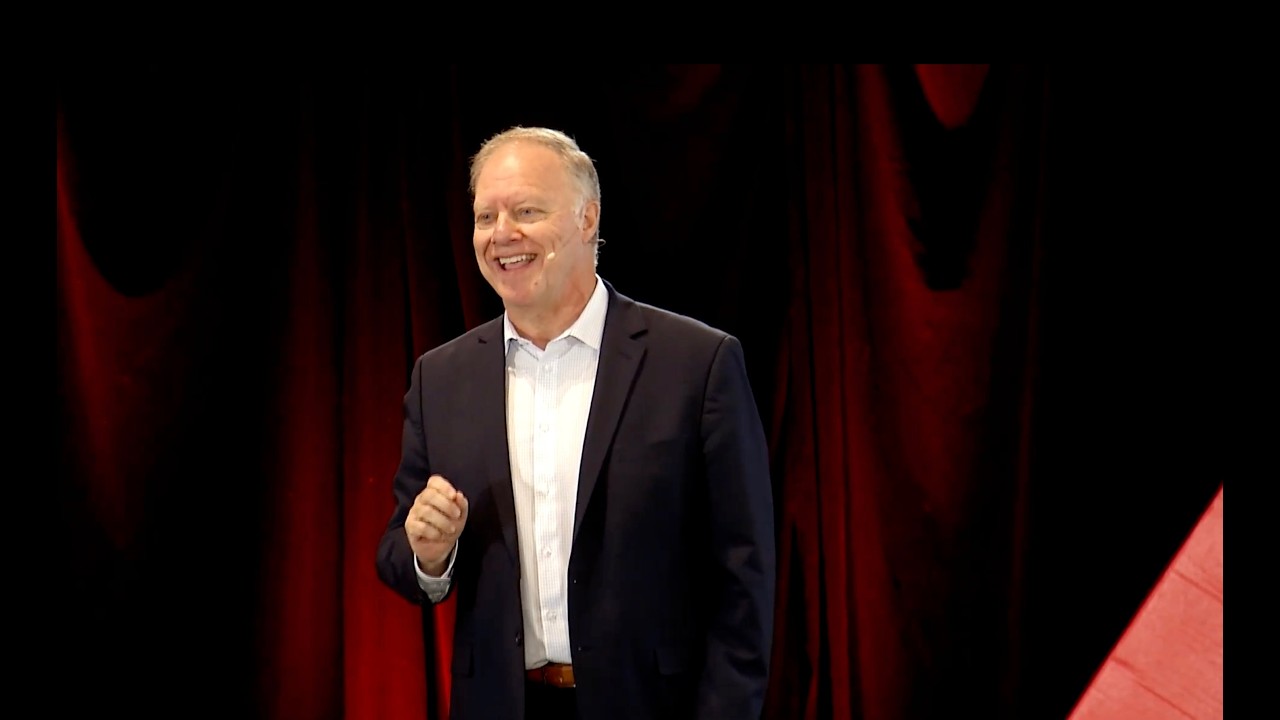
Can Your City Compete Without You? | Bob Hess | TEDxArlington Heights
Title history
- Can Your City Compete Without You? | Bob Hess | TEDxArlington Heights (PSI archive)
- Can Your City Compete Without You? | Bob Hess | TEDxArlington Heights — observed on 20261119-1754 UTC (YouTube)
Keywords
Summary
171 words
Critical Evaluation
Value of the Information & Strength of the Argument
The talk offers a refreshing perspective on economic development by shifting focus from impersonal metrics to human elements. The speaker draws on decades of professional experience, making his anecdotes credible and relatable. The argumentation is coherent: he builds a case that individual actions collectively create a ‘magnet economy’ that attracts investment. He uses concrete examples—Dublin and Superior—to illustrate cause and effect, though these are retrospective and subjective. The reasoning is more motivational than analytical, lacking quantitative evidence or systematic comparisons. While the central thesis is plausible and aligns with common sense in community development, it stops short of providing a rigorous framework or data support. The emotional appeals enhance persuasiveness but may overshadow objective analysis.
Scientific Rigor, Source Quality, Title Accuracy
The talk is an expert opinion piece rather than a literature review or meta-analysis. The speaker cites no external sources, relying entirely on his professional track record and personal stories. The only source mentioned is the TEDx platform itself, which guarantees no scientific validation. However, the speaker’s credentials are strong: he has led 350+ projects, worked with Deloitte and Cushman & Wakefield, and served on the U.S. Department of Commerce advisory council. The title is apt and directly addresses the listener, promising a discussion on the role of individuals in urban competitiveness. It does not overpromise or mislead. The content matches the title well, with a clear narrative and logical progression. There is no mention of public comments, so no tendency analysis is possible.
254 words
Title / Content Match
The title accurately reflects the core message: the importance of individual participation in a city's economic competitiveness.
Quality & Reliability
7/10
The speaker is a seasoned professional with 40 years of experience, but the talk relies heavily on personal anecdotes and motivational messages rather than rigorous data.
Key Moments
Markers derived by PSI from the transcript: the creator did not define chapters.
- Introduction: wife's list of best places, personal excitement
- Introduction to site selection and critical location factors
- Civic pride exemplified by Dublin, Georgia case
- Definition of magnet economy and its components
- Signaling questions for community attitude and readiness
- Superior, Wisconsin example and Andy's legacy, conclusion
Cited Sources
- TEDx Talks official platform — The talk was given at a TEDx event and this link provides information about the TEDx program.
Contribution & Novelties
This talk introduces the concept of a ‘magnet economy’ as a fresh lens for understanding how individual civic participation influences corporate location decisions. It bridges the gap between personal behavior and economic outcomes, emphasizing that subtleties like positive conversation and volunteerism are quantifiable in site-selector evaluations. The perspective is original in that it frames civic pride as a strategic asset rather than a mere social good.
Pour aller plus loin :
- Civic engagement — Relevant to the broader concept of individual participation in community affairs.
- Site selection — The professional field the speaker practices, offering a technical foundation for location decision-making.
- Economic development — Covers the broader policy and planning context that the talk touches upon.
116 words
Radar Profile
The radar profile shows high scores in information quality but moderate for quantity and reliability, reflecting the talk's anecdotal yet credible nature. The low technical level suggests it is accessible to a broad audience, while the global score of 6 indicates a somewhat subjective but engaging message.