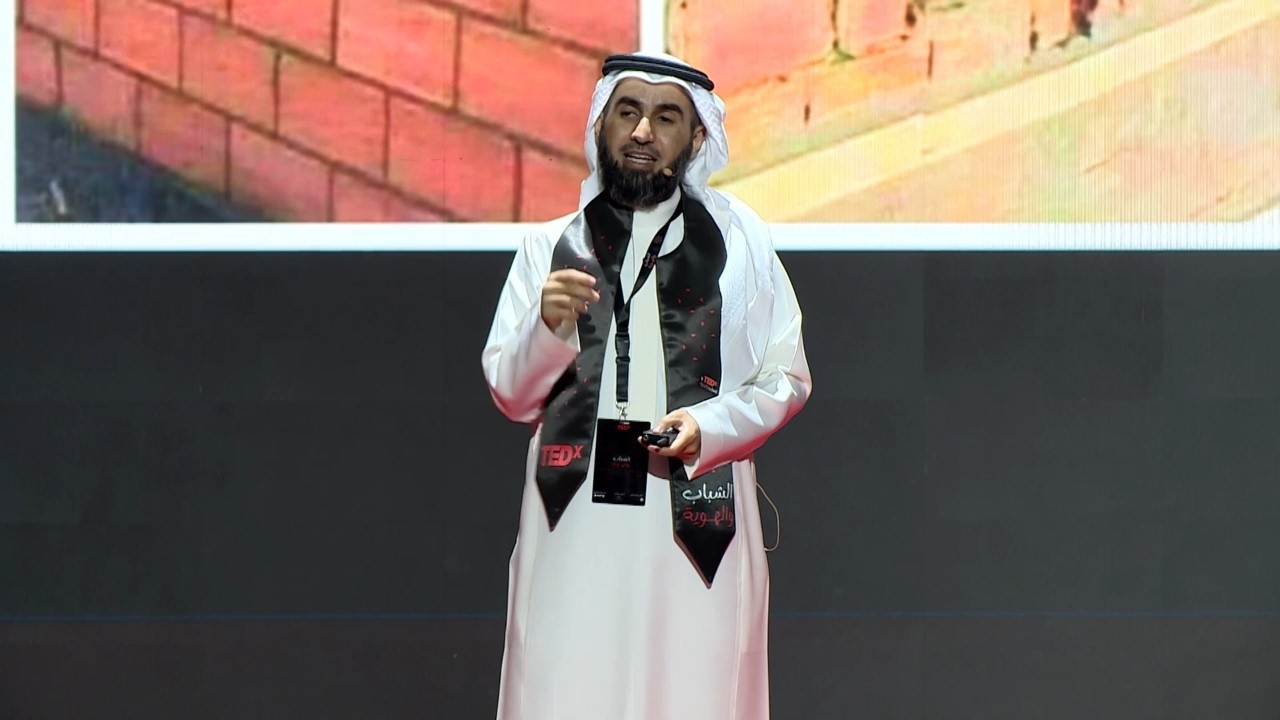
The Joy of a Meaningful Life | Yasser Al-Hozaimi | TEDxAl Raed
Title history
- The Joy of a Meaningful Life | Yasser Al-Hozaimi | TEDxAl Raed — observed on 20261118-1746 UTC (YouTube)
Keywords
Summary
229 words
Critical Evaluation
Value of the Information & Strength of the Argument
The value of the information lies primarily in its motivational and reflective power rather than in novel empirical findings. The speaker weaves a coherent argument using vivid metaphors (the building, the train vs. ship) and illustrative anecdotes (the mother’s hairpin, the two garbage collectors) to make the case that intrinsic meaning transforms one’s perception of hardships and routines. The argumentative structure is solid and engaging: it logically progresses from defining the problem (lack of meaning leads to fragility), to contrasting ‘how’ and ‘why’ questions, and finally to providing tangible examples of how meaning changes outcomes. However, the argumentation relies exclusively on personal observation, religious doctrine, and cultural narratives, lacking a systematic review of psychological research or universal frameworks, which significantly limits its scientific validity while enhancing its rhetorical appeal.
Scientific Rigor, Source Quality, Title Accuracy
From a scientific rigor standpoint, this talk is weak. The speaker cites zero scientific papers, studies, or verifiable external sources; the only reference provided is the generic TEDx website link. His evidence base is personal anecdotes and religious scripture, which, while culturally rich and ethically compelling, cannot be considered scientifically rigorous for establishing objective truths about human psychology. The title, however, shows perfect adequation: ‘The Joy of a Meaningful Life’ exactly captures the video’s content, with no clickbait or misleading framing. Given that no specific scientific sources are cited or discussed, the overall rigor must be rated very low, focusing instead on the internal coherence of a faith-based perspective.
253 words
Title / Content Match
The title accurately reflects the core theme: the speaker consistently explores how finding meaning enriches life, identity, and resilience, supported by stories and metaphors throughout.
Quality & Reliability
4/10
The talk is a compelling philosophical and spiritual reflection grounded in Islamic theology and personal anecdotes, but it contains no empirical data or verifiable scientific references. Its reliability for making generalizable claims about psychology or human behavior is low, although it maintains strong internal logical coherence in its arguments.
Key Moments
Markers derived by PSI from the transcript: the creator did not define chapters.
- Speaker engages the audience with clapping, introducing the concept of belonging as the first element of meaning.
- Metaphor of two walls – one solid, one defective – illustrating how appearances (plaster) hide inner fragility, revealed in crises.
- Introduces the two critical questions: 'How do I live?' versus 'Why do I live?', emphasizing the primacy of the 'why'.
- Contrast between a train journey (structured life) and a ship voyage (unstructured post-university life), where a clear goal is essential.
- Uses the Battle of Uhud archers to illustrate the difference between following desires and adhering to a higher purpose.
- An anecdote about a relative joining a gym three times unsuccessfully but completing a session when faced with a wedding dress deadline – showing how meaning enables persistence.
- Story of two workers cleaning a construction site: one feels meaningless, the other feels he is 'helping build the tower', showcasing different perspectives.
- The doctor's hairpin anecdote – a hairpin worth over a million because it carries the memory and love of his deceased mother.
- Conclusion with religious examples and the statement 'Fuztu bi Rabbil Ka'bah' (I've triumphed by the Lord of the Kaaba) from Haram bin Milhan, emphasizing victory through meaning.
Cited Sources
- TEDx Program Official Site — Provided in the video description as the official resource for TEDx events, where this talk was independently organized.
Contribution & Novelties
The talk’s primary value lies in synthesizing classical Islamic philosophical concepts with modern day-to-day psychological challenges, framing them in accessible contemporary metaphors (the gym story, the start-up vs. employment feeling). It brings nothing new empirically, but offers a refreshing narrative bridge for audiences familiar with Islamic culture to explore the universal concept of existential meaning.
Pour aller plus loin :
- Logotherapy — Viktor Frankl’s psychological approach that centers on the search for meaning as the primary motivational force in humans.
- Meaning-making — A psychological concept describing how people construct meaning from their experiences, highly relevant to the speaker’s claims.
- Self-determination theory — Psychological theory addressing intrinsic motivation, which relates to the speaker’s emphasis on ‘why’ over ‘how’.
- Ikigai — Japanese concept of ‘a reason for being’, comparable to the speaker’s call for defining a clear life goal.
137 words
Radar Profile
The radar profile shows a stark contrast between high internal narrative coherence and very low technical and empirical grounding. The talk is strong on emotional appeal and rhetorical structure but scores poorly on scientific rigor and information density, typical of a motivational spiritual discourse rather than a scholarly work.