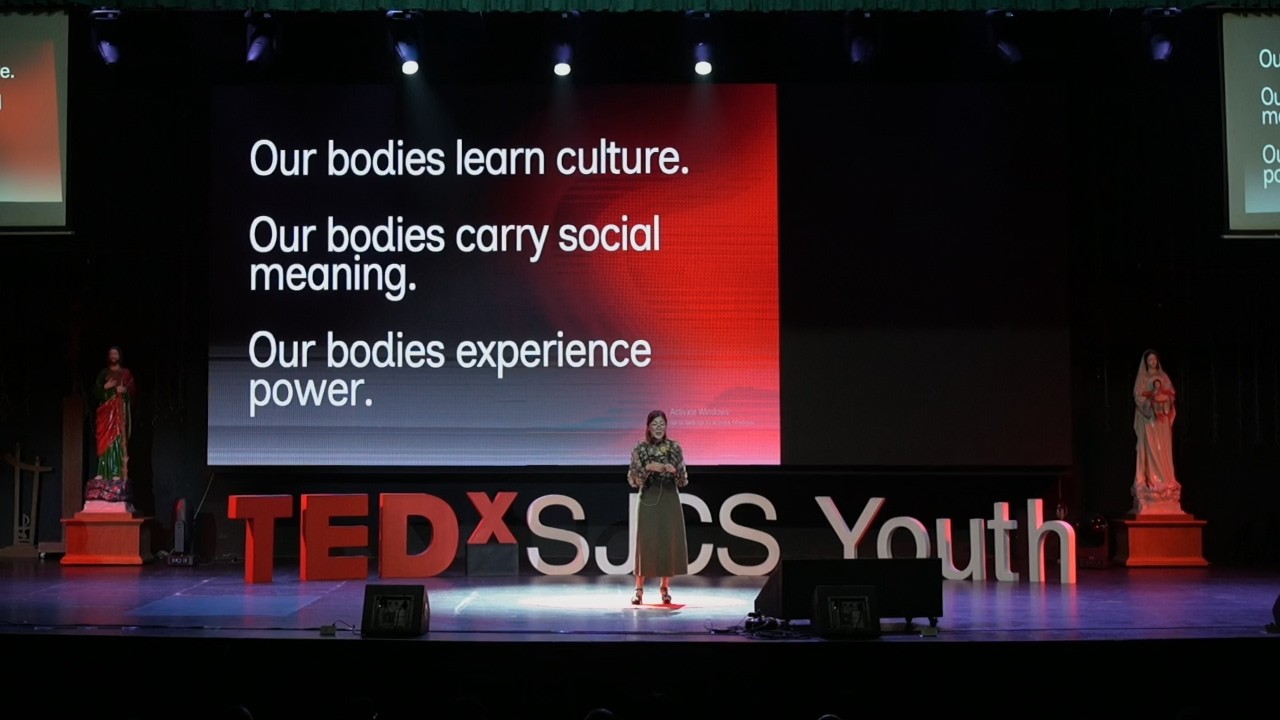
Your Body Is More Social Than You Think | Noreen Sapalo-Chan | TEDxSJCS Youth
Keywords
Summary
151 words
Critical Evaluation
Value of the Information & Strength of the Argument
The talk offers a compelling and accessible synthesis of anthropological theories about embodiment, making a strong case that everyday bodily practices are culturally constructed. The argumentation is well-structured, using concrete examples (posture, apologizing, breathing) that make abstract concepts tangible. The speaker logically progresses from personal experience to established academic frameworks, and she successfully bridges anthropology and Pilates to show practical relevance. The reasoning is clear and persuasive, though it remains at a surface level without deeply critiquing potential counterarguments. The interactive elements engage the audience and reinforce the theoretical points.
Scientific Rigor, Source Quality, Title Accuracy
The scientific rigor is moderate: the speaker correctly references key anthropologists (Mauss, Scheper-Hughes, Lock) and uses their concepts accurately, but without citing specific studies or data. The talk is more phenomenological and reflective than data-driven. The sources she mentions are credible, and her expertise lends authority. The title is directly aligned with the content, as the entire talk reinforces that bodies are social entities. There is no obvious mismatch between the advertised topic and the delivered message.
182 words
Title / Content Match
The title accurately captures the central argument that bodies are shaped by and communicate social norms and power structures.
Quality & Reliability
7/10
The talk relies on established anthropological concepts (Mauss, Scheper-Hughes, Lock) and is delivered by an anthropology professor, but it is a general-audience presentation rather than a peer-reviewed source.
Key Moments
Markers derived by PSI from the transcript: the creator did not define chapters.
- Interactive deep-breathing exercise and self-observation prompt.
- Introduces the connection between anthropology and Pilates, both teaching attention to the taken-for-granted.
- First argument: we learn society through our bodies, with examples of posture and gendered instructions.
- Marcel Mauss's 'techniques of the body' and how cultural habits become physical.
- Second argument: we read society through others' bodies, making assumptions about age, health, and confidence.
- Critique of beauty standards and the voice we listen to when judging our bodies.
- Introduces Scheper-Hughes and Lock's three bodies: individual, social, and body politic.
- Third argument: power is exercised on bodies, exemplified by stress and health disparities.
- Pilates teaching shift: from 'how does this body move?' to 'what has this body experienced?'
- Closing remarks: asking 'How did I learn this?' and recognizing bodily traces of society.
Cited Sources
- TEDx Talks official page — The talk was given at a TEDx event using the TED conference format; the description links to this page for more information.
Contribution & Novelties
The talk provides a fresh, accessible perspective on how anthropological concepts apply to everyday bodily awareness, merging academic insight with practical movement instruction. It encourages a shift from self-critique to sociocultural curiosity, which is a valuable reframing.
Pour aller plus loin :
- Embodiment (sociology) — Relevant to the idea of how society is inscribed in bodies.
- Marcel Mauss — The anthropologist who coined ’techniques of the body'.
- Nancy Scheper-Hughes — Anthropologist known for work on the body and political violence, cited in the talk.
84 words
Radar Profile
The radar profile shows high scores for information quantity and moderate scores for technical level and global reliability, reflecting a content-rich talk that is accessible but not deeply technical. The quality of information is solid, while the reliability is anchored by the speaker's expertise but limited by the popular format.