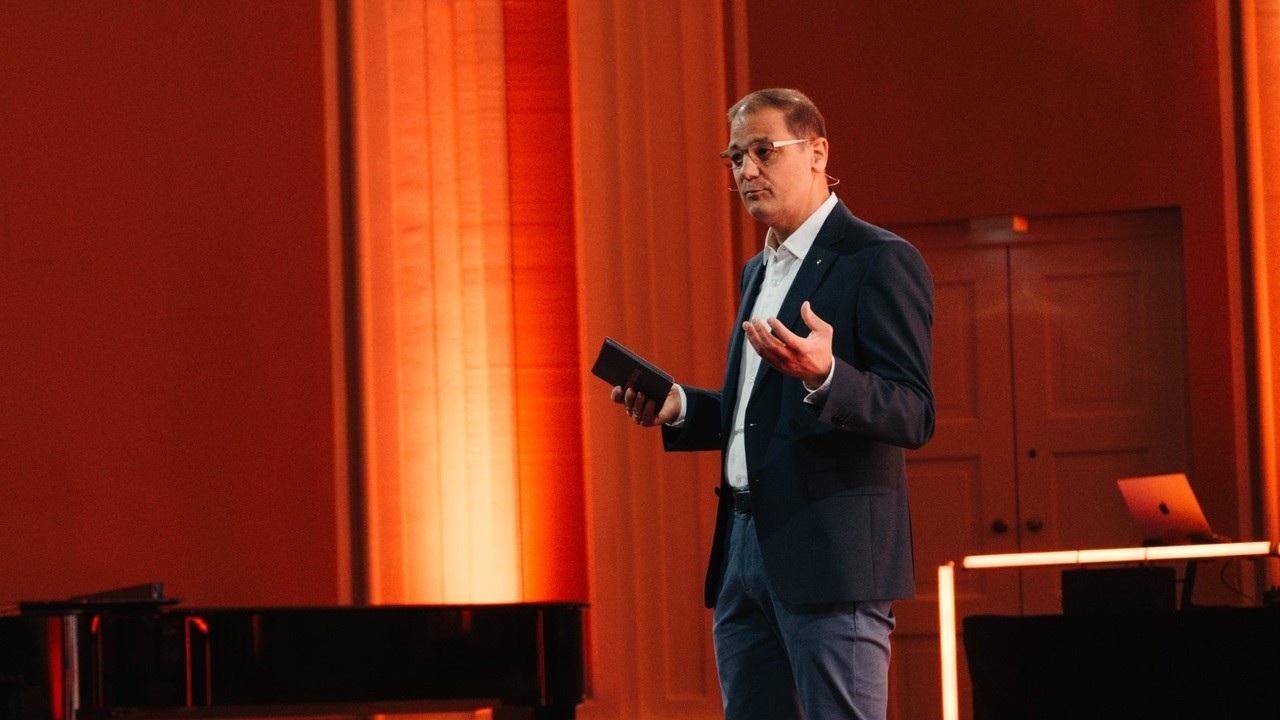
Der Supermarkt als Spiegelbild und Gestalter der Gesellschaft | Johannes Holzleitner | TEDxSalzburg
The Supermarket as a Reflection and Shaper of Society | Johannes Holzleitner | TEDxSalzburg
Title history
- Der Supermarkt als Spiegelbild und Gestalter der Gesellschaft | Johannes Holzleitner | TEDxSalzburg — observed on 20261110-1738 UTC (YouTube)
Keywords
Summary
212 words
Critical Evaluation
Value of the Information & Strength of the Argument
The value of the information lies in the unique insider perspective of a retail executive, offering real-world examples of how cultural and economic trends manifest in consumer choices. The argumentation is coherent and accessible, following a logical progression from observations to broader societal reflections. However, it relies heavily on anecdotal evidence and personal interpretation rather than systematic data or external studies. The speaker’s authority is established through his 27 years in the food retail industry, which lends credibility, but the claims about polarization and societal change are not backed by quantitative evidence. The call for interpersonal kindness is compelling and persuasive, but it remains a rhetorical appeal rather than an empirically supported solution.
Scientific Rigor, Source Quality, Title Accuracy
The talk does not cite scientific literature or external sources; the only reference is the generic TEDx link provided in the description. The content is based on the speaker’s professional experience and observations, which is appropriate for an opinion-based talk but limits its rigor. The title is well-aligned with the content: the supermarket is presented as a mirror reflecting societal trends and as a shaper through the choices it enables and signals. No commercial or advertising sequences were detected inthe talk, and the absence of specific data or citations is a notable weakness in terms of scientific rigor.
226 words
Title / Content Match
Titre accurately reflects the central thesis: the supermarket as a societal mirror and active shaper, exactly as developed in the talk.
Quality & Reliability
6/10
The talk offers insightful observations from a long career in retail, but relies on anecdotes and personal interpretation rather than empirical data or citations. The arguments are plausible and well-structured, yet their reliability is limited by the subjective nature of the evidence.
Key Moments
Markers derived by PSI from the transcript: the creator did not define chapters.
- Introduction of the three shopping baskets representing different consumer types.
- Claim that the supermarket is one of the most honest places, with alcohol and vegan trends as societal indicators.
- Discussion of societal polarization and its reflection in the product assortment.
- Growing demand for local and regional items as a response to anxiety and desire for security.
- Impact of digitalization and filter bubbles; offline as the new premium.
- Supermarket as the last common space, replacing traditional gathering places.
- Call to action: be kind and attentive in the supermarket to foster societal change.
Cited Sources
- TEDx Program — Generic link to the TEDx initiative, confirming the talk's format and platform.
Contribution & Novelties
The talk contributes an original perspective by framing the supermarket not merely as a commercial space but as a social barometer and a potential arena for rebuilding interpersonal connections. It offers a practical, everyday context for discussing abstract issues like polarization, filter bubbles, and community building. The speaker’s position as a retail executive brings a rarely heard insider view, making the observations concrete and grounded.
Pour aller plus loin:
- Filter bubble — Relevant to the discussion of algorithmic homogenization and its societal effects.
- Political polarization — Directly ties to the talk’s claims about societal division and its manifestation in consumer choices.
- Consumer behaviour — Provides academic background on how and why individuals make purchasing decisions, supporting the talk’s assumptions.
119 words
Radar Profile
The radar profile shows moderate information quantity with lower scores in quality, technical level, and reliability, indicating an engaging but evidence-light presentation. The high quantity relative to reliability suggests a talk rich in anecdotes but weak in empirical support, suitable for a general audience seeking inspiration rather than rigorous analysis.