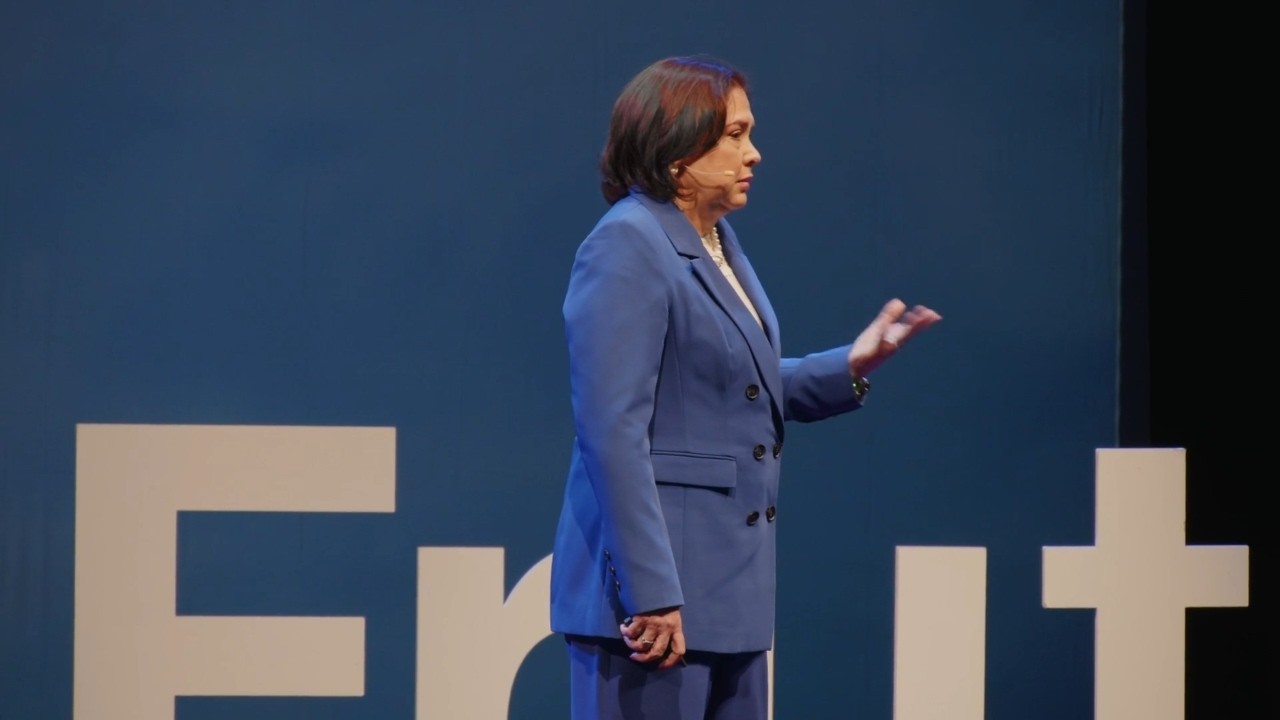
AI is Accidentally Putting Humanity on the Same Side | Gloria Maldonado | TEDxFrutillar
Title history
- AI is Accidentally Putting Humanity on the Same Side | Gloria Maldonado | TEDxFrutillar (PSI archive)
- AI is Accidentally Putting Humanity on the Same Side | Gloria Maldonado | TEDxFrutillar — observed on 20261110-1738 UTC (YouTube)
Keywords
Summary
135 words
Critical Evaluation
Value of the Information & Strength of the Argument
The value lies in the speaker’s unique perspective as a technologist and corporate leader, translating large-scale abstract risks into a tangible need for collective governance. Her argumentation is structured by concrete recent events and personal insights. She effectively contrasts past successes (pandemic cooperation) with current fragmentation. However, the argument remains high-level and lacks empirical evidence or concrete solutions, relying more on advocacy than detailed analysis.
Scientific Rigor, Source Quality, Title Accuracy
Scientifically, the talk is not rigorous: it mentions Davos, UNESCO, and the Pope’s encyclical without citations or specific references. The only source provided is the generic TEDx URL. The title accurately reflects the content, and the speaker’s credibility stems from her professional background. No comments were provided, so public reception is unknown.
132 words
Title / Content Match
The title captures the core thesis that AI paradoxically unites humanity through a shared existential threat, which is developed throughout the talk. The title is engaging and matches the content.
Quality & Reliability
6/10
The talk presents a coherent argument based on the speaker's experience and cites major global events, but lacks specific data or detailed sources. The claims are plausible but not verifiable from the video alone.
Key Moments
Markers derived by PSI from the transcript: the creator did not define chapters.
- Introduction and personal background in technology development.
- Claim that technology is no longer the most urgent problem; discusses screen addiction and loss of communication.
- Description of Davos statements on superintelligence as a risk to be governed.
- February crises: geopolitical supply chain impacts, Chilean fires and floods, and Pope's encyclical.
- Analysis of how crises feed on social fragmentation and how corporate boards treat them as technical issues.
- Reference to pandemic collaboration as an example of global unity.
- Mention of UNESCO's open science platform as another positive gesture.
- Call to exercise 'sovereignty as a species' and preserve collective decision-making.
- Final appeal: we are the first generation called to exercise human sovereignty, possibly the last with the chance.
Cited Sources
- TEDx Talks — Official TEDx page for the talk and associated content.
Contribution & Novelties
The talk offers a fresh framing: AI and other existential risks are not separate issues but share a root cause—human fragmentation and incapacity for collective decision-making. The novel concept of ‘sovereignty as a species’ challenges traditional national sovereignty and calls for a new global governance mechanism. However, it remains philosophical rather than operational, providing no specific proposals.
Pour aller plus loin :
- Open science — Relevant to UNESCO’s open science platform mentioned in the talk.
- Collective intelligence — Core to the speaker’s call for shared decision-making.
- AI governance — Discusses challenges and frameworks for governing AI, aligning with the talk’s theme.
101 words
Radar Profile
The radar profile shows moderate scores across the board, with slightly higher quality and reliability, indicating a persuasive talk with some factual grounding but limited technical depth and information density.