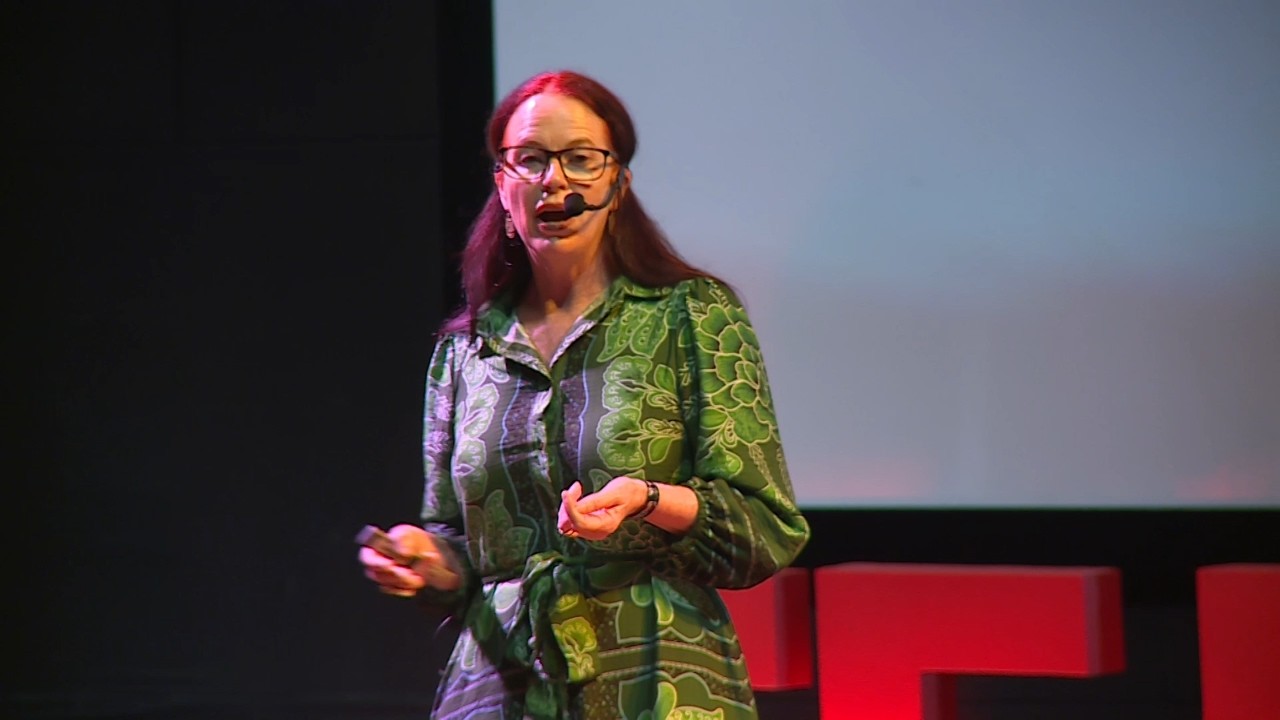
Shaping the Future | Fiona Curran | TEDxSWA Youth
Title history
- Shaping the Future | Fiona Curran | TEDxSWA Youth — observed on 20261110-1823 UTC (YouTube)
Keywords
Summary
157 words
Critical Evaluation
Value of the Information & Strength of the Argument
The talk offers a valuable reminder that the future is not a passive event but a product of human decisions. It provides an accessible philosophical framework rather than empirical evidence, relying on storytelling and a few expert references. The argumentation is logical, though somewhat general and occasionally repetitive. It effectively challenges the assumption that progress is automatic, highlighting the fragility of rights and the risk of technology outpacing wisdom. However, it lacks concrete examples or actionable steps, making it more inspirational than practical.
Scientific Rigor, Source Quality, Title Accuracy
The scientific rigor is limited: the talk cites Brian Cox by name but provides no specific works or data. The only external link in the description is to the generic TEDx page, which does not directly support the claims. There is no engagement with scholarly research or statistics. The title ‘Shaping the Future’ is suitable and accurately captures the central message. No comments were provided for analysis, so public reception could not be assessed.
172 words
Title / Content Match
The title accurately reflects the content, as the talk focuses on how human choices and values shape the shared future.
Quality & Reliability
6/10
The talk is coherent and well-structured, but relies on anecdotal evidence and general assertions rather than specific scientific data. It references Brian Cox's ideas without detailed citations, so the scientific rigor is moderate.
Key Moments
Markers derived by PSI from the transcript: the creator did not define chapters.
- Introduction to the talk and anecdote about grandmother Edith, who lived from 1901 to 2010, witnessing major changes.
- Discussion on exponential growth and how the pace of change is accelerating, with reference to climate change and AI.
- Introduction of Brian Cox's perspective on our cosmic origins, stating that we are made of stardust.
- Exploration of how technology (AI, genetic engineering) can both solve and amplify inequalities, and the need to define human values.
- Call for building scientific literacy and empathy, warning against repeating historical mistakes.
- Conclusion emphasizing that the future is not guaranteed and that our choices and actions determine what happens.
Cited Sources
- TEDx Program — The talk was delivered at a TEDx event and the description refers to the TEDx program as the context.
Contribution & Novelties
The talk contributes a reflective perspective on the future, emphasizing the interplay between technological acceleration and human values. It stands out for its accessible cosmic framing and the reminder that progress is fragile. While not offering new scientific data, it synthesizes existing ideas into a motivating narrative.
Pour aller plus loin :
- Brian Cox (physicist) — Provides background on the physicist referenced in the talk.
- Exponential growth — Explains the concept of compounding change that Curran applies to technology.
- Stellar nucleosynthesis — Describes how elements are forged in stars, aligning with the ‘stardust’ concept.
- Anthropocene — Related to the human impact on the planet and the uncertainty of the future.
110 words
Radar Profile
The radar profile shows moderate scores in information quantity and quality, with lower technicality and reliability, reflecting the talk's philosophical and motivational nature rather than a data-driven or technical exposition.