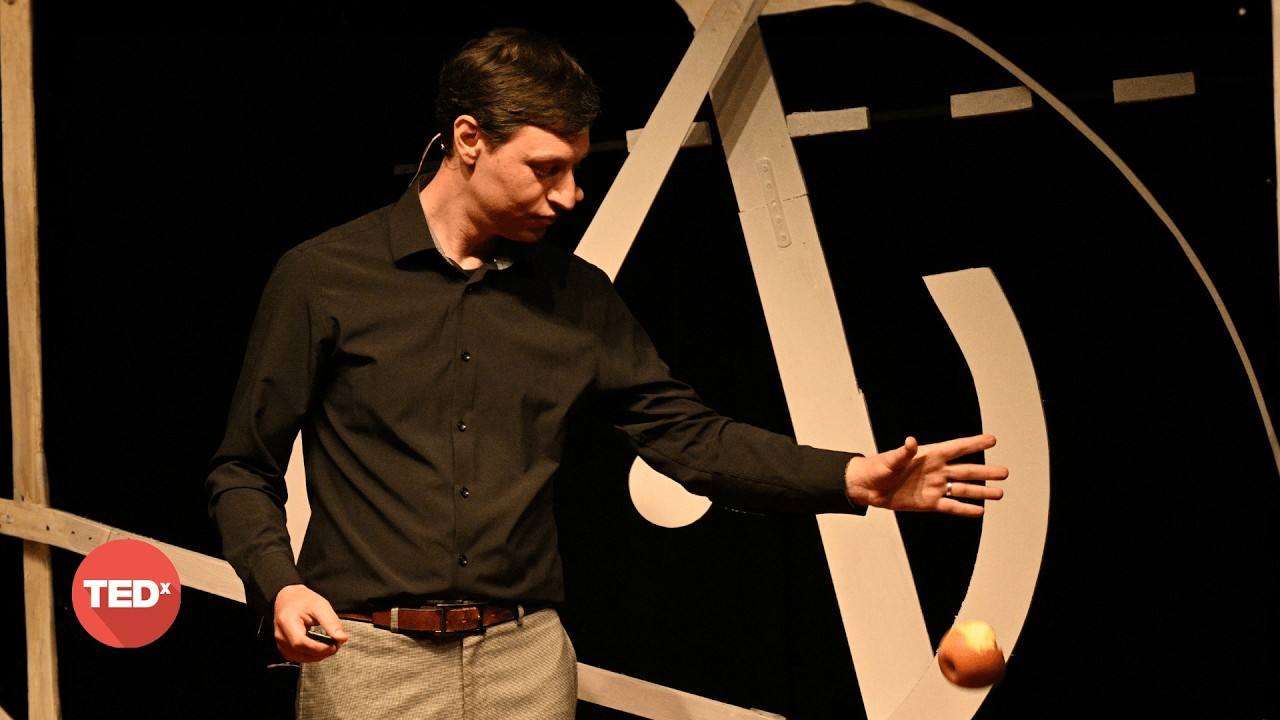
The Soft Science of Healthy Traditional Cuisine | Hart N. Feuer | TEDxKyoto University
Title history
- The Soft Science of Healthy Traditional Cuisine | Hart N. Feuer | TEDxKyoto University — observed on 20261112-0403 UTC (YouTube)
Keywords
Summary
198 words
Critical Evaluation
Value of the Information & Strength of the Argument
The value of the information lies in the speaker’s real-world experience in Cambodia, providing concrete examples of how traditional meals meet nutritional needs. The argumentation is compelling, using the apple demonstration to illustrate sensory intelligence and the historical case of nori to show global connectivity. However, the rhetoric is persuasive rather than strictly empirical, relying on anecdotes and selected examples. The claim that cuisines ‘got nutrition right’ is presented as a general principle, but the evidence is limited to a few cases and one nutritional analysis without full methodological transparency. The counterargument to modern nutritional science is well-articulated but may overlook valid improvements from scientific knowledge. Overall, the value is in raising awareness of the cultural and sensory dimension of food, but the scientific rigor of the argument is moderate.
Scientific Rigor, Source Quality, Title Accuracy
The speaker references his own fieldwork and mentions the International Center for Tropical Agriculture’s research on global crop exchange, but no direct citations or URLs are provided in the video or description beyond the general TEDx link. The title is adequately aligned with the content, summarizing the main thesis. The talk’s scientific rigor is limited by the lack of detailed cited sources and the reliance on personal interpretation. The audience response indicates appreciation, but no specific comments were provided for analysis. The absence of detailed references weakens the verifiability of the claims, though the speaker’s expertise and real-world examples add some credibility.
247 words
Title / Content Match
The title accurately reflects the central theme: the importance of traditional cuisine as a 'soft science' for health, contrasting with rigid nutritional science.
Quality & Reliability
6/10
The talk is based on the speaker's field research in Cambodia and references studies such as those by the International Center for Tropical Agriculture, but it presents mostly anecdotal evidence and persuasive arguments rather than systematic data. The nutritional analysis of Cambodian meals is mentioned but not detailed with methodology.
Key Moments
Markers derived by PSI from the transcript: the creator did not define chapters.
- The speaker introduces the anecdote about a cereal brand claiming to be healthier than a traditional Japanese breakfast.
- Discussion of the decline in life expectancy and the limits of modern nutrition science.
- Presentation of the Cambodian field research and nutritional analysis of traditional meals.
- Demonstration with an apple to illustrate sensory intelligence in evaluating food quality.
- Examples of global food exchange: sushi from Southeast Asia, tempura from Portugal, and the story of nori and Kathleen Drew Baker.
- Conclusion emphasizing the value of traditional culinary wisdom and the need to respect it.
Cited Sources
- TEDx Program — The talk is part of a TEDx event, and this link provides information about the TEDx program and other talks.
Contribution & Novelties
The talk offers a novel perspective by framing traditional cooking as a ‘soft science’ based on sensory experience and cultural inheritance, challenging the over-reliance on quantifiable nutrition metrics. It emphasizes the importance of global food exchange in shaping cuisines and argues that nutritional science should complement, not replace, traditional knowledge.
Pour aller plus loin :
- Sensory science and food quality — Exploration of how human senses are used to evaluate food, relevant to the speaker’s concept of sensory intelligence.
- International Center for Tropical Agriculture — The center’s research on global crop origins and exchanges, cited in the talk.
- Nori cultivation and Kathleen Drew Baker — Historical account of the scientist who helped revive Japan’s nori industry, illustrating cross-cultural scientific collaboration.
- Nutrient profiling of traditional diets — WHO guidance on healthy eating, can be compared with the talk’s arguments about traditional diets.
141 words
Radar Profile
The radar profile shows moderate scores across information quantity and quality, with a lower technical level, reflecting an accessible but not deeply scientific presentation. The fiabilite is average, consistent with an expert opinion talk relying on personal experience and selected examples.