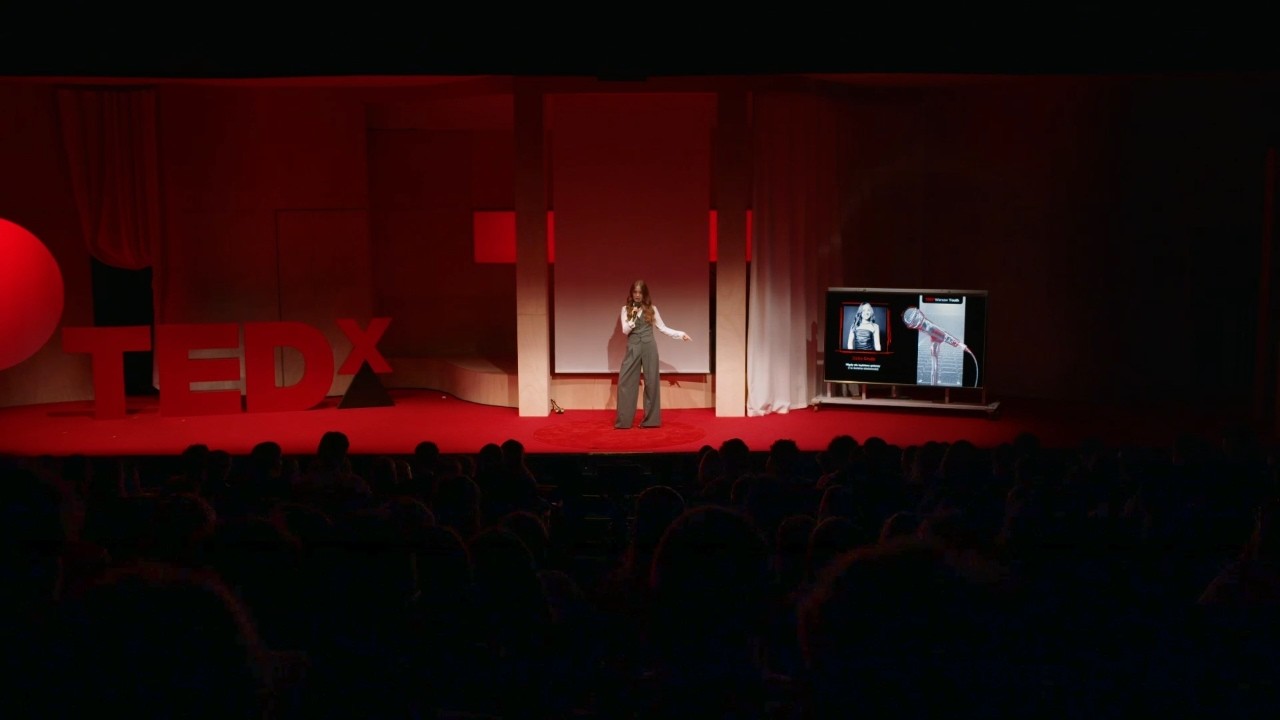
Nigdy nie będziesz gotowy i to świetna wiadomość | Daria Grula | TEDxWarsaw Youth
You Will Never Be Ready and That’s Great News | Daria Grula | TEDxWarsaw Youth
Title history
- Nigdy nie będziesz gotowy i to świetna wiadomość | Daria Grula | TEDxWarsaw Youth — observed on 20261117-0330 UTC (YouTube)
Keywords
Summary
158 words
Critical Evaluation
Value of the Information & Strength of the Argument
The value of the information lies in its practical, relatable advice for overcoming paralysis by fear. The speaker effectively uses personal stories to illustrate a universal psychological mechanism, making the content accessible and engaging. The argumentation is coherent, leading from personal experience to the introduction of Bandura’s theory, then to a concrete method (micro-steps). However, the scientific evidence is limited to a single theory reference, and the reasoning is primarily anecdotal. The talk does not provide empirical data or a systematic review, but its logical flow and the credibility of the cited theory lend it reasonable strength.
Scientific Rigor, Source Quality, Title Accuracy
The talk cites Albert Bandura’s self-efficacy theory, which is a well-established psychological framework, but does not provide specific sources or references beyond that. The link to TEDx is provided, but no academic references are shared. The title is accurate and evocative, though it slightly oversimplifies the nuance of the content. There are no comments provided to analyze. The scientific rigor is moderate: the theory is correctly described, but the talk is primarily a personal testimony rather than a research-backed presentation, lacking citations and empirical grounding.
197 words
Title / Content Match
The title accurately reflects the core message: the speaker argues that one never feels fully ready, and this is liberating. It matches the content well.
Quality & Reliability
7/10
The talk draws on personal experience and references Albert Bandura's self-efficacy theory, but relies primarily on anecdotal evidence without citing specific studies or data. The theoretical foundation is solid, yet the scientific rigor is limited by the narrative format.
Key Moments
Markers derived by PSI from the transcript: the creator did not define chapters.
- Speaker introduces the common feeling of being in a desired place but wanting to escape.
- Recounts her experience at age 16 going to a US high school alone.
- Describes gap year troubles: hospital in Bali, airport in Korea.
- Moves to Madrid for dream studies, roommate conflict.
- Key insight: we mistake fear for information; discusses Bandura's self-efficacy.
- Explains that confidence comes after action, not before.
- Introduces the 'micro-step' principle with practical examples.
- Final message: you will never be ready, but that's good news because you can start now.
Cited Sources
- TEDx Talks - Official page — Description of the TEDx event format and context for this talk.
Concurring Sources
- Self-efficacy - Wikipedia — Supports the theory mentioned in the talk.
Dissenting Sources
- None — No contradictory sources were cited or identified in the video.
Contribution & Novelties
The talk offers a fresh personal perspective on applying self-efficacy theory to everyday decision-making, particularly the ‘micro-step’ method, which is a concrete, actionable technique not commonly detailed in academic literature. It also reframes fear as a sign of significance rather than a warning, providing a shift in mindset that can be empowering. The novelty lies in the relatable integration of psychological theory with relatable anecdotes, making the concept accessible to a broad audience.
Pour aller plus loin :
- Self-efficacy - Wikipedia — Provides a comprehensive overview of Bandura’s theory and its evidence base.
- Albert Bandura - Wikipedia — Background on the psychologist and his major contributions.
- Growth mindset - Wikipedia — Related concept of fixed vs. growth mindset, offering additional perspective on overcoming challenges.
124 words
Radar Profile
The radar profile shows moderate scores across all dimensions, with information quantity and technical level slightly lower than quality and reliability. This reflects a talk that is well-delivered and theoretically grounded, but not deeply technical or data-rich, making it suitable for a general audience seeking motivational and practical advice.