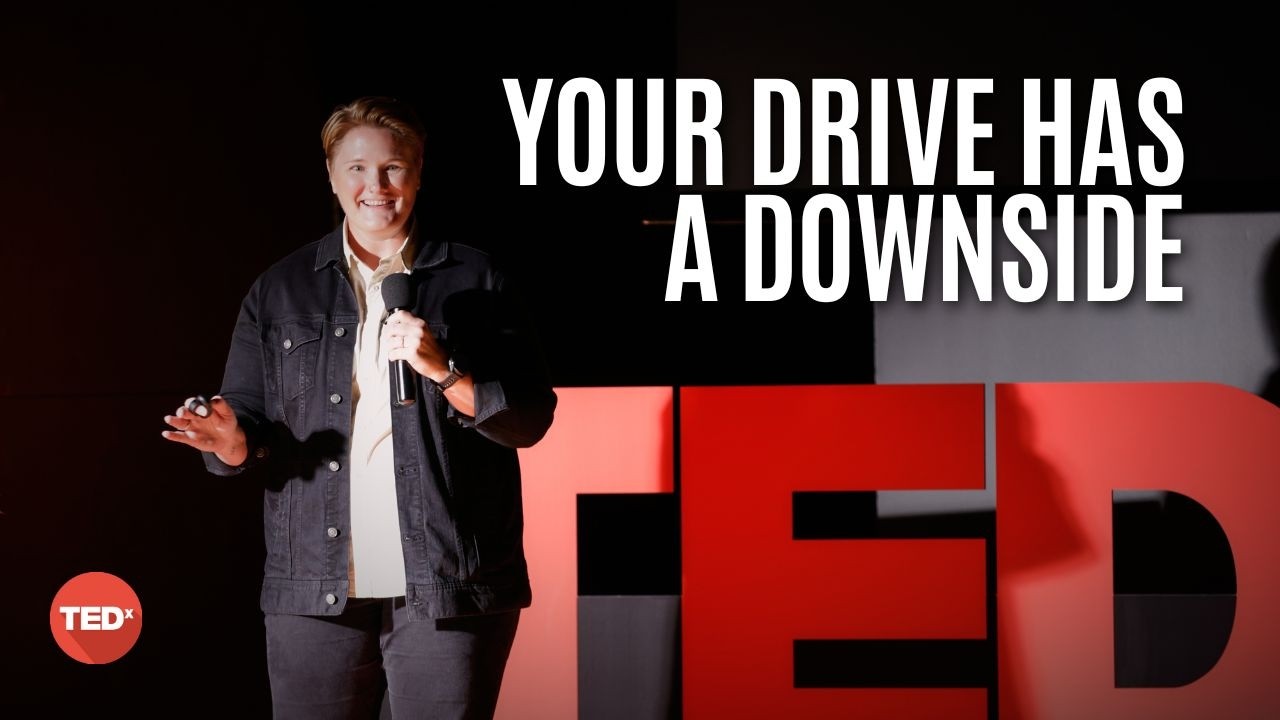
The problem with being good at hard things | Alex Gasaway | TEDxShoreline Drive
Title history
- The problem with being good at hard things | Alex Gasaway | TEDxShoreline Drive — observed on 20261112-0403 UTC (YouTube)
Keywords
Summary
167 words
Critical Evaluation
Value of the Information & Strength of the Argument
The talk offers valuable insights into the psychological pitfalls of high achievers, particularly athletes, who often struggle with identity and fulfillment after competition ends. Gasaway’s argument is coherent and grounded in personal narrative, though it relies heavily on anecdotal evidence rather than empirical research. She introduces the useful metaphor of the ’endless middle’ and provides actionable suggestions, such as explicitly defining seasons and wins. The emotional storytelling enhances persuasiveness but does not replace scientific rigor.
Scientific Rigor, Source Quality, Title Accuracy
The scientific rigor is limited; no specific studies or external references are cited in the talk. The speaker mentions her podcast and general observations but does not provide verifiable sources. The title is well-matched with the content. There are no comments provided to analyze, so public reception is not assessed.
140 words
Title / Content Match
The title accurately captures the core theme: how being good at hard things can hinder stopping. The talk elaborates with personal stories and practical advice, aligning well with the title.
Quality & Reliability
6/10
The talk is based on personal experience and interviews with nearly 100 retired athletes, but it lacks rigorous scientific references or systematic analysis. The concepts are plausible and relatable, but the evidence is anecdotal.
Key Moments
Markers derived by PSI from the transcript: the creator did not define chapters.
- Describes the post-race blues and feeling of failure after completing an Ironman.
- Recalls childhood identity built around sports.
- Explains burnout experienced as a founder and the feeling of being near collapse.
- Introduces the 'endless middle' concept from long bike rides and applies it to life.
- Discovers common struggles among retired athletes through podcast interviews.
- Proposes that structure and play are missing from high-achievers' lives.
- Suggests declaring 'seasons' and defining the win to avoid self-sabotage.
- Emphasizes measuring recovery and play, sharing the impact of tracking play sessions.
- Ends with the key question: 'What am I still trying to prove by being good at hard things?'
Cited Sources
- TEDx Program — The talk was given at a TEDx event using the TED conference format but independently organized by a local community.
Contribution & Novelties
The talk provides a relatable and practical perspective on the dark side of perseverance, particularly within high-performance cultures. It introduces the ’endless middle’ as a framework for recognizing circular effort and offers a concrete method for redefining success by setting seasons and measuring play. While not scientifically novel, the synthesis of athletic identity, burnout, and intentional structure may resonate with many professionals.
Pour aller plus loin :
- Athlete burnout — Useful for understanding the term in sports psychology.
- Psychological resilience — Explores how persistence can sometimes backfire.
- Flow (psychology) — Related to finding enjoyment in activities, connecting to the play aspect she mentions.
103 words
Radar Profile
The radar profile shows moderate scores across information quantity and quality, with a lower level of technical depth and reliability. This reflects the personal, anecdotal nature of the talk, which is strong on narrative and relatable insights but lacks rigorous empirical backing.