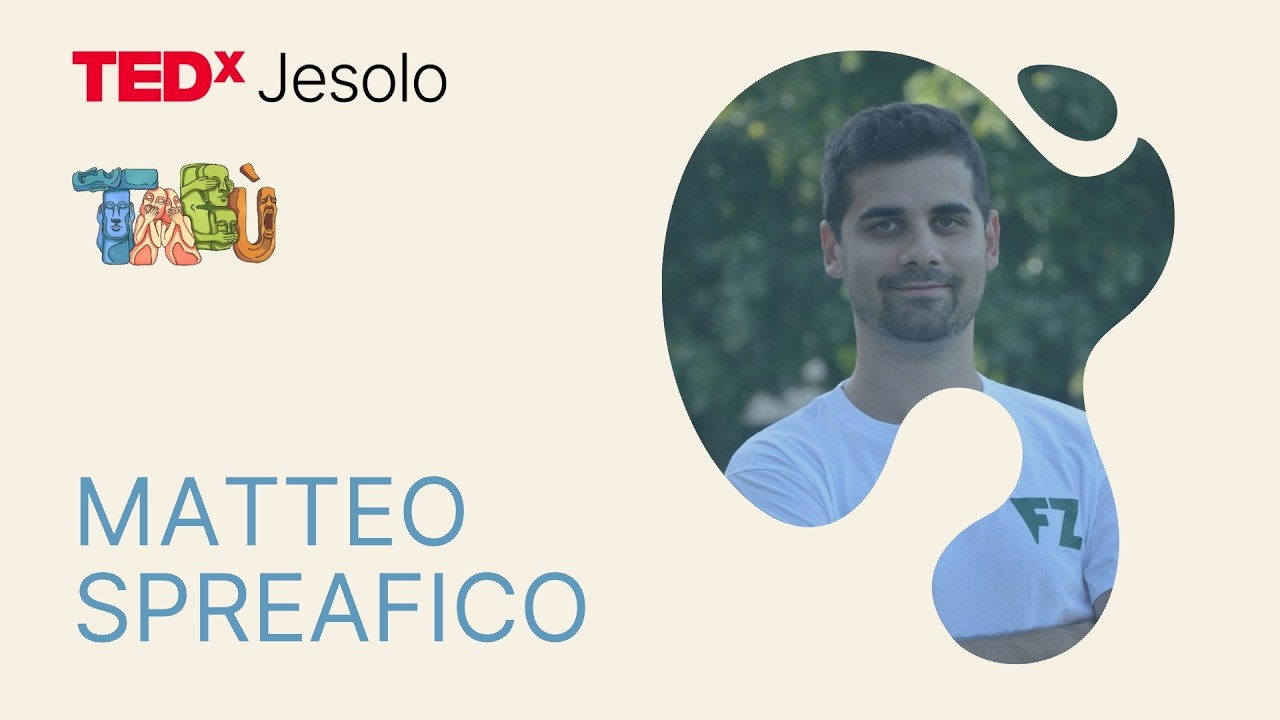
Perché i soldi sono ancora il nostro tabù più grande? | Matteo Spreafico | TEDxJesolo
Why is money still our biggest taboo? | Matteo Spreafico | TEDxJesolo
Keywords
Summary
164 words
Critical Evaluation
Value of the Information & Strength of the Argument
The value of the information lies in the compelling personal narrative and the clear articulation of a common psychological barrier. Spreafico’s arguments are largely anecdotal, drawing on stories like Francesco and Sofia to illustrate the fear and embarrassment surrounding financial matters. The logic is sound: the silence around money leads to ignorance, which entrenches the taboo. However, the claims are rarely supported by statistical evidence or references, weakening the empirical foundation. The argument about AI is insightful, highlighting the risk of confirmation bias. Overall, the reasoning is coherent and persuasive for a general audience, but it lacks the rigor of a scientific or data-driven analysis.
Scientific Rigor, Source Quality, Title Accuracy
The scientific rigor is limited, as the talk provides no citations, statistics, or verifiable sources. The description only links to the TEDx website, offering no additional references. The title accurately matches the content, which is a subjective and motivational perspective on financial education. There is no explicit evaluation of source quality because no sources are used, relying instead on personal testimony. The absence of hard data means the talk should be seen as an opinion piece rather than a factual report.
201 words
Title / Content Match
The title accurately reflects the content: the talk explores why money remains a taboo subject and its consequences.
Quality & Reliability
6/10
Talk by an entrepreneur in financial education, based on personal experience and anecdotal evidence. No rigorous data or citations are provided, but the message is consistent with known barriers to financial literacy.
Key Moments
Markers derived by PSI from the transcript: the creator did not define chapters.
- Opening interactive exercise: audience stands up if they have financial commitments or dreams requiring money.
- Introduction of the theme: money affects everyone, yet it is rarely discussed.
- The founding of Finanz app and the realization that people seek happiness, not just money.
- Etymology of 'finanza' from Latin 'finis' meaning both end and goal, framing money as a means, not an end.
- Critique of the education system: Italy, until 2024, was the only developed country without financial education in schools.
- Personal confession: spreafico admits he taught but didn't practice, illustrating the taboo's internalization.
- The digital trap: excessive information online, but no personalized answers; AI can provide confirmation, not truth.
- Conclusion: talking about money is the cure; financial education is about self-awareness and confidence.
Cited Sources
- TEDx Program — The talk is part of TEDx events, independently organized; the description provides this link as the only external reference.
Contribution & Novelties
The talk adds a motivational and psychological perspective to the often technical topic of financial education, emphasizing the emotional barriers rather than the mechanical aspects. It introduces the concept of ‘silence as a symptom and speaking as the cure,’ which is a refreshing angle.
Pour aller plus loin :
- Financial literacy - Wikipedia — Provides a broad overview of financial literacy research and its importance.
- Behavioral finance - Wikipedia — Explores psychological influences on financial behavior, relevant to the taboos discussed.
- Financial education in Italy - OECD — The OECD works on financial education policies, including in Italy, offering data and reports.
102 words
Radar Profile
The radar profile shows moderate scores in information quantity and quality, with a low technical level due to the anecdotal nature. Reliability is average, reflecting the lack of citations but the plausibility of the message.