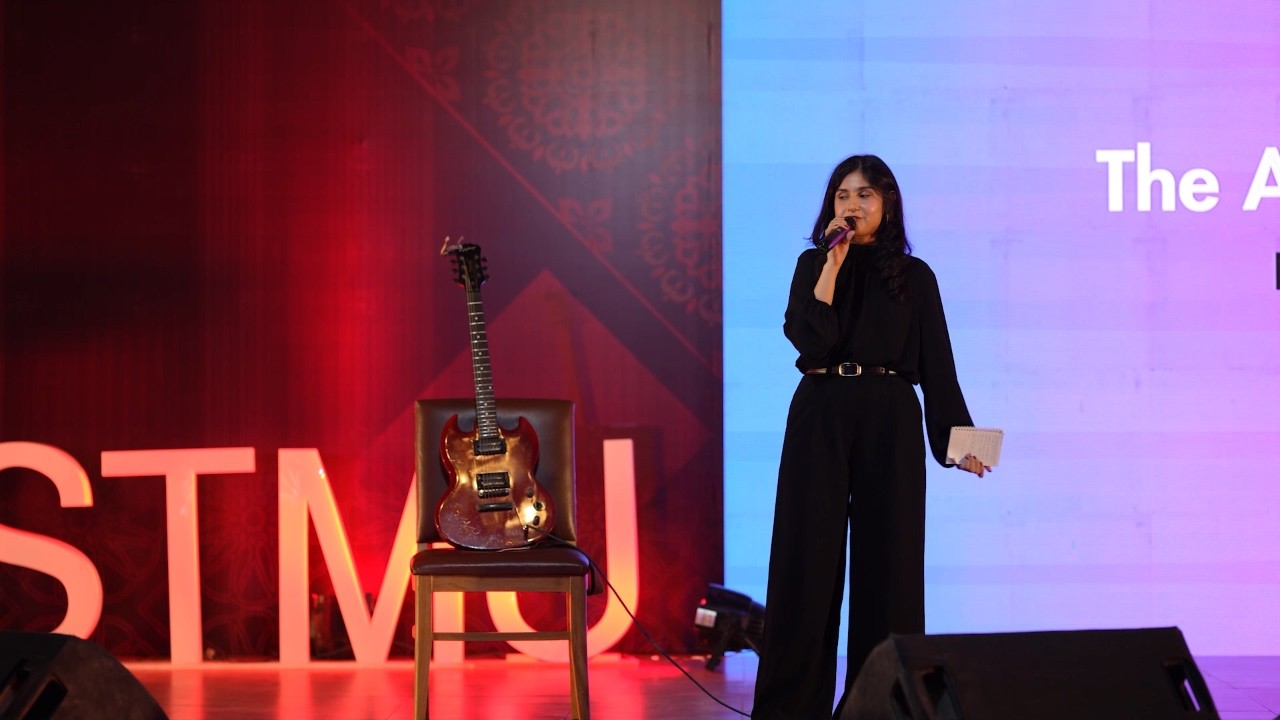
The Audacity to Be Bad | Maleaha Mansoor | TEDxSTMU
Keywords
Summary
172 words
Critical Evaluation
Value of the Information & Strength of the Argument
The value of this talk lies in its compelling personal narrative and the relatable reframing of failure as a necessary part of creative growth. Mansoor effectively argues that the cultural pressure for instant success is detrimental, and she supports this with tangible examples from her own life and the career trajectory of the band Kavish. The reference to Ira Glass’s ‘gap’ theory provides a recognizable framework, though it is not deeply elaborated. The argument is coherent and emotionally resonant, building logically from personal anecdotes to broader societal critique. The inclusion of an original song at the end powerfully reinforces the message, demonstrating the courage to be imperfect in a public forum. However, the talk lacks empirical data or systematic analysis, relying primarily on anecdotal evidence and personal conviction.
Scientific Rigor, Source Quality, Title Accuracy
The talk does not cite formal academic sources; its main reference is to Ira Glass’s concept, mentioned without a specific citation. The only source provided in the description is the general TEDx website. The title ‘The Audacity to Be Bad’ accurately encapsulates the central thesis, and the content consistently aligns with it. The talk is a personal reflection rather than a research-based presentation, which limits its scientific rigor but does not detract from its authenticity. The description provides context about the speaker’s background, and the performance of the song adds a unique element that reinforces the message. Overall, the title and content are well-matched, and the talk stands as an inspirational, though not rigorously sourced, contribution.
259 words
Title / Content Match
The title accurately reflects the central theme: the courage to be bad at something and the value of embracing imperfection.
Quality & Reliability
7/10
The talk is a personal narrative on creativity and imperfection, referencing the concept of 'the gap' by Ira Glass. It is not based on empirical research but offers valuable insights. The argument is coherent, though subjective.
Key Moments
Markers derived by PSI from the transcript: the creator did not define chapters.
- Introduction and opening anecdote about being bad at guitar.
- Discussion of early poems and the beginning of musical journey.
- Introduction of Ira Glass's concept of 'the gap' between taste and ability.
- Critique of societal obsession with instant success and the fear of failure.
- Mention of the band Kavish and their six-year journey to their first album.
- Personal reflections on resilience and belonging in creative spaces.
- Introduction to the original song 'A Note' and its emotional meaning.
- Performance of the song, which continues until the closing remarks.
Cited Sources
- TEDx Talks — This talk was given at a TEDx event using the TED conference format but independently organized by a local community.
Contribution & Novelties
The talk’s original contribution is the personal perspective on the importance of being bad at creative endeavors, culminating in a performance of an original song that embodies the themes. It challenges the culture of instant success and encourages embracing the long, unrewarded middle of mastery.
Pour aller plus loin:
- Ira Glass on storytelling — The concept of ’the gap’ between taste and ability, which is central to the talk.
- The War of Art — A book about overcoming resistance in creative work, relevant to the theme of persistence.
- Art & Fear — A book on the challenges of making art, aligning with the idea of embracing imperfection.
- Growth Mindset by Carol Dweck — The psychological concept of viewing abilities as developable, complementing the talk’s message.
125 words
Radar Profile
The radar profile shows higher scores in quality and fiabilité relative to quantity and technique, indicating a talk that is credible in its message but not dense in data or highly technical. The overall note of 4 reflects a compelling but subjective presentation.