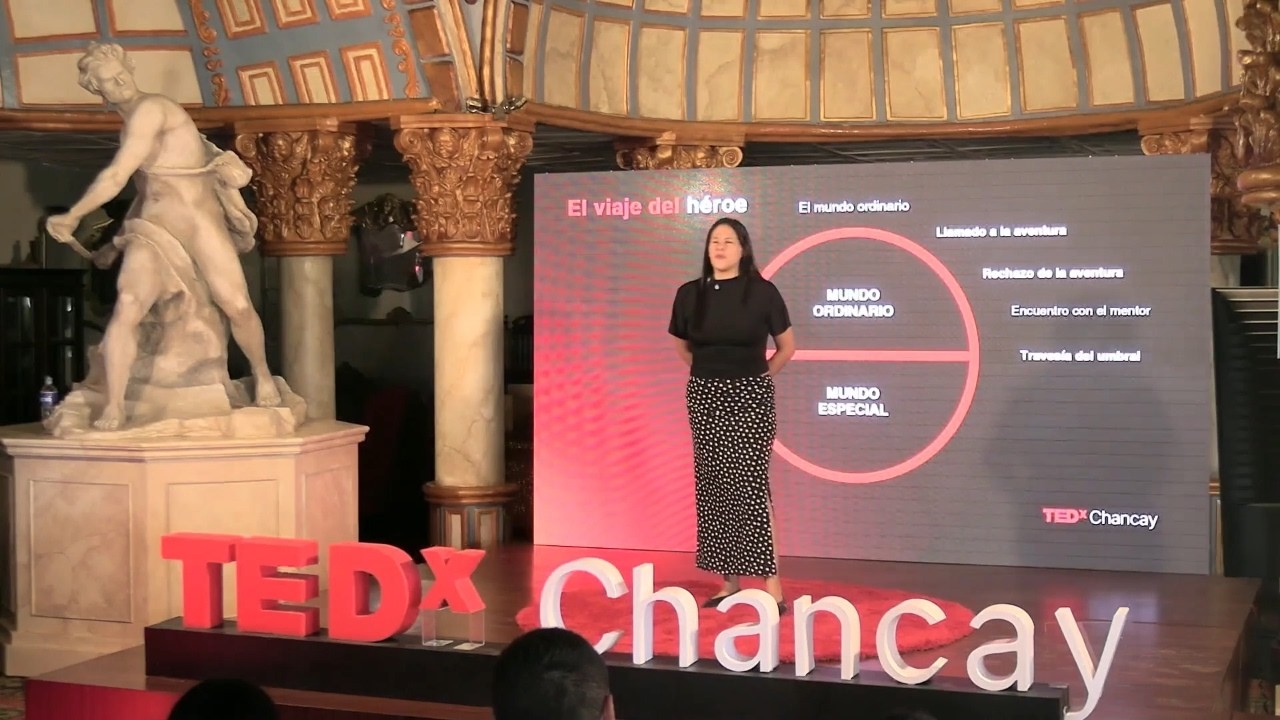
El héroe que no estabas buscando | Delia Choquehuanca Gil | TEDxChancay
The hero you weren't looking for | Delia Choquehuanca Gil | TEDxChancay
Title history
- El héroe que no estabas buscando | Delia Choquehuanca Gil | TEDxChancay — observed on 20261106-0126 UTC (YouTube)
Keywords
Summary
134 words
Critical Evaluation
Value of the Information & Strength of the Argument
The value of this talk lies in its accessible reinterpretation of a classic narrative structure as a tool for personal introspection. The argument is built methodically: it introduces the Hero’s Journey framework, maps it onto concrete personal examples (the call to adventure, the refusal, crossing the threshold), and culminates in a powerful redefinition of heroism centered on vulnerability. The speaker’s use of her own emotional confrontation with public speaking and leadership serves as a compelling, authentic illustration. However, the argumentation is primarily anecdotal and does not engage with psychological research or counterarguments, making it persuasive on an emotional level but thin on analytical rigor.
Scientific Rigor, Source Quality, Title Accuracy
The talk correctly attributes the Hero’s Journey structure to Joseph Campbell (1949), and the content aligns well with the foundational concepts of the monomyth, such as the two worlds and the deepest cave. The only external link provided is the generic TEDx platform page, and no specific academic or empirical sources are cited. The title accurately match the content, as the entire talk is dedicated to redefining the hero archetype. The internal narrative coherence is strong, and the speaker’s professional background in marketing and mindfulness adds credibility to her personal testimony, though it does not substitute for scientific data. No audience comments were provided for analysis.
225 words
Title / Content Match
The title accurately reflects the core argument of the talk, which is the redefinition of heroism as vulnerability and self-acceptance rather than conventional perfection.
Quality & Reliability
6/10
The talk relies on a well-established narrative framework (Joseph Campbell's monomyth) but lacks empirical evidence or citations beyond personal anecdote. The reasoning is coherent and grounded in the speaker's lived experience, yet the scientific rigor is moderate due to the absence of external sources.
Key Moments
Markers derived by PSI from the transcript: the creator did not define chapters.
- Introduction to the universal search for purpose and the offer of a structural framework.
- Explanation of Joseph Campbell's 1949 Hero's Journey structure and its applications.
- The call to adventure and the refusal of the call, illustrated by personal doubts.
- Crossing the threshold and entering the special world of the unknown.
- The deep cavern: confronting one's unconscious and greatest fears.
- Redefining heroism as continuous vulnerability and self-acceptance, inviting the audience to embrace their own journey.
Cited Sources
- TEDx Program — Official TEDx platform that hosted this talk as an independent local event.
- The Hero with a Thousand Faces — Book by Joseph Campbell referenced as the origin of the Hero's Journey structure.
- Hero's journey — The core narrative framework discussed throughout the talk.
Contribution & Novelties
The talk offers a fresh, personal reinterpretation of the mythic Hero’s Journey, shifting the focus from external achievements to internal vulnerability and self-acceptance. It applies a well-known narrative structure to everyday psychological growth, making heroism accessible to all. The innovation lies not in the framework itself, but in the direct application to the speaker’s lived experience, illustrating that true bravery is persisting without abandoning oneself.
Pour aller plus loin :
- The Hero’s Journey — Core concept discussed; essential for understanding the narrative structure.
- Joseph Campbell — The mythologist behind the monomyth.
- Brené Brown - The Power of Vulnerability — Directly relates to the central theme of vulnerability as strength.
109 words
Radar Profile
The scores reflect a talk that is high on narrative quality and emotional appeal but relatively low on technical complexity and raw information density. The 'quality' score slightly exceeds the 'quantity' and 'global reliability', indicating a coherent, well-structured presentation that relies more on personal testimony than on verifiable data.