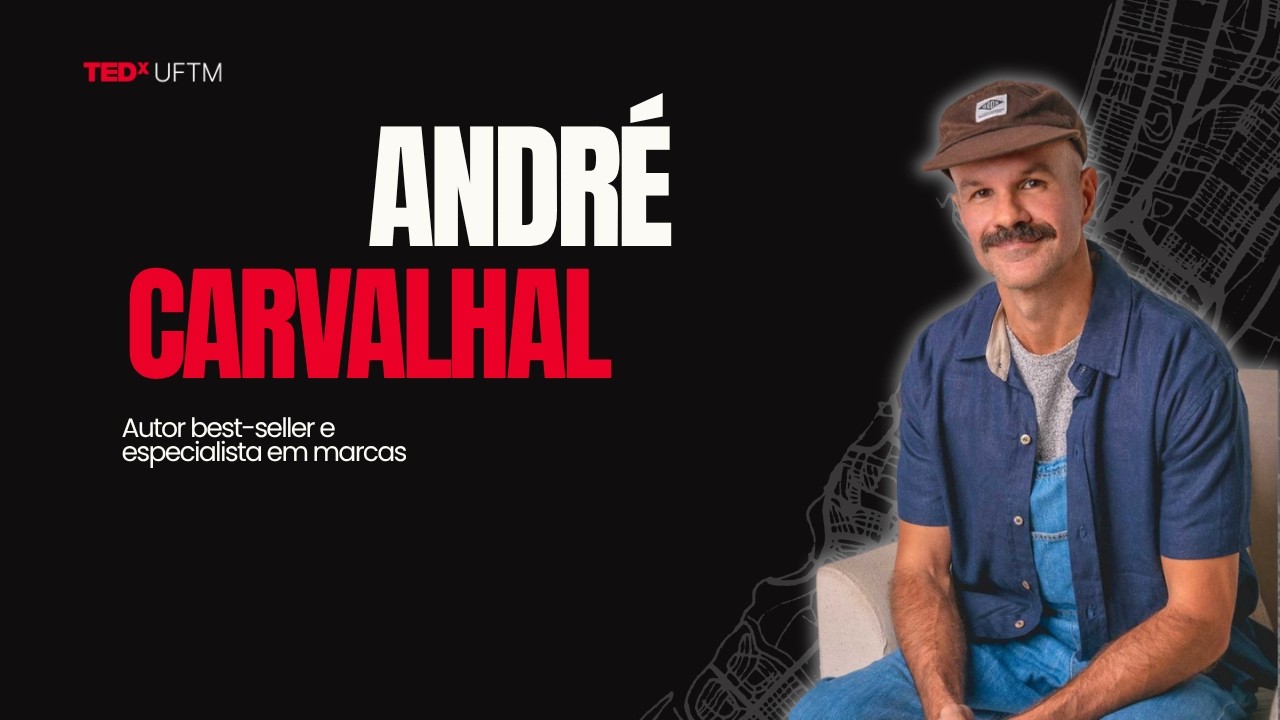
O Futuro Chegou. E agora? | André Carvalhal | TEDxUFTM
The Future is Here. What Now? | André Carvalhal | TEDxUFTM
Keywords
Summary
226 words
Critical Evaluation
Value of the Information & Strength of the Argument
The talk offers significant value in shifting the sustainability discourse from a purely material focus to include personal and cultural dimensions, a perspective that is often overlooked. The argument about algorithmic curation eroding serendipity and self-determination is compelling and resonates with contemporary concerns about digital well-being. However, the reasoning relies heavily on anecdotal evidence and personal opinions rather than empirical data. Some claims, such as the environmental overdraft, are presented without precise dates or sources, weakening the argument’s robustness. The connection between AI delegation and cognitive decline is asserted but not backed by scientific studies, although it aligns with emerging research. Overall, the argumentation is thought-provoking and coherent but lacks the rigor of evidence-based analysis.
Scientific Rigor, Source Quality, Title Accuracy
Scientific rigor is moderate at best. The speaker mentions concepts like Earth Overshoot Day and quotes thinkers like Ailton Krenak and Mateus Sodré, but provides no detailed references or citations. The description offers only the generic TEDx page link, making it impossible to verify specific claims through the provided sources. The talk is more of an expert opinion piece than a research-backed presentation. The title ‘O Futuro Chegou. E agora?’ is broad and somewhat vague, but it accurately captures the reflective and forward-looking nature of the content. The adéquation with the content is adequate, as the talk indeed explores how to navigate an accelerated future. The lack of references and reliance on personal experience weaken its scientific credibility but do not nullify its value as a perspective piece.
258 words
Title / Content Match
The title accurately reflects the talk's theme: discussing the arrival of an accelerated future and reflecting on personal and societal responses. It is broad but fitting.
Quality & Reliability
5/10
The talk is a personal reflection and opinion-based narrative without empirical data or rigorous sourcing. Several claims (e.g., Earth Overshoot Day, cognitive impacts of AI) are mentioned without precise references or numbers, though they align with known concepts. The speaker is a recognized author and sustainability consultant, but the content is anecdotal and philosophical rather than scientifically rigorous.
Key Moments
Markers derived by PSI from the transcript: the creator did not define chapters.
- Speaker introduces himself and reflects on his first TEDx talk 10 years ago and the theme of change.
- Discusses the outdated three-pillar sustainability model and introduces cultural and personal sustainability.
- Mentions the environmental overdraft and Earth Overshoot Day, suggesting we need 1.5 planets.
- Develops the idea that internal voids are bigger than the ozone layer, linking personal dissatisfaction to overconsumption.
- Uses the film 'September Issue' to explain how trends are manufactured, and criticizes algorithmic influence.
- Introduces the concept of 'brain care' over skincare, warning about cognitive decline from AI delegation.
- Discusses aging and loneliness, separating realistic challenges from romanticized views of old age.
- Argues that 'the new luxury' will be human elements like intuition, delight, and real connections, while AI will dominate for others.
- Talks about the 'purpose hangover' and the need for authenticity and uniqueness.
- Concludes by connecting his childhood dream of being an astronaut to his current role as an explorer of human experiences.
Cited Sources
- TEDx Conference — The talk is part of the TEDx program, and the description provides this link to learn more about TEDx events.
Concurring Sources
- Earth Overshoot Day — The speaker references the concept of environmental overdraft, which aligns with the global data on resource consumption.
Dissenting Sources
- No explicit discordant sources provided — The talk does not directly reference any sources that contradict its claims, but some assertions, such as the cognitive effects of AI, lack supporting scientific evidence.
Contribution & Novelties
The talk contributes a novel perspective by broadening the concept of sustainability to include personal and cultural dimensions, arguing that existential voids drive overconsumption. It also highlights the emerging importance of ‘brain care’ and the risk of cognitive delegation to AI, a timely topic. The author’s call for preserving serendipity and human uniqueness offers a counterpoint to algorithmic curation.
Pour aller plus loin :
- Earth Overshoot Day — Directly related to the speaker’s mention of environmental overdraft and resource depletion.
- Attention economy — Relevant to the discussion of social media algorithms and their impact on human behavior.
- Digital detox — Pertains to the speaker’s advocacy for reducing screen time and fostering real-world experiences.
- Gilbert Simondon’s concept of individuation — Provides a philosophical background to the idea of human uniqueness and identity formation in a technological world.
136 words
Radar Profile
The radar profile shows moderate scores across all dimensions, indicating a balanced but not outstanding performance. Strength lies in the quality of information and its thought-provoking nature, while technical level and reliability are lower due to the lack of rigorous data. This reflects a conversational and opinion-driven talk rather than a research-based presentation.