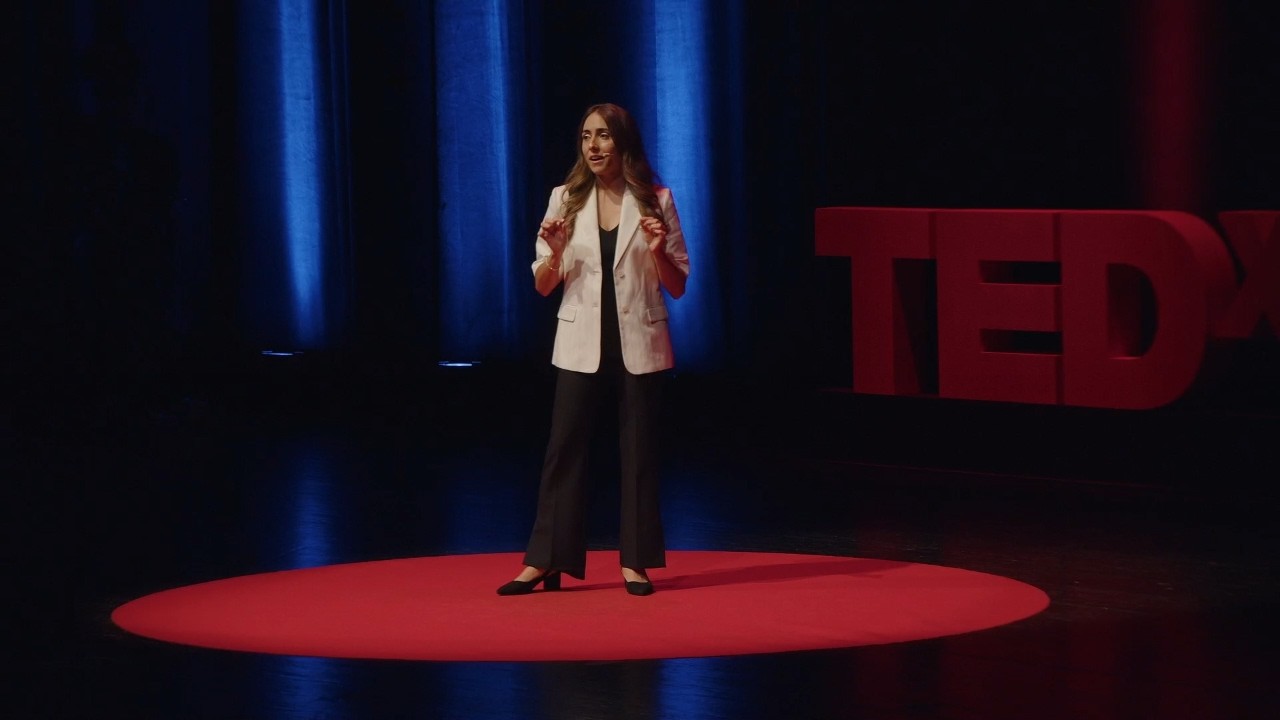
Are we too comfortable to be happy and healthy? | Beatriz Subtil | TEDxLisboa
Keywords
Summary
140 words
Critical Evaluation
Value of the Information & Strength of the Argument
The talk offers a compelling narrative that connects evolutionary biology with modern health issues. The argument is straightforward: our ancestral bodies are mismatched with modern comfort, leading to chronic disease, but we can reintroduce manageable stress to rebuild resilience. The presentation is engaging and uses analogies like the ‘stone age operating system’ to make concepts accessible. However, the argument relies on generalised claims and does not cite specific studies. The ‘good stress’ concept is presented as evidence-based, but without clear references. The talk’s value lies in raising awareness rather than providing rigorous evidence. The argumentation is persuasive but not deeply supported by data.
Scientific Rigor, Source Quality, Title Accuracy
The talk is scientifically imprecise in places, and TED has added a disclaimer noting that it falls outside content guidelines and that several claims warrant further investigation. The speaker references ‘studies’ but does not name them. The title appropriately captures the talk’s theme. The speaker’s background lends some credibility, but the talk lacks specific citations. The adequacy between title and content is good, as the talk directly addresses the question. The presence of the disclaimer significantly affects the reliability score.
198 words
Title / Content Match
The title accurately reflects the central question of the talk, and the content directly addresses it.
Quality & Reliability
5/10
The talk presents a personal perspective with some scientific references, but TED has flagged it as outside content guidelines with claims needing further investigation. The speaker has a PhD but the content is partly speculative.
Key Moments
Markers derived by PSI from the transcript: the creator did not define chapters.
- Introduction of the central feeling of being tired but wired.
- Speaker describes her scientific background and shift from lab to science communication.
- Presentation of modern lifestyle paradox and rising lifestyle diseases.
- Introduction of evolutionary mismatch concept.
- Discussion on nervous system as the conductor and effects of constant comfort.
- Explaining that pleasure was short-lived and effort was essential to reward.
- Introduction of four habits: movement, breath, environment, connection.
- Conclusion: health is a regulated nervous system and daily choices matter.
Cited Sources
- TEDx Content Guidelines — Referenced in the description as guidelines for TEDx organizers.
- TEDx Program — Mentioned as the platform for this talk.
Contribution & Novelties
The talk synthesizes existing concepts into practical advice. It doesn’t present new research but frames evolutionary mismatch and nervous system regulation in a relatable way. The practical habits (movement, breath, environment, connection) are presented as actionable steps for improving health, which is a useful takeaway for the general public.
Pour aller plus loin :
- Evolutionary mismatch — Wikipedia article providing background on the concept.
- Neuroplasticity — The brain’s ability to adapt, basis for the talk’s recommendations.
- Hormesis — Concept of beneficial stress, relevant to ‘good stress’.
- Vagus nerve — Related to breath effects on the nervous system.
97 words
Radar Profile
The radar chart shows moderate scores in information quantity but lower scores in quality and reliability, reflecting the talk's engaging yet scientifically unsubstantiated content.