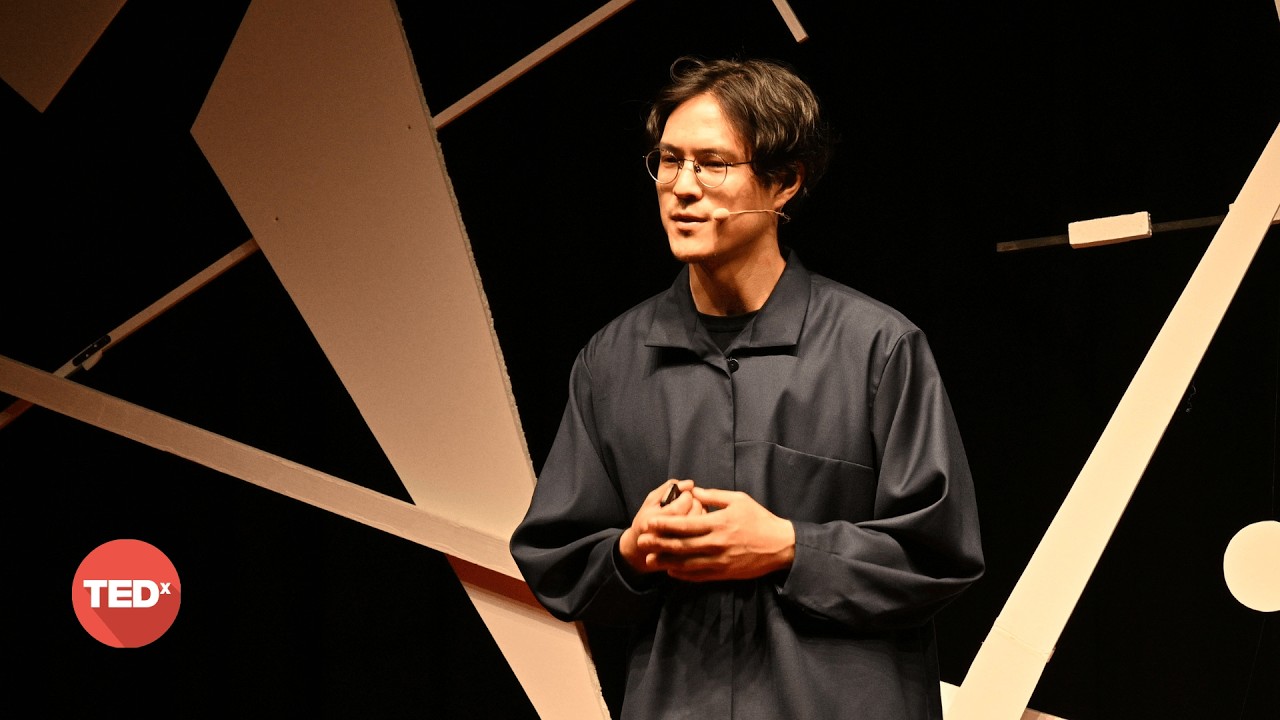
What I Found Standing in a River | Troy Yoshimoto | TEDxKyoto University
Title history
- What I Found Standing in a River | Troy Yoshimoto | TEDxKyoto University (PSI archive)
- What I Found Standing in a River | Troy Yoshimoto | TEDxKyoto University — observed on 20261110-1621 UTC (YouTube)
Keywords
Summary
189 words
Critical Evaluation
Value of the Information & Strength of the Argument
The talk’s value lies in its authentic personal narrative and its effective use of concrete examples (the river, ceramic tests) to illustrate abstract concepts like attention and process-oriented creativity. The argument is built logically: from a personal crisis to a nature-based epiphany, then to a material exploration that embodies the philosophy. The speaker’s dual background as industrial designer and artist strengthens credibility. However, the scientific elements are brief and not deeply explained, and the leap from river observation to life philosophy is an anecdotal analogy rather than a rigorous demonstration. The emotional resonance is strong, but the intellectual framework is thin.
Scientific Rigor, Source Quality, Title Accuracy
The talk references no external scientific literature; it relies on the speaker’s experience and a brief mention of iron oxidation in celadon. The only source provided in the description is the TEDx official page, which is appropriate for the format. There is no evidence of fabricated data; the narrative is presented as personal testimony. The title is faithful to the content, capturing the central metaphor. No audience comments were provided, so no community reception could be analyzed.
193 words
Title / Content Match
The title is intriguing and directly relates to the central metaphor of the river and the discoveries made there, matching the content well.
Quality & Reliability
6/10
The talk is a personal narrative mixing experience, craft knowledge, and a few scientific references (iron oxidation in celadon). It is honest and well articulated, but not empirically rigorous; it serves as an inspirational perspective rather than a technical treatise.
Key Moments
Markers derived by PSI from the transcript: the creator did not define chapters.
- Yoshimoto receives news of his grandfather’s illness and reflects on guilt and regret.
- He describes his fast-paced industrial design career and the priority on outcomes over process.
- He goes fly fishing for the first time and experiences the river’s vastness and order.
- He discovers red sludge from the river and shows a video of turning it into a ceramic glaze, explaining celadon chemistry.
- He discusses slip as an in-between state and introduces architectural tiles dipped in the river.
- He concludes by linking attention to his grandfather’s death and urging the audience to pay attention.
Cited Sources
- TEDx Talks — Official TEDx page providing context for the talk format and speaker.
Contribution & Novelties
The talk offers a refreshing perspective on creativity by merging industrial design practice with ceramic art and drawing direct inspiration from natural materials. Its original contribution is the concrete example of using river-derived iron oxide to create a glaze, demonstrating how paying attention to a mundane substance can yield artistic meaning. The metaphor of the river as a teacher for process-oriented living is compelling, and the advice to ’leave a margin’ for play is practically actionable.
Pour aller plus loin :
- Wabi-sabi (Wikipedia) — Mention of Japanese aesthetics that value imperfection and process, aligning with Yoshimoto’s philosophy.
- Ceramic glaze (Wikipedia) — Background on glaze chemistry, relevant to his celadon exploration.
- Mindfulness (Wikipedia) — The practice of paying attention to the present moment, central to his message.
126 words
Radar Profile
The radar shows moderate scores across all dimensions, with quality and reliability slightly higher than quantitative information and technical depth. This indicates a well-communicated personal story with limited scientific content, fitting an expert opinion talk.