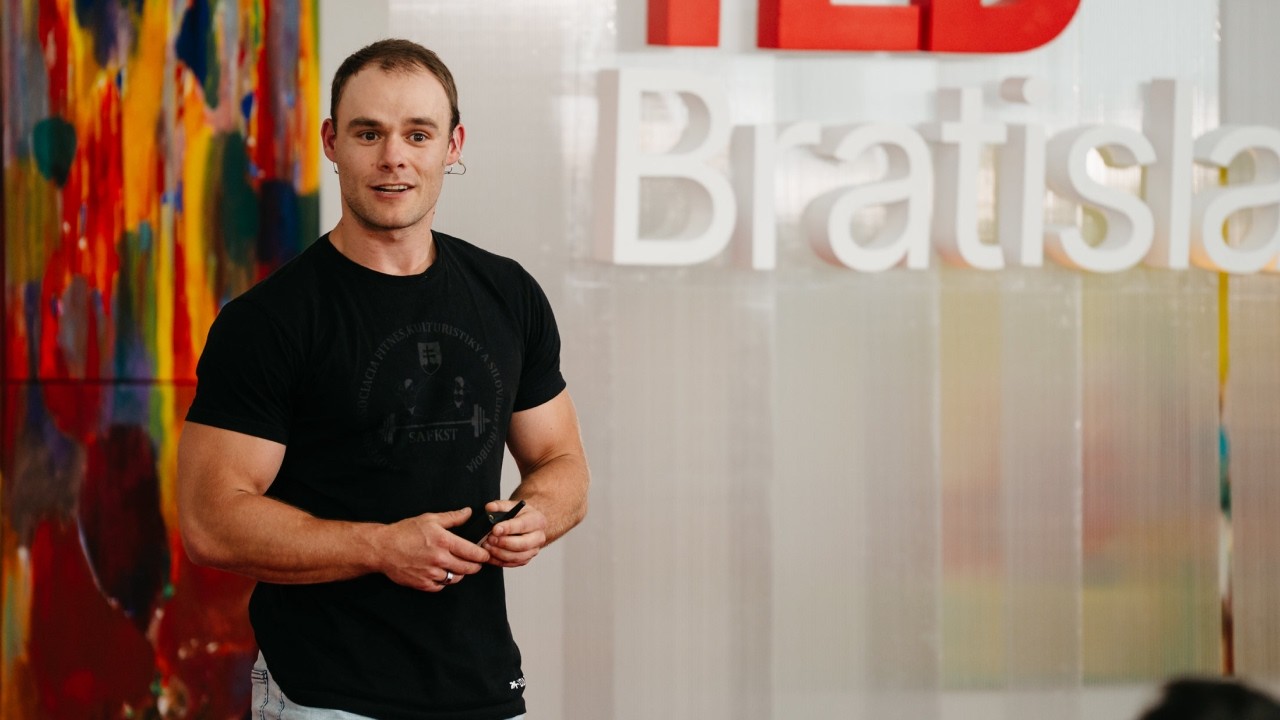
Ako ti môže stojka zmeniť život | Michal Barbier | TEDxBratislava
How an erection can change your life | Michal Barbier | TEDxBratislava
Title history
- Ako ti môže stojka zmeniť život | Michal Barbier | TEDxBratislava — observed on 20261114-0303 UTC (YouTube)
Keywords
Summary
121 words
Critical Evaluation
Value of the Information & Strength of the Argument
The value lies in translating years of athletic experience into accessible, motivational guidance. The argumentation is structured around personal anecdote, then broadens to physiological necessity, and culminates in actionable standards. While not scientifically rigorous, it resonates through relatable examples and a clear logical flow, effectively persuading the audience to integrate small daily movements. The speaker’s credibility as a champion and coach reinforces his practical recommendations.
Scientific Rigor, Source Quality, Title Accuracy
The talk presents no formal scientific references, relying solely on personal experience and common knowledge like Maslow’s hierarchy. The TEDx platform itself is the only external source mentioned. The title is a rhetorical hook rather than a precise description, making it catchy but not misleading. The content covers far more than handstands, addressing overall movement philosophy. No comments were provided to assess public reception.
144 words
Title / Content Match
The title is metaphorical: the handstand serves as a symbol for body mastery and daily movement practice, which the talk thoroughly addresses.
Quality & Reliability
6/10
The talk is grounded in personal experience and practical coaching but lacks empirical scientific citations; it offers valuable anecdotal guidance rather than evidence-based rigorous claims.
Key Moments
Markers derived by PSI from the transcript: the creator did not define chapters.
- Discovery of parkour as a child and the start of systematic movement training.
- Introduction to hand balancing and the principle of progressive skill development.
- Discussion of movement as a physiological need and the decline of activity with age.
- Practical advice on integrating 'movement snacks' and finding a supportive community.
Cited Sources
- TEDx Program — Talks are independently organized under the TEDx format; this is the only reference provided in the video description.
Contribution & Novelties
The talk offers a refreshing perspective by framing movement as a daily nutritional need rather than a chore, and by presenting concrete, achievable strength and flexibility standards for the average person. Its originality lies in the synthesis of athletic excellence with a holistic view of the body.
Pour aller plus loin :
- Calisthenics — Discusses bodyweight training, closely related to the core practices described.
- Hand balance — Explores the specific skill of hand balancing, a central theme of the talk.
- Parkour — Provides background on the discipline that inspired the speaker’s initial passion.
- Maslow’s hierarchy of needs — The theoretical framework the speaker references to position movement among basic needs.
110 words
Radar Profile
The radar profile shows moderate scores across all axes, with slightly higher values for quantity and quality of information reflecting the talk's rich practical content, while technicality and reliability remain moderate due to the absence of scientific citations. The overall shape suggests a motivational and accessible resource rather than a rigorous scientific contribution.