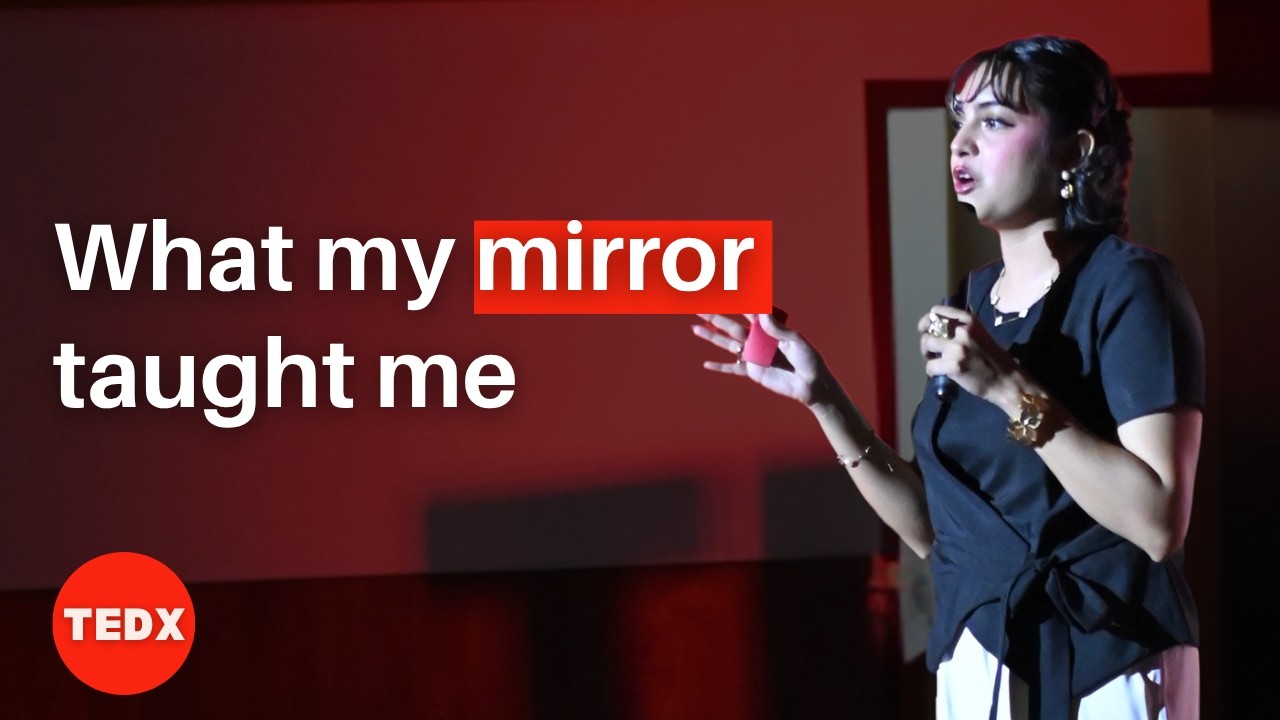
Brushing the strokes of recovery: What my mirror taught me | Rabika Tahir | TEDxDUHS
Title history
- Brushing the strokes of recovery: What my mirror taught me | Rabika Tahir | TEDxDUHS — observed on 20261117-1743 UTC (YouTube)
Keywords
Summary
162 words
Critical Evaluation
Value of the Information & Strength of the Argument
The value of this talk lies in its authentic, first-person perspective on cancer and identity crisis, which can inspire and provide emotional support to others facing similar situations. The argumentation is coherent and structured around personal narratives and reflections, using rhetorical questions and concrete examples. However, it lacks empirical evidence or references to scientific literature, making the claims primarily anecdotal. The emotional appeal is strong, but the reasoning relies more on subjective experience than on systematic analysis. Despite this, the speaker effectively conveys the psychological importance of self-acceptance and creative expression during recovery, which is a valuable message even if not scientifically substantiated.
Scientific Rigor, Source Quality, Title Accuracy
The talk does not cite any external sources; the only mention is a general reference to TEDx as an organizational context. The statistics, such as the claim about breast cancer prevalence in Pakistan, are presented without citing specific studies. The speaker’s expertise is experiential, providing insight into the reality of a cancer patient, but the scientific rigor is limited. The title ‘Brushing the strokes of recovery: What my mirror taught me’ poetically encapsulates the central theme of rebuilding identity through self-reflection, which aligns well with the content. No comments were provided, so no public sentiment analysis is possible.
216 words
Title / Content Match
The title metaphorically reflects the content about rebuilding identity and self-image during recovery, which is well represented in the talk.
Quality & Reliability
5/10
The talk is a personal testimony with some medical facts and statistics, but lacks citations and is largely anecdotal. Reliability is moderate for scientific standards.
Key Moments
Markers derived by PSI from the transcript: the creator did not define chapters.
- Speaker introduces the concept of identity and how it is often shaped by societal expectations.
- Describes her healthy life at age 24 and the sudden diagnosis of blood cancer (DLBCL).
- Explains the challenges of cancer treatment, the cycle of chemo, and the uncertainty of outcomes.
- Presents her four personal choices for coping with the illness, including accepting life and controlling attitude.
- Details the making of a video before chemotherapy to document her appearance before losing hair.
- Shares the positive impact of posting the video and receiving messages from those affected by cancer.
Cited Sources
- TEDx Program Official Website — Referenced in video description as the organizational body for independently organized TEDx events.
Contribution & Novelties
Her talk offers a deeply personal perspective on navigating cancer and rebuilding identity, highlighting the role of creative self-expression in recovery. While not presenting new medical discoveries, it emphasizes psychological resilience and the importance of self-acceptance.
Pour aller plus loin :
- Diffuse large B-cell lymphoma — Background on the specific cancer type she had.
- Cancer survivorship — Overview of long-term effects and experiences of cancer survivors.
- Art therapy — Explores the use of art for psychological healing, related to her creative expression.
- Psychooncology — Field studying psychological aspects of cancer.
90 words
Radar Profile
The radar shows moderate scores in quality and quantity of information, with a lower technical level, indicating a talk that is relatively accessible but not deeply technical or data-heavy.