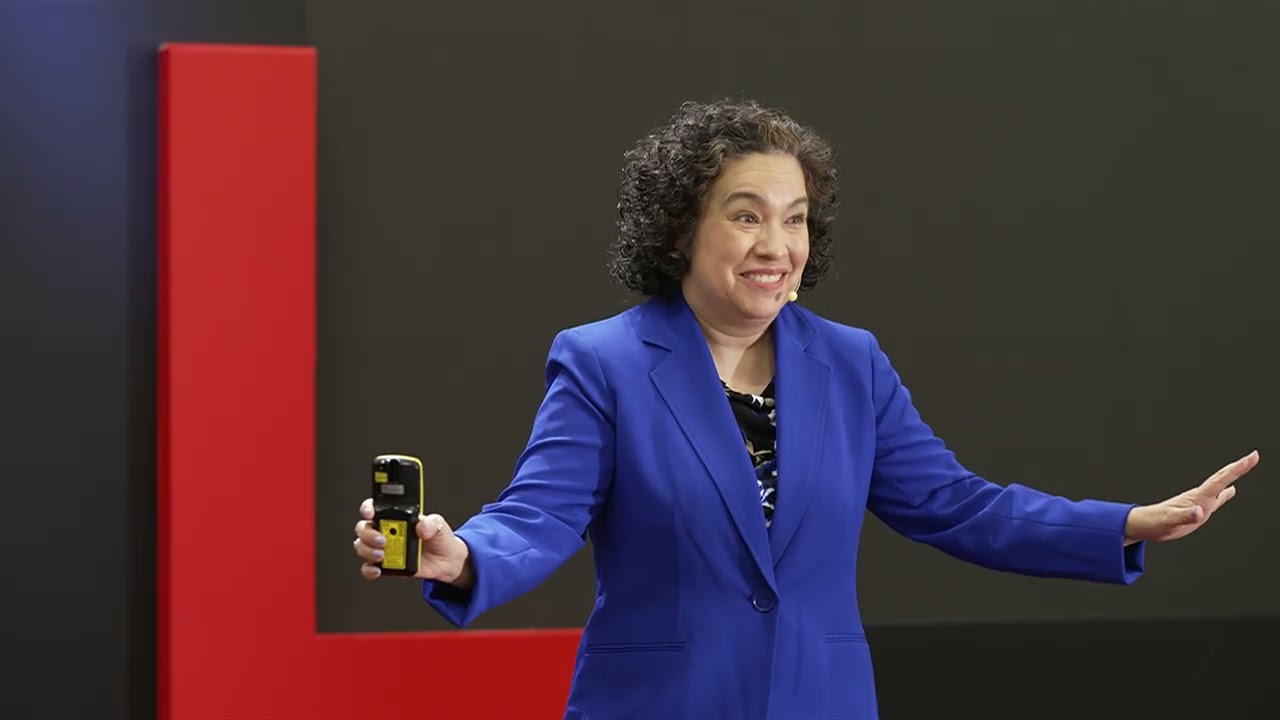
Love Lies On the Border | Giana Hesterberg | TEDxBrownsville
Keywords
Summary
157 words
Critical Evaluation
Value of the Information & Strength of the Argument
The talk provides a valuable introduction to limerence, a concept that is often misunderstood or undiagnosed. The speaker effectively combines her own story with scientific research, making the information accessible and emotionally engaging. The argumentation is strong in that it connects personal experience to broader psychological theories, such as attachment theory and brain imaging studies. However, the reliance on personal testimony, while compelling, limits the generalizability. The speaker also offers practical coping strategies, which adds practical value. Overall, the talk succeeds in raising awareness and providing a framework for understanding limerence, though the scientific depth is moderate.
Scientific Rigor, Source Quality, Title Accuracy
The talk references credible sources including Dorothy Tennov’s work on limerence, Helen Fisher’s brain research, and Psychology Today, but these are not formally cited with specific studies or papers. The scientific rigor is acceptable for a TEDx presentation, but lacks detailed verification. The title is metaphorical and may require the viewer to engage with the content to fully understand its meaning. The talk is well-structured and coherent, but the sources are not explicitly listed beyond mentions. The adequacy between title and content is good once the concept is explained, but the title itself is not self-explanatory.
208 words
Title / Content Match
The title poetically captures the theme of limerence as a borderline between love and obsession, but is vague without context.
Quality & Reliability
7/10
The talk combines personal narrative with references to established researchers such as Dorothy Tennov and Helen Fisher, and mentions Psychology Today. However, the scientific evidence is presented without rigorous detail, and the personal nature may introduce bias. The information is generally accurate but not deeply technical.
Key Moments
Markers derived by PSI from the transcript: the creator did not define chapters.
- Introduction: Personal story of falling in love with another man without an affair.
- Discovery of the term 'limerence' and its definition by Dorothy Tennov.
- Personal coping methods: no-contact, grounding techniques, thought stopping.
- Three ways limerence ends: rejection, consummation, or transference.
- Brain study by Helen Fisher showing limerence activates addiction pathways.
- Attachment theory: anxious and avoidant styles and their role in limerence.
- Healing through EMDR and self-care, meeting own needs, and conclusion.
Cited Sources
- TEDx official site — Description link providing information about TEDx events.
- Limerence - Wikipedia — Definition and background of the concept discussed in the talk.
- Dorothy Tennov - Wikipedia — Psychologist who coined the term limerence.
- Helen Fisher (anthropologist) - Wikipedia — Researcher whose brain study on love and addiction is referenced.
- Eye movement desensitization and reprocessing - Wikipedia — Therapy technique mentioned in the talk for trauma processing.
Contribution & Novelties
The talk offers a unique personal perspective on limerence, destigmatizing a condition that is often confused with infidelity or ordinary romantic feelings. It bridges personal experience with scientific research, providing a holistic view that is both relatable and informative. The emphasis on attachment theory and the analogy to addiction adds depth to the understanding of limerence. The speaker’s counseling background adds credibility, and her story of recovery offers hope and practical advice.
Pour aller plus loin :
- Limerence - Wikipedia — Foundational concept and overview.
- Attachment theory - Wikipedia — Explains the anxious/avoidant dynamics central to the talk.
- Helen Fisher’s research on love - Wikipedia — Details on the neural basis of romantic love.
- EMDR therapy - Wikipedia — Information on the therapeutic technique used in the speaker’s recovery.
129 words
Radar Profile
The radar profile shows a balanced but moderately high rating across information quantity, quality, technical level, and reliability. This reflects a talk that is informative and scientifically grounded, yet not overly specialized. The high quantity of information is complemented by decent quality and reliability, with a moderate technical level suitable for a general audience.