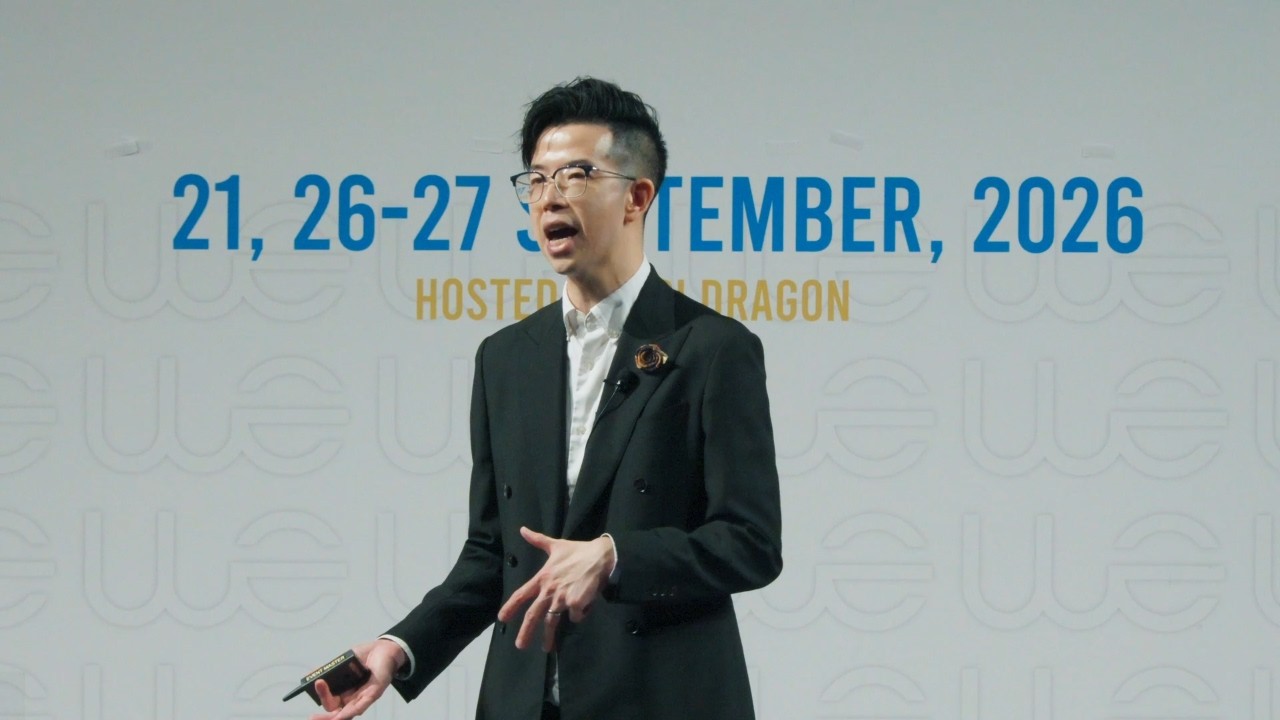
用故事,推動永續 | Alan Li | TEDxJCIHK
Using Stories to Drive Sustainability | Alan Li | TEDxJCIHK
Keywords
Summary
172 words
Critical Evaluation
Value of the Information & Strength of the Argument
The talk’s value lies in its compelling use of narrative to illustrate a well-known but under-communicated point: that emotional engagement is often more persuasive than statistical evidence. Li’s argumentation is built on two vivid, relatable anecdotes that effectively demonstrate the limits of data and the power of personal struggle. While he does not provide empirical proof that storytelling outperforms data in driving behavior change, his reasoning is coherent and grounded in common human experience. The rhetorical structure—opening with a question, weaving stories, and closing with a call to action—is effective and engaging, though the scientific underpinning is weak.
Scientific Rigor, Source Quality, Title Accuracy
The talk references the United Nations Sustainable Development Goals but provides no specific sources, citations, or datasets. The only link in the description points to the TEDx program itself, not to specific research. The title matches the content well: the talk is entirely about using stories to promote sustainability. No comments were provided for analysis, so no public reception data is available.
175 words
Title / Content Match
The title accurately reflects the content: the speaker argues that storytelling, not data, is essential for driving sustainability awareness and action. The talk delivers on this premise.
Quality & Reliability
6/10
The talk relies on anecdotal evidence and rhetorical persuasion rather than empirical research. It references the UN SDGs but provides no specific data or citations. The two personal stories (organic farmer, ocean conservation) are compelling but unverifiable. The scientific basis is limited, though the message aligns with existing communication research.
Key Moments
Markers derived by PSI from the transcript: the creator did not define chapters.
- Opening question: what do you cherish and hope not to lose in the next decade?
- Introduction to the idea that data shows urgency but stories drive action.
- Story of the organic farmer facing the dilemma of using chemicals during extreme rain.
- Story about ocean conservation and the risk of promoting a hope spot.
- Proposal of the key question to elicit personal sustainability stories.
- Conclusion: encouraging the audience to tell stories instead of quoting data.
Cited Sources
- TEDx Program — Official TEDx website, cited as the general framework for the talk.
- UN Sustainable Development Goals — Mentioned in the talk as the 17 goals that provide data, but which need stories to inspire action.
Concurring Sources
- UN Sustainable Development Goals — Supports the existence of global sustainability data and targets that the talk references.
- TEDx Program — Provides the platform for this talk, which is part of the broader TEDx series on ideas worth spreading.
Contribution & Novelties
The talk offers a practical and emotional perspective on sustainability communication, emphasizing the superiority of personal narratives over cold data. While the idea is not revolutionary, the speaker presents it through accessible real-life examples in a Hong Kong context, which adds a unique local angle. The core contribution is the actionable question to ask communities to unlock stories, making the message immediately applicable.
Pour aller plus loin :
- Storytelling — Foundational concept; the talk relies on this age-old practice to convey sustainability.
- Transportation theory — Psychological theory explaining how narratives immerse audiences and increase persuasion, relevant to the talk’s claim.
- Environmental communication — Field that studies how information about the environment is conveyed; aligns with the talk’s focus on communication strategies.
121 words
Radar Profile
The radar profile shows moderate scores across information quantity and reliability, a low technical level, and a slightly higher quality of information relative to quantity. This reflects a presentation that is engaging and well-structured but not data-dense or highly technical, fitting a TEDx format that prioritizes accessibility and emotional appeal over rigorous scientific detail.