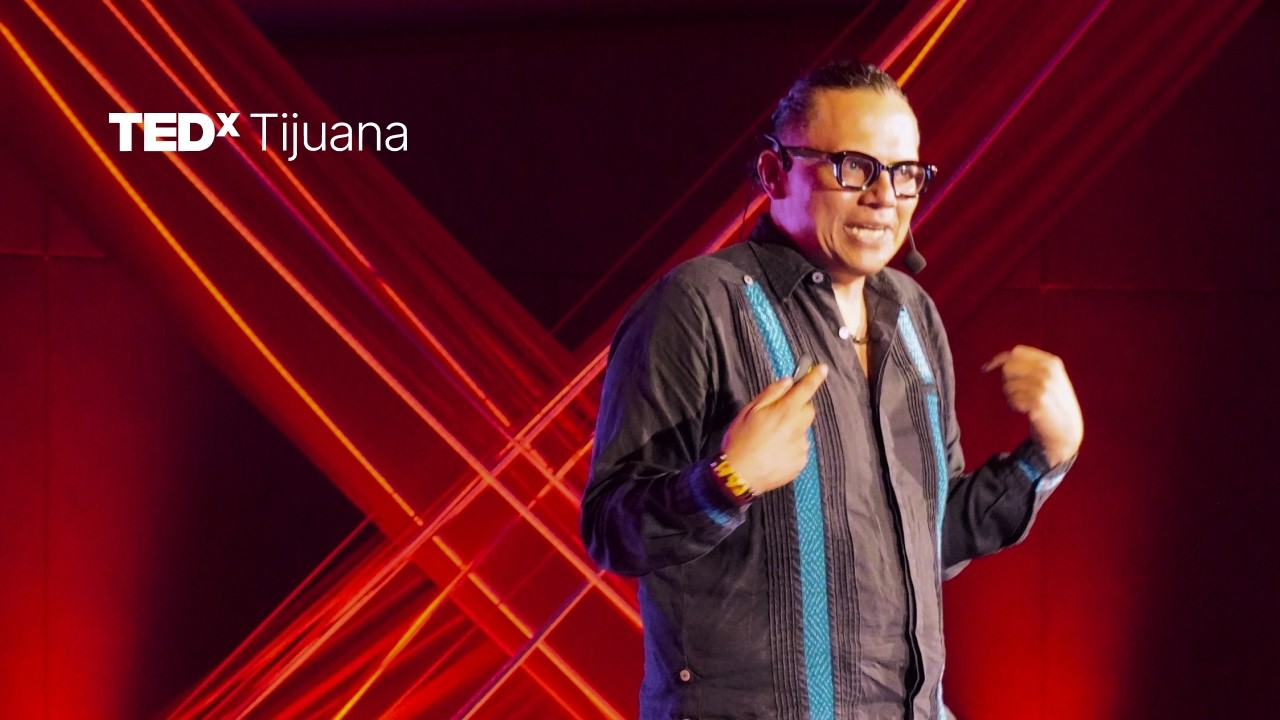
De laboratorios vivientes a los laboratorios para la vida pluriversal | Maximino Matus | TEDxTijuana
From living laboratories to laboratories for pluriversal life | Maximino Matus | TEDxTijuana
Keywords
Summary
196 words
Critical Evaluation
Value of the Information & Strength of the Argument
The presentation offers valuable insights into alternative technology paradigms, especially the concept of cosmotechnics and the critique of universalist design assumptions. However, the arguments are largely anecdotal, relying on personal stories and cultural myths rather than empirical data or references. The speaker’s proposal for indigenous laboratories is compelling but lacks concrete evidence of outcomes or comparative effectiveness. The argumentation is passionate and persuasive in a TED-style context, but it does not provide a rigorous scientific framework for evaluating the proposed approach.
Scientific Rigor, Source Quality, Title Accuracy
The talk references no specific scientific studies or external sources aside from general concepts. The title accurately describes the evolution from living labs to pluriversal labs, aligning well with the content. The speaker mentions a book on underground philosophies and the influence of Buddhist thought, but does not name it or provide a reference. The lack of citations weakens the scientific rigor, but for a TEDx talk, it is acceptable. There is no direct evaluation of public comments as none were provided.
178 words
Title / Content Match
The title accurately reflects the content about transforming living labs to encompass pluriversal and indigenous worldviews.
Quality & Reliability
6/10
Discourse based on personal experience and cultural insights, lacks formal citations but offers a coherent and original perspective.
Key Moments
Markers derived by PSI from the transcript: the creator did not define chapters.
Cited Sources
- TEDx Program — Official TEDx program information
Contribution & Novelties
This talk advances the idea of indigenous living labs, merging modern technology with ancestral knowledge. It gives a concrete example of creating bioleather from grape waste, illustrating a zero-waste, community-based innovation model.
Pour aller plus loin :
- Cosmotechnics — Concept by Yuk Hui, relevant to the talk’s core argument.
- Pluriverse — Notion of diverse worlds coexisting, central to the pluriversal lab idea.
- Living lab — Methodology for user-driven innovation in real-life contexts.
72 words
Radar Profile
The radar shows a well-rounded talk with moderate information density and reliability, but lower technical depth, suggesting an accessible and idea-driven presentation.