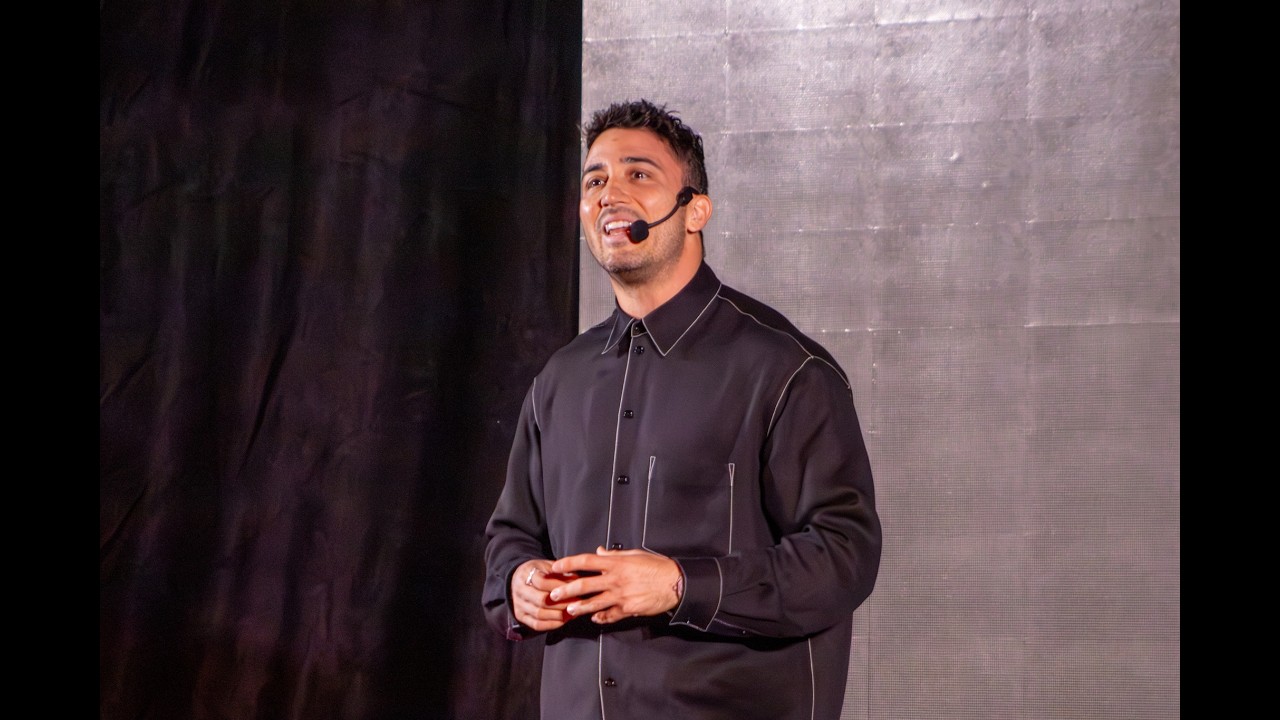
El que quiere, puede | Fernando Rodriguez | TEDxTec de Mty Sonora Norte
Where there's a will, there's a way | Fernando Rodriguez | TEDxTec de Mty Sonora Norte
Keywords
Summary
270 words
Critical Evaluation
Value of the Information & Strength of the Argument
The informative value is essentially narrative and axiological rather than factual: the viewer leaves with a vivid picture of what free dental brigades look like in north-western Mexico and with a vocabulary of motives (service, listening, balance) but with no epidemiological, clinical or organisational data. There are no numbers on the number of patients treated, no description of the trailer’s equipment or sterilisation constraints, no discussion of the regulatory or ethical framework of mobile care, and no follow-up on outcomes. The medical episode is recounted entirely from the patient’s point of view — ’the heart vibrates and generates a clot’ — which is evocative but not an explanation. The argumentation is inductive and anecdotal: each vignette is used as a lesson, and the lessons are then gathered into a three-part framework (decision, purpose, construction) that is announced late in the talk and asserted rather than demonstrated. The reasoning is coherent within its own register, and a few passages are genuinely reflective, notably the admission that he keeps a chair colour known to induce anxiety because he liked it, and the remark that deciding on a career should be tested against the reality of doing it for twenty-four hours. But the causal claims are unsupported: the ischaemic attack is attributed to overwork without any discussion of the actual risk factors, and the benefits of the tour are asserted rather than examined. The talk works as testimony and as an invitation to self-examination; it does not attempt to persuade by evidence, and it should not be read as doing so.
Scientific Rigor, Source Quality, Title Accuracy
Scientific rigour is close to absent by design: this is a personal address, not a scientific communication, and it cites no study, no institution and no data. The only external reference is the generic TEDx attribution in the description, which documents the event format rather than any claim made in the talk. The medical terms used are approximate and popularised (‘isquemia cerebral transitoria’ is named correctly, but its mechanism is simplified into an image), and the one general claim about colour and anxiety in dental patients is stated without qualification, even though the speaker himself notes he ignored it. The description is a faithful abstract of the talk, though it is written in the promotional register typical of the format. On title-content fit: the slogan ‘whoever wants, can’ is drawn from an anecdote in the final third and matches the exhortative register, but it does not announce the actual subject — a mobile dental clinic and a reflection on burnout and service — so a viewer drawn by the title may find a very different talk.
449 words
Title / Content Match
The title is a maxim borrowed from one of the talk's closing anecdotes (a homeless man with excellent oral hygiene), and it does capture the overall exhortative tone; it is however a general slogan that says nothing about the actual subject, which is a mobile dental clinic journey and a reflection on service, listening and burnout.
Quality & Reliability
3/10
First-person motivational narrative: the factual content consists of personal anecdotes (a dental practice, a transient ischaemic attack, a mobile clinic tour through Sonora and Sinaloa) with no data, no cited studies, no verifiable figures and no methodological framing. Nothing is demonstrably false, and the medical episode is described with the vocabulary a layperson would use, but the talk offers no evidence base, no external references beyond the TEDx organisation itself, and no way to check its claims. Reliability as testimony is acceptable; reliability as information is weak.
Key Moments
Markers derived by PSI from the transcript: the creator did not define chapters.
- Opening scene in an operating room in Magdalena de Kino, summer 2005: the sight of blood makes him doubt his plan to study medicine.
- Childhood memory of his grandmother handing out food parcels to a mother with six children and to a gardener named Ismael — learning to help without being taught.
- Discovering free dental brigades in the sierra and receiving a bright red electric dental chair from his grandmother.
- The overload period: two outside practices, his own clinic, a teaching coordination role and a family restaurant, followed by a transient ischaemic attack.
- A retreat and an encounter with a monk who suggests converting a trailer into a free mobile clinic under the sign 'pay what you can, and if you can't, you don't pay'.
- In San Carlos the power fails; Miguel and Juan improvise tables and chairs outdoors — a lesson in not making a storm in a glass of water.
- Carlos, a migrant who had never had a dental cleaning, and the weight of a simple 'thank you'.
- In Los Mochis, a street vendor reveals his identity card after fifteen minutes of trust; Raúl, living rough, has impeccable teeth — 'whoever wants, can'.
- Closing framework: decision, purpose (conscious listening) and construction (personal balance), followed by acknowledgements.
Cited Sources
- TEDx — independently organised TED-format events — Only reference given in the description; it documents the event format and does not support any factual claim made in the talk.
Concurring Sources
- Transient ischemic attack — Wikipedia — Concords with the speaker's description of a temporary ischaemic episode causing transient paralysis, while adding the risk-factor and follow-up dimension the talk omits.
- Oral health — World Health Organization fact sheet — Concords with the premise that untreated oral disease disproportionately affects poor and remote communities, which justifies the brigade model described.
- Occupational burnout — Wikipedia — Concords with the accumulation of multiple professional roles described as the prelude to the health event.
Contribution & Novelties
The talk’s originality lies less in its ideas — service, listening, work-life balance — than in the concrete device it describes: a trailer converted into a dental surgery, parked in plazas and marginalised communities, operating on a ‘pay what you can’ basis and deliberately stripped of the scheduling that structures the speaker’s ordinary practice. The four vignettes give an unusually specific picture of what opportunistic care looks like in practice: improvising outdoors when the compressor loses power, spending twenty minutes talking to a patient for a five-minute cleaning, discovering that trust can be built or lost in a quarter of an hour. The framing in three pillars (decision, purpose, construction) is conventional self-development material, but the tension the speaker admits — keeping a chair colour known to increase patient anxiety, attributing a cerebrovascular event to overwork without examining risk factors — makes the account more candid than the genre usually allows.
Further reading:
- Transient ischemic attack — Clinical context for the episode the speaker recounts, including actual risk factors and the fact that a TIA is a warning sign requiring urgent assessment, which the talk does not discuss.
- Oral health (WHO fact sheet) — Institutional overview of the global burden of untreated oral disease and of access inequalities, the background against which free brigades operate.
- Dental public health — Discipline that studies population-level oral health delivery and would be the natural framework for evaluating a mobile clinic’s real impact.
- Occupational burnout — Concept underlying the speaker’s account of cumulative overload preceding his health event, useful for distinguishing exhaustion from clinically defined burnout.
- Conscious listening / active listening as a clinical and managerial skill — referenced by the speaker as the core of his ‘purpose’ pillar, without naming any author or framework.
291 words
Radar Profile
The profile is that of a testimonial talk: information quantity and global reliability sit in the low-middle range, technical level is minimal, and quality of information is the weakest axis because everything rests on personal anecdote. The shape reflects a coherent, well-structured narrative with essentially no evidence base, rather than an uneven treatment of a technical subject.