Emotional Crisis In Our Kids | Sonika Sidharth | TEDxMRIS Charmwood Youth
Keywords
Summary
274 words
Critical Evaluation
Value of the Information & Strength of the Argument
The primary value of this talk lies in raising awareness about a subtle yet pervasive issue: children’s inability to express complex emotions, which is often misinterpreted as defiance or disinterest. Sidharth provides a compelling conceptual frame—emotional granularity—and connects it to practical outcomes, such as better coping and mental health. Her argumentation is built on poignant anecdotes and a clear narrative arc, making the topic relatable and actionable for parents and educators. However, the argumentation would benefit from more empirical evidence and references to peer-reviewed studies to strengthen the scientific foundation. The talk is persuasive on an emotional level but may not fully satisfy an audience seeking rigorous data. Nonetheless, Sidharth’s personal experience as a counsellor lends credibility, and her examples vividly illustrate the phenomenon.
Scientific Rigor, Source Quality, Title Accuracy
Scientific rigor is moderate; the speaker mentions Daniel Siegel’s concept and the term ’emotional granularity’ but does not cite specific publications. The only link in the description is the generic TEDx page, providing no direct access to referenced research. The talk is based on personal practice and anecdotal observation, which, while valuable, is not a substitute for systematic evidence. The title ‘Emotional Crisis In Our Kids’ accurately conveys the talk’s focus and urgency, aligning well with the content presented. It does not overpromise or mislead, though the word ‘crisis’ could be seen as slightly dramatic. Overall, the title is appropriate and invites the intended audience, and the content stays consistent with it.
251 words
Title / Content Match
The title accurately mirrors the content, which centers on children's emotional struggles and the necessity of emotional vocabulary. It may slightly overstate 'crisis', but the talk indeed highlights a significant, concerning issue.
Quality & Reliability
6/10
The speaker is a qualified school counsellor and art therapist with practical experience, but the talk relies primarily on anecdotal evidence and personal stories. It references psychological concepts like emotional granularity and neuroplasticity without providing rigorous citations. The message aligns with established research in developmental psychology, but the talk itself offers limited scientific sourcing.
Key Moments
Markers derived by PSI from the transcript: the creator did not define chapters.
- Introduction to Adi, an eight-year-old who tips his chair daily at 11:40.
- Observation reveals the timing coincides with 10 minutes before break; lunch behavior points to social comparisons.
- Art therapy session: Adi colors an entire page red and breaks a crayon, illustrating overwhelming emotion.
- More examples: a girl repeatedly saying 'I'm fine,' a boy with stomach aches, and a child labeled 'angry'.
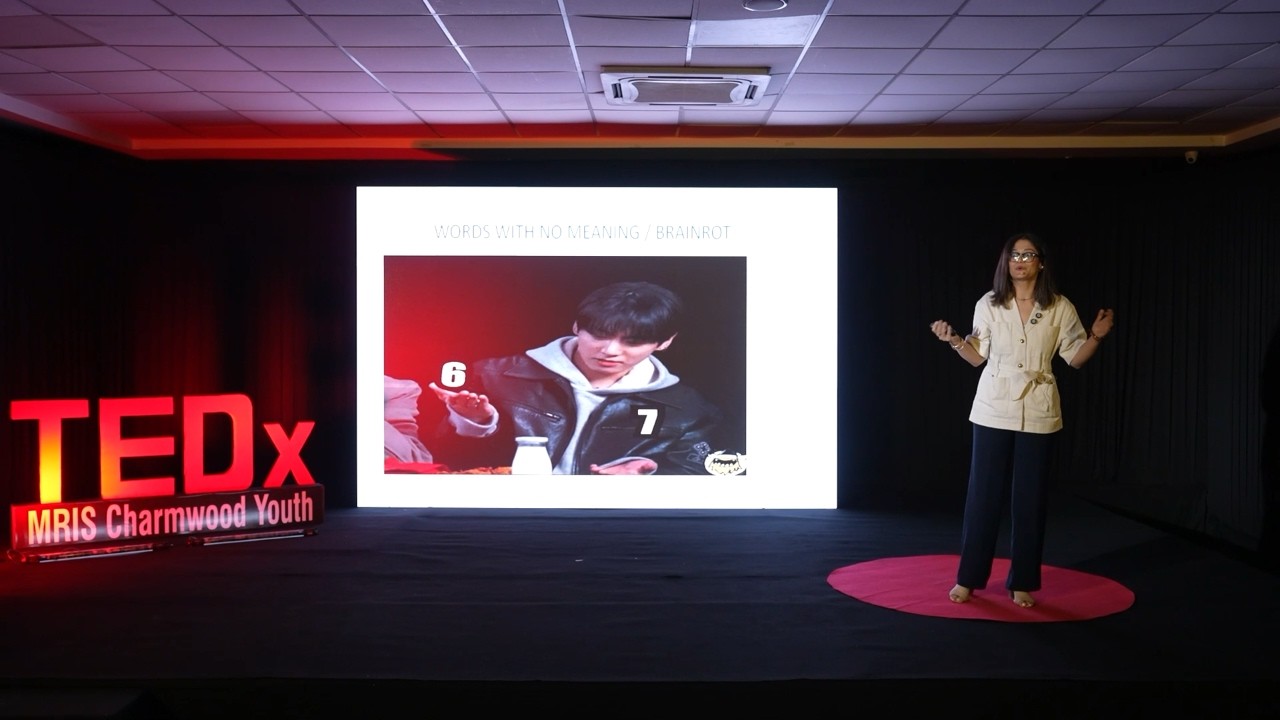
- Discussion of emotional granularity and children's rich vocabulary for memes but lack of emotional words.
- Personal confession and the quote 'Name it to tame it' from neuroscientist Dan Siegel.
- Practical advice: sit with children, listen, label emotions, and avoid overwhelming them; closing with Adi's progress.
Cited Sources
- TEDx Program — General information about TEDx events, provided in the description.
Contribution & Novelties
The talk brings attention to the concept of emotional literacy as a fundamental skill for children, often overlooked in educational settings. It offers a simple, practical approach: giving children the vocabulary to describe their feelings, rather than punishing behaviors that mask unmet emotional needs. The speaker also connects this to neuroscience, citing ‘Name it to tame it’ and neuroplasticity to argue that this skill can be taught. The original contribution lies in the vivid use of art therapy anecdotes to illustrate the phenomenon, making abstract concepts tangible for a lay audience.
Pour aller plus loin :
- Emotional granularity — The ability to precisely identify and label emotions, central to the talk’s message.
- Neuroplasticity — The brain’s ability to reorganize itself, supporting the idea that emotional vocabulary can be learned.
- Daniel J. Siegel — The psychiatrist and neuroscientist who coined the phrase ‘Name it to tame it’, referenced in the talk.
150 words
Radar Profile
The radar profile shows moderate scores in information quantity (6) and quality (6), a low level of technical detail (4), and moderate reliability (6). This indicates an accessible, experience-driven talk that is emotionally compelling but lacks deep scientific rigor. The low technicality makes it suitable for general audiences, while the moderate reliability suggests that claims are not unfounded but are not backed by extensive citations.