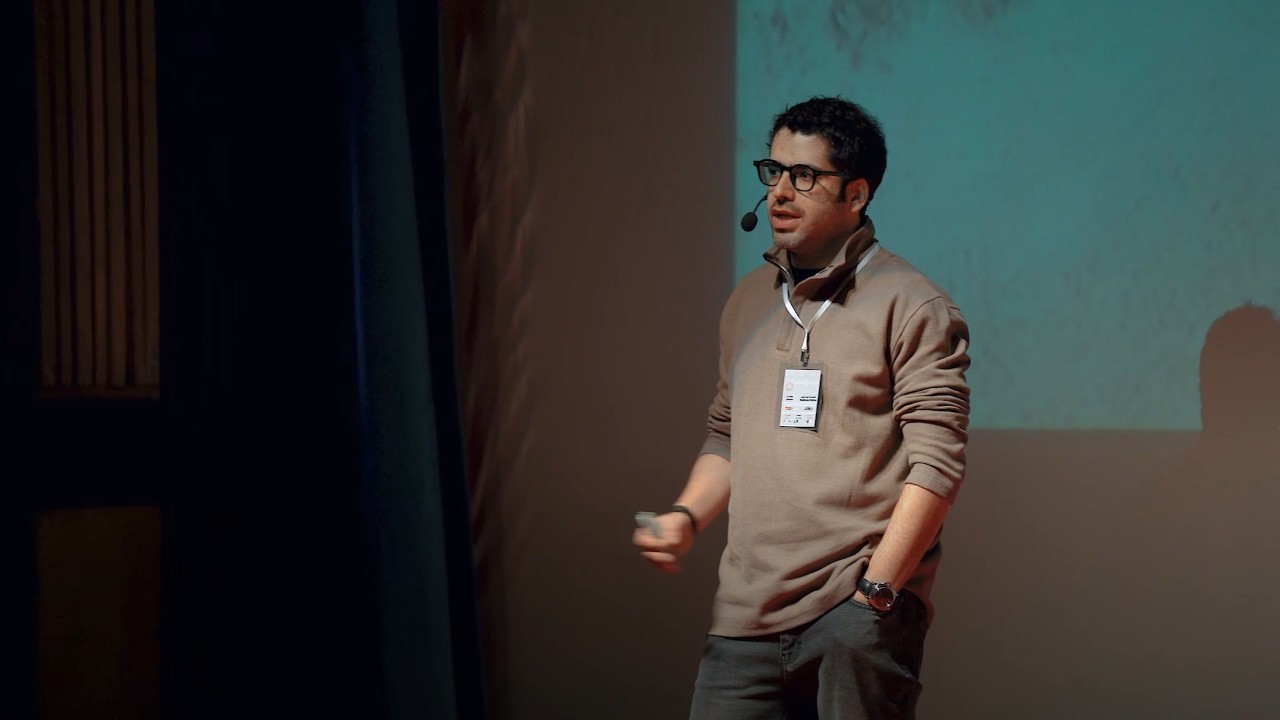
Present Comes from a Place That Never Appears on Any of Our Resumes | Hamidreza Chitchian | TEDxKish
Keywords
Summary
162 words
Critical Evaluation
Value of the Information & Strength of the Argument
The talk’s value lies in its authenticity and personal testimony. Chitchian offers concrete, relatable examples rather than abstract advice, which makes his argument persuasive and accessible. He explicitly rejects the glorification of failure, instead emphasizing that failure is painful yet can yield long-term insight when paired with time and reflection. The argumentation is built on a narrative structure that connects diverse anecdotes (university admissions, a failed chair project, a business blunder) into a coherent thesis about the invisible foundations of personal and professional growth. However, the reasoning is primarily anecdotal and lacks empirical support or a systematic framework. The argument would be stronger with references to psychological research on resilience or learning from failure, but as a personal testimony, it is compelling and logically consistent.
Scientific Rigor, Source Quality, Title Accuracy
Rigor is moderate: the speaker explicitly states he is giving a personal reading of events and avoids presenting his experiences as universally prescriptive. He does not cite external studies or data, which limits scientific rigor. The only source mentioned is the TEDx platform itself (via the description link). The title is well-chosen and directly supported throughout the talk—it encapsulates the central metaphor of the uncredited ‘bill of lading’ of our lives. The content matches the title precisely, and no discrepancies were observed. No audience comments were provided, so no public reception analysis is possible.
234 words
Title / Content Match
The title accurately reflects the core message: the present is shaped by experiential elements not listed on a resume. The talk consistently elaborates on this idea, making the title well-aligned with the content.
Quality & Reliability
6/10
The talk is a personal narrative presented by an experienced marketing professional. It contains anecdotal evidence rather than peer-reviewed research, but the speaker's first-hand accounts and reflective insights provide a credible, albeit subjective, perspective. The lack of metric-based data or independent verification lowers the overall reliability score.
Key Moments
Markers derived by PSI from the transcript: the creator did not define chapters.
- Story about university admission and shifting to industrial design after missing the film program.
- The heavy chair project and the professor's critical question 'why did you do this?'
- Description of a costly marketing campaign error and its emotional impact.
- The pearl diver metaphor and comparing resume to a ship's bill of lading.
- Encouragement to ask better questions and embrace the hidden elements of one's journey.
Cited Sources
- TEDx Program — Official TEDx webpage, referenced in the video description as the organizational context for this independently organized TEDx event.
Contribution & Novelties
The talk adds a personal, anecdotal dimension to the common theme of learning from failure, distinguishing between the resume as a formal record and the ‘invisible cargo’ of experiences that truly shape us. It challenges the audience to reassess how they evaluate their own paths, offering a metaphor (diving for pearls) that is culturally specific yet universally relatable. The novelty is more in the narrative and personal framing than in the underlying ideas, which resonate with established concepts in psychology and career development.
Pour aller plus loin :
- Growth mindset — Related concept that learning and resilience are developed through challenges and failures.
- Psychological resilience — Discusses how individuals adapt positively to adversity, aligning with the speaker’s emphasis on continued diving despite repeated failure.
- Reflective practice — A method of self-examination that can help turn experiences into meaningful learning, similar to the speaker’s retrospective analysis.
145 words
Radar Profile
The radar profile shows moderate scores across most dimensions, with slightly higher quality information relative to quantity and technical level. The talk is strong on narrative coherence and personal insight but weaker on data-driven rigor, resulting in a balanced but unexceptional profile. The low technical level reflects its non-technical nature, while the moderate reliability score reflects the personal, unverifiable nature of the anecdotes.