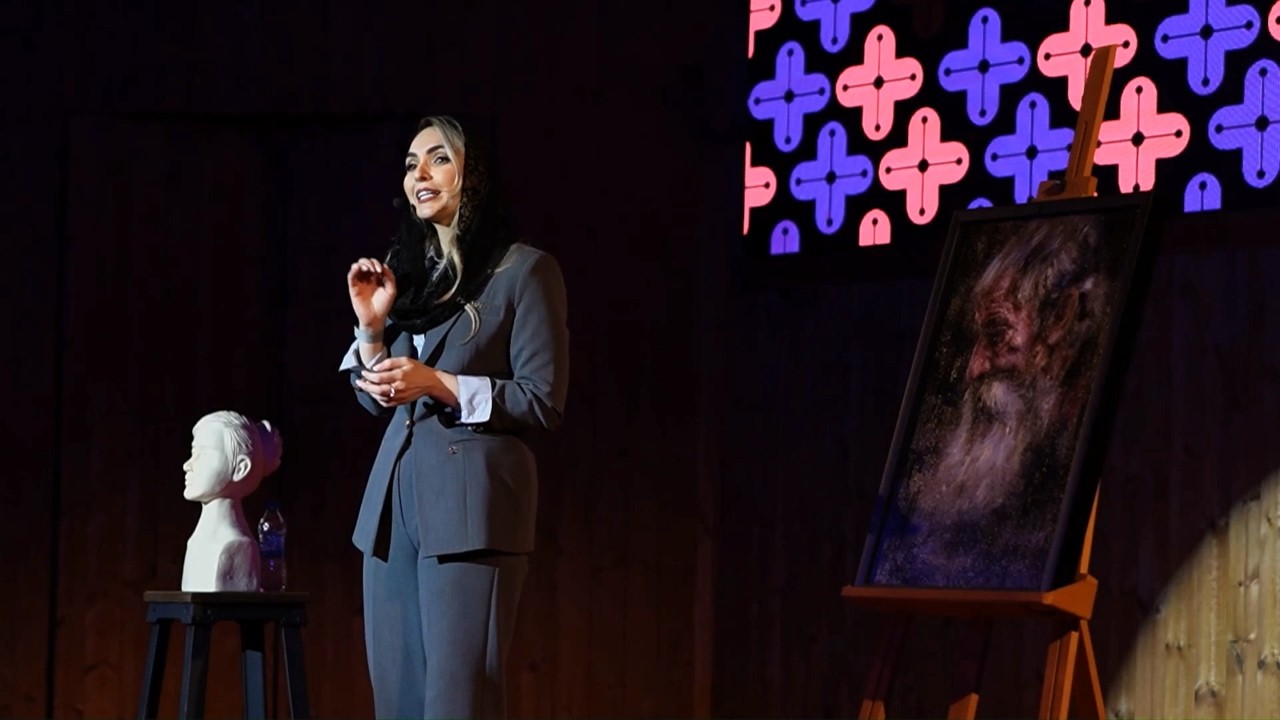
The Invisible Influence of Our Inner World | Nasim Gholami | TEDxAlef Women
Title history
- The Invisible Influence of Our Inner World | Nasim Gholami | TEDxAlef Women — observed on 20261114-0303 UTC (YouTube)
Keywords
Summary
179 words
Critical Evaluation
Value of the Information & Strength of the Argument
The talk’s value lies in its accessible blend of personal experience and professional insight, offering a fresh perspective on how emotional well-being shapes external outcomes. Gholami argues convincingly that inner peace and self-acceptance are foundational to genuine influence, contrary to conventional notions of power. Her argumentation is coherent, built on vivid storytelling and relatable metaphors (sculpture, painting), though it remains anecdotal. She does not reference scientific studies, making the claims subjective rather than evidence-based. The reasoning is persuasive for a lay audience but lacks the rigor of academic discourse.
Scientific Rigor, Source Quality, Title Accuracy
The talk adheres to a personal narrative style typical of TEDx, with no formal citations. The only source mentioned is the TEDx platform itself. The title is well-matched to the content, as the speech indeed explores the invisible influence of internal states. No discrepancies exist between the title and the material covered. The absence of external references weakens the scientific credibility, but the talk’s purpose appears motivational rather than strictly informative.
175 words
Title / Content Match
The title accurately reflects the content, which explores how inner emotional states shape our interactions and creations, often without conscious intention.
Quality & Reliability
6/10
The talk relies on personal anecdotes and clinical experience, but lacks empirical citations. The reasoning is coherent and insightful, yet scientific rigor is limited due to absence of referenced studies.
Key Moments
Markers derived by PSI from the transcript: the creator did not define chapters.
- Sculpture story: realizing inner state emerges in art
- Medical practice: patients seek change but actually want self-perception change
- Patient story: from flaw-focused to self-acceptance, name change
- Painting analogy: stepping back to see larger picture
- Discussion of soft power and true strength
- Call to accept imperfections and influence through empathy
Cited Sources
- TEDx Talks — General reference to the TEDx event where the talk was presented
Contribution & Novelties
The talk offers a personal and holistic view of emotional influence, merging medical aesthetics with artistic creation. It introduces the concept of ‘soft power’ as a gentle, non-coercive way of enabling self-belief in others, extending beyond typical geopolitical definitions to interpersonal relationships. The analogy of stepping back from a painting to embrace flaws as strengths resonates as a novel framing of self-acceptance.
Pour aller plus loin :
- Emotional contagion — Relevant to how emotions spread unconsciously, underpinning the talk’s premise.
- Soft power — The political science origin of the term, offering a scholarly perspective on influence without coercion.
- Self-compassion — Directly relates to the theme of accepting imperfections and fostering inner well-being.
112 words
Radar Profile
The profile shows moderate scores across all dimensions, with slightly higher marks for quantity and quality of information, balanced by lower technical level and reliability. This reflects a talk that is engaging and insightful but lacks empirical depth.