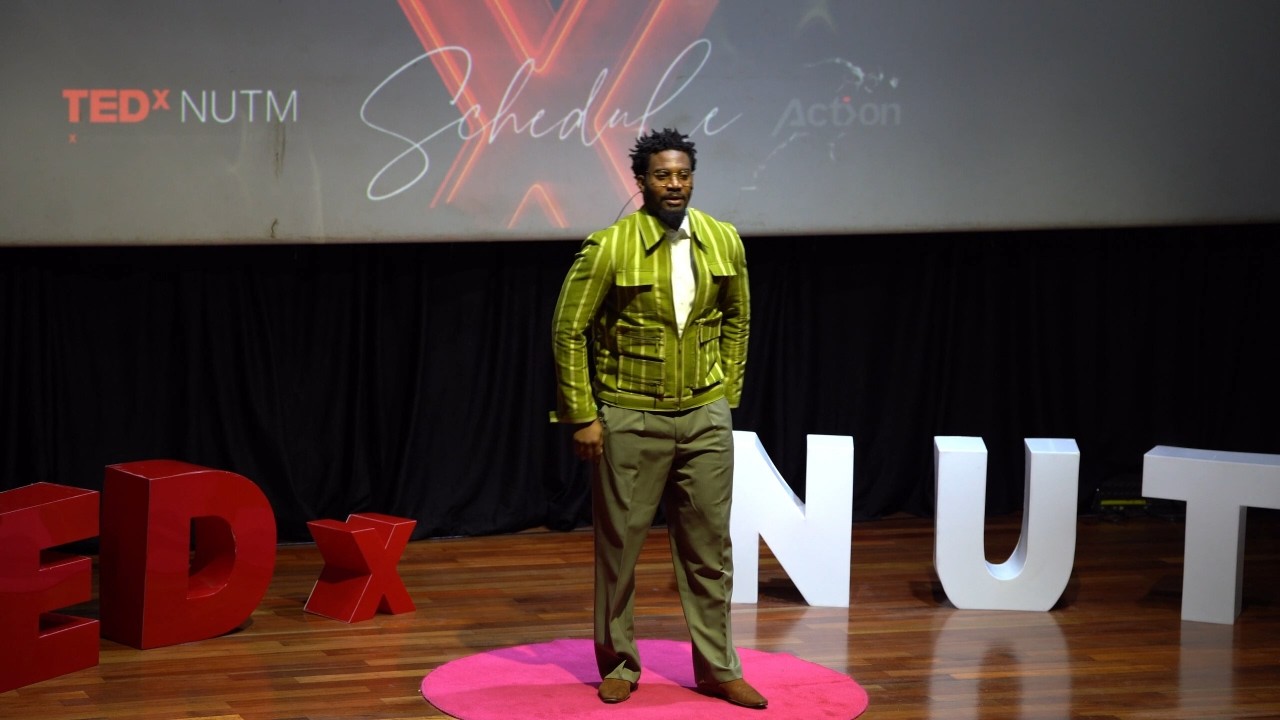
The Fine Line Between Preparation and Protection | Kunle Remi | TEDxNUTM
Title history
- The Fine Line Between Preparation and Protection | Kunle Remi | TEDxNUTM — observed on 20261029-1522 UTC (YouTube)
Keywords
Summary
174 words
Critical Evaluation
Value of the Information & Strength of the Argument
The talk’s value lies in its relatable, anecdotal wisdom rather than empirical evidence. The argumentation is coherent and emotionally engaging, built on personal narratives that illustrate the dangers of excessive preparation. The speaker contrasts preparation as a ‘sophisticated place to hide’ with action as a tool for gaining real-world information. The reasoning is persuasive for a general audience but lacks logical rigor or empirical support. The speaker does not diminish the importance of preparation but calls for a cyclical process of prepare, act, learn, repeat. The strength of the argument rests on illustrative examples and universal psychological patterns, making it accessible and compelling.
Scientific Rigor, Source Quality, Title Accuracy
Scientific rigor is low because the talk is purely narrative and lacks citations or data. The only source mentioned is the TEDx platform itself (https://www.ted.com/tedx ). The title accurately reframes the prepared action dilemma, though the term ‘protection’ is not explicitly defined until later in the talk. The speaker’s anecdotes are subjective and not generalizable, but they serve the inspirational purpose. The adequacy between title and content is strong, as the entire talk revolves around the distinction between productive preparation and defensive procrastination.
201 words
Title / Content Match
The title accurately captures the core message about balancing preparation and taking action, though the term 'protection' is not explicitly defined until midway.
Quality & Reliability
6/10
This is a personal testimonial talk, not an evidence-based study. The speaker shares career experiences and psychological insights, which are plausible but not independently verifiable. The content is credible within the context of personal narrative, but lacks scientific rigor.
Key Moments
Markers derived by PSI from the transcript: the creator did not define chapters.
- Introduction to the word 'action' and the film production metaphor.
- Discussion of preparation as a 'sophisticated place to hide' and its link to perfectionism.
- Anecdote about winning Gold Ultimate Search and audition rejection that taught him to train.
- Reflection on using preparation to protect against rejection and criticism, and the question of whether one is preparing or protecting.
- Interpretation of Psalm 23's 'follow' as a call to move in order to be pursued by goodness and mercy.
- Call to action: activate thoughts, take the first step, and avoid endless preparation.
Cited Sources
- TEDx Talks — Official TEDx website explaining the TEDx format and independent organization.
Contribution & Novelties
The talk offers a novel framing of preparation as a potential shield against vulnerability, urging listeners to transition from perfectionistic planning to iterative action. Its originality lies in the personal journey of a professional actor applying production metaphors to life. The main contribution is the reminder that real feedback comes from entering the arena, not from endless rehearsal.
Pour aller plus loin :
- Action bias — Action bias suggests people often prefer acting over doing nothing, which complements the talk’s emphasis on taking steps.
- Fear of failure — Fear of failure is a common psychological barrier that drives procrastination and perfectionism, central to the talk’s theme.
- Deliberate practice — Deliberate practice involves structured improvement, aligning with the speaker’s emphasis on learning through action.
- Growth mindset — Growth mindset theory explains how embracing challenges and feedback fosters learning, which supports the talk’s message.
142 words
Radar Profile
The radar profile shows low technical depth and moderate reliability, but high relevance for personal growth. This suits an inspirational talk that prioritizes emotional resonance over empirical evidence, making it effective for its intended audience.