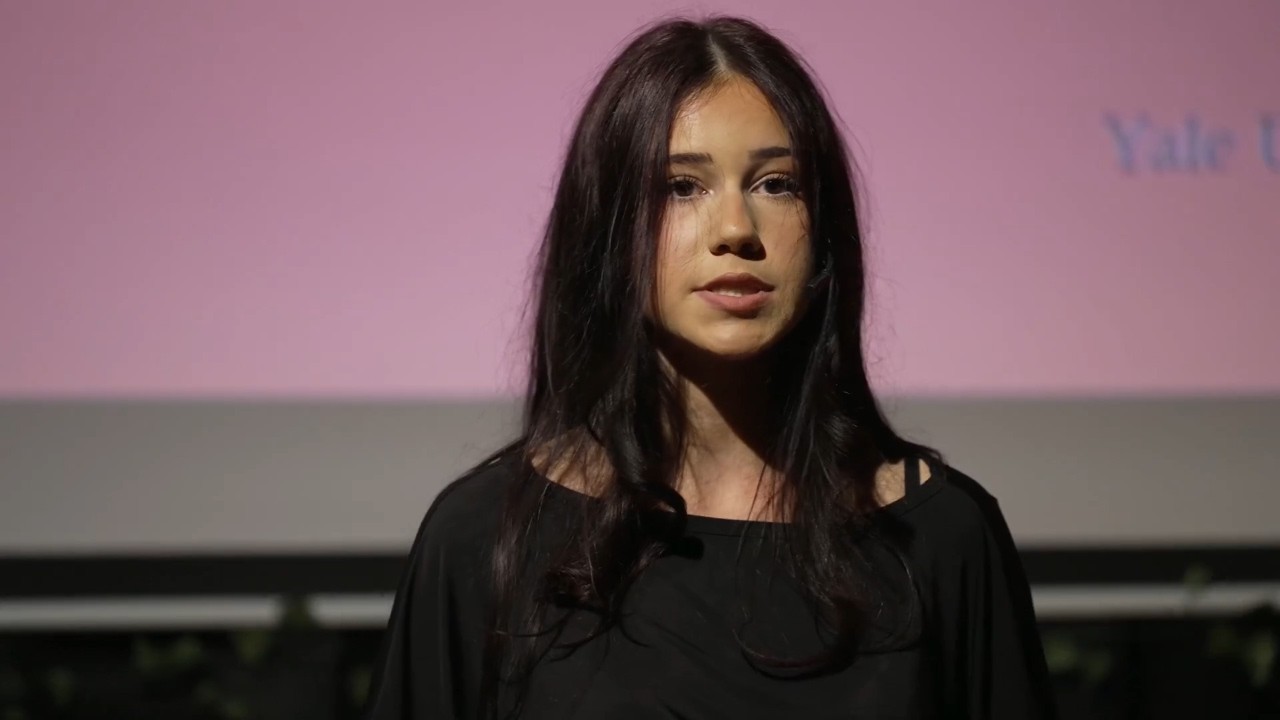
Women in STEM | Laia Perez | TEDxEEB3 Youth
Title history
- Women in STEM | Laia Perez | TEDxEEB3 Youth — observed on 20261114-0303 UTC (YouTube)
Keywords
Summary
170 words
Critical Evaluation
Value of the Information & Strength of the Argument
The talk provides a compelling personal narrative that humanizes the issue, complemented by credible data from recognized institutions (OECD, UNESCO, Yale). The argumentation progresses logically from individual experience to systemic patterns, using statistics and studies to support claims. The distinction between performance and confidence is well-made, and the discussion of implicit bias (age six, beauty penalty) adds depth. The speaker also critiques superficial measures like quotas, which demonstrates critical thinking. However, the argument could be strengthened by more recent or specific sources, and the causal links between representation and encouragement are asserted but not fully elaborated. The overall structure is persuasive and accessible.
Scientific Rigor, Source Quality, Title Accuracy
The speaker cites several reputable studies (OECD PISA, UNESCO, Yale, Science journal) but provides no direct URLs or detailed citations, relying on general mentions. The TEDx description links only to the TEDx main page, so verifiability is limited. The title accurately matches the content. The talk is a synthesis of existing research rather than original study, and the speaker’s status as a student rather than a researcher may reduce perceived authority, though she conveys the material accurately. No contradictory sources are presented, but the lack of primary links is a weakness in scientific rigor. Comments were not provided in this analysis, so audience reception cannot be assessed.
225 words
Title / Content Match
The title accurately reflects the content: the speaker discusses gender inequalities in STEM, systemic biases, and solutions, directly matching the stated theme.
Quality & Reliability
6/10
The talk presents personal experience and several cited studies (OECD PISA, UNESCO, Yale, Science journal) but lacks direct links to these studies. The speaker is a student, not a professional researcher, so the synthesis relies on secondary references. The arguments are coherent and well-structured, but the scientific depth is limited.
Key Moments
Markers derived by PSI from the transcript: the creator did not define chapters.
- Introduction: personal story of receiving a microscope, sparking interest in science.
- Discussion of hateful comments and doubts about girls choosing STEM.
- PISA data: girls perform equally but have lower confidence.
- Statistics on women in STEM graduates and ICT sector in EU.
- Yale study on CV evaluation bias and gender.
- Science journal study: children associate brilliance with boys by age six.
- Historical context of women's exclusion from education and the 'beauty penalty'.
- Proposed solutions: challenge stereotypes early, increase representation, foster belonging.
- Critique of quotas and tokenism; need to change mindsets.
- Conclusion: science belongs to everyone regardless of gender.
Cited Sources
- TEDx Talks Official Website — Description link to the TEDx program, under which this talk was organized.
Contribution & Novelties
The talk’s originality lies in its personal perspective combined with frequently cited data on gender gaps in STEM, making the issue tangible for a youth audience. It synthesizes existing knowledge into a coherent narrative, and its call to action focuses on early education and representation rather than solely on policy changes. The critique of well-intentioned quotas as potentially reinforcing tokenism adds a nuanced viewpoint.
Pour aller plus loin :
- Women in STEM fields - Wikipedia — Overview of the global gender gap in STEM and contributing factors.
- Stereotype threat - Wikipedia — Explains how stereotype threat undermines performance and confidence, relevant to the confidence gap mentioned.
- Implicit stereotype - Wikipedia — Addresses unconscious biases like those in the Yale CV study.
- OECD PISA — Original source for the student performance and confidence data cited in the talk.
137 words
Radar Profile
The radar profile shows moderate scores in information quantity and quality, with a notably lower technical level due to the accessible, non-specialist approach. Overall reliability is moderate, reflecting the use of secondary sources without direct citations. The talk is strong on raising awareness but limited in technical depth.