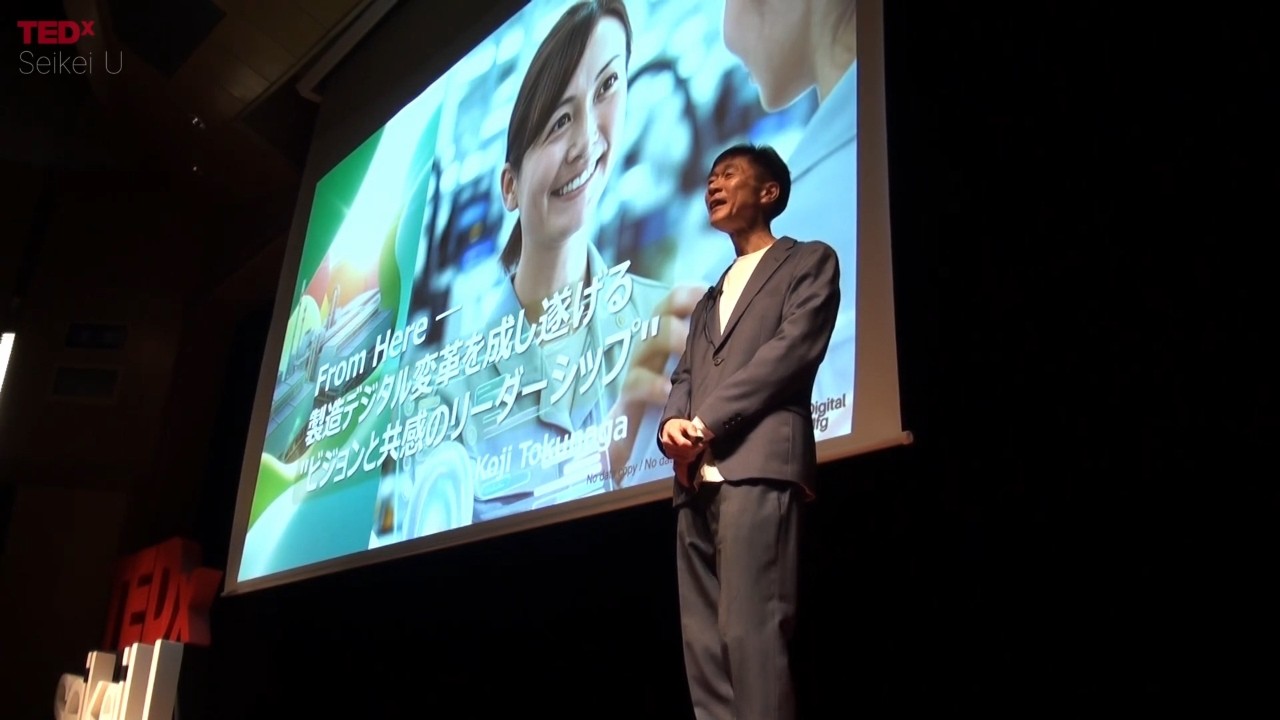
デジタル変革を成し遂げる「ビジョンと共感」のリーダーシップ | Kouji Tokunaga | TEDxSEIKEI U
Leadership of "Vision and Empathy" to Achieve Digital Transformation | Kouji Tokunaga | TEDxSEIKEI U
Keywords
Summary
183 words
Critical Evaluation
Value of the Information & Strength of the Argument
The talk’s value lies in its real-world example (jet engine maintenance) and clear step-by-step methodology for digital transformation, emphasizing organizational and human factors. The argumentation is persuasive and logically structured: start from a concrete problem, propose a simple solution, address resistance, and scale. However, evidence is anecdotal—only two case studies (jet engine and fighter jet) are cited , and no quantitative data or external references are provided. The leadership principles are presented as universal truths without empirical backing, making the argumentative strength moderate rather than high.
Scientific Rigor, Source Quality, Title Accuracy
Scientific rigor is limited: the talk is an expert opinion based on personal experience, with no citations of studies or literature. The only source mentioned is the TEDx organization link in the description. The title accurately represents the content, focusing on vision and empathy leading digital change. The speaker does reference concepts like ‘Digital Shadow’ and ‘Digital Twin’ but without formal definitions or sources. The absence of data and peer-reviewed references reduces the scientific credibility, although the practical insights are valuable.
182 words
Title / Content Match
The title accurately reflects the content, focusing on leadership through vision and empathy in the context of digital transformation.
Quality & Reliability
7/10
The talk provides practical insights from the speaker's extensive experience in manufacturing digital transformation, with a concrete case study and clear methodology. However, claims are anecdotal and lack empirical data or references, limiting scientific rigor.
Key Moments
Markers derived by PSI from the transcript: the creator did not define chapters.
- Introduction: speaker presents his background in manufacturing digital transformation.
- Describes the decline of Japanese manufacturing and productivity gap compared to other countries.
- Presents the jet engine maintenance case where new regulations required detailed tracking.
- Explains how a simple solution using IC tags reduced input time from 30 hours to zero.
- Discusses four systemic challenges in Japanese manufacturing and root causes.
- Introduces digital shadow and digital twin concepts, with a video demonstration.
- Shares the fighter jet case achieving 4x production capacity and discusses profit-producing optimization.
- Introduces the four pillars of leadership: grasping essence, courage, empathy, and positivity.
- Concludes with personal vision and a call to action for starting transformative journeys.
Cited Sources
- TEDx Talks official page — Mentioned in the video description as the organizing entity; the talk was given at a TEDx event.
Contribution & Novelties
The talk offers a practitioner’s perspective on digital transformation in manufacturing, emphasizing the human dimension (vision and empathy) as crucial alongside technical implementation. It provides a concrete case study and a maturity model (computerization, connectivity, digital shadow, digital twin) that is accessible to non-specialists. The original insight is that transformation requires winning hearts through understanding pain points and building a movement, rather than just installing systems.
Pour aller plus loin :
- Digital twin — Directly related to the core concept used in the talk for optimizing factories.
- Industry 4.0 — Contextual background for the digital transformation trends discussed.
- Lean manufacturing — The speaker’s approach to eliminating waste and improving flow aligns with Lean principles.
114 words
Radar Profile
The radar profile shows moderate scores across all dimensions, with information quality and quantity slightly higher than technical level and reliability. This reflects a talk that is informative and engaging but relies on anecdotal evidence rather than rigorous scientific backing.