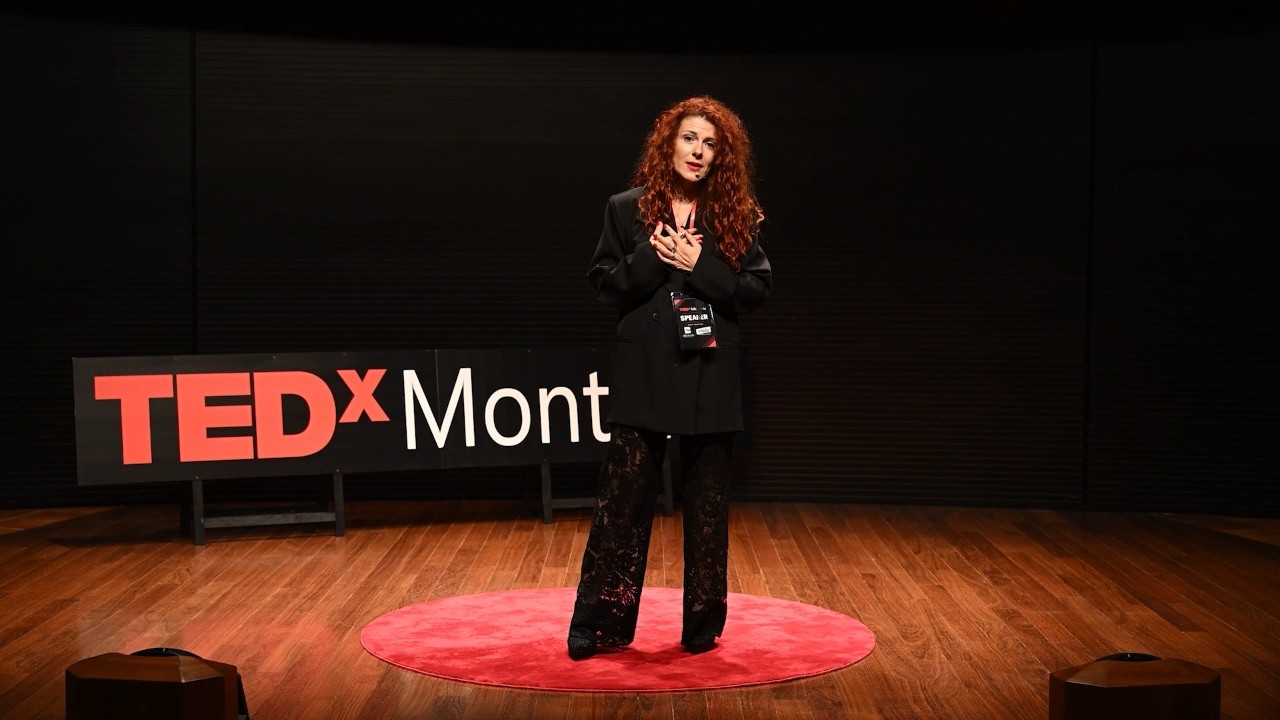
TEDx Montella - Maria Consiglia Izzo | Izzo Maria Consiglia | TEDxMontella
Keywords
Summary
180 words
Critical Evaluation
Value of the Information & Strength of the Argument
The talk’s value lies in its accessible synthesis of media history and personal career insights, offering a compelling call to critical media consumption and proactive community building. The argumentation is primarily emotional and anecdotal, anchored in the speaker’s professional experiences and well-known historical examples. While it lacks empirical evidence, the narrative is coherent and persuasive, effectively linking personal practices to broader societal challenges. The rhetorical progression from war-as-propaganda to the metaphor of constructing the future is compelling, though it remains largely at the level of popular commentary rather than rigorous analysis.
Scientific Rigor, Source Quality, Title Accuracy
The scientific rigor is limited; the talk references Edward Bernays and the Ghost of Kyiv without formal citations, relying on widely known but unverified anecdotes. The quality of sources is acceptable for a public talk but not for scholarly standards. The title is insufficiently descriptive, failing to signal the content’s focus on communication ethics and future-building. No explicit sources are provided in the description beyond the generic TEDx link, leaving the audience without direct references for further exploration. The adéquation between title and content is weak, as the title only identifies the speaker and event.
201 words
Title / Content Match
The title is generic, solely identifying the speaker and event, and does not convey the substantive topic of the talk, which centers on building the future through critical communication and networking.
Quality & Reliability
5/10
The talk offers personal insights and anecdotal evidence, referencing historical events and figures without formal citations. It is coherent and relevant, but relies heavily on subjective experience rather than rigorous data or verifiable sources, resulting in moderate reliability.
Key Moments
Markers derived by PSI from the transcript: the creator did not define chapters.
- Introduction: the speaker reflects on the fantastic story of life and the need to write our own narrative.
- She analyzes her own professional language, noting the use of warlike terms like 'target' and 'campaign'.
- Historical turn: she cites Edward Bernays and the Committee on Public Information during WWI as the origin of propaganda as communication.
- She mentions the Ghost of Kyiv and soldiers' TikTok content as contemporary examples of viral misinformation.
- She emphasizes the need to overcome societal limits, accept mistakes, and learn to say 'no'.
- She discusses the TEDx Montella event as a model of networking and community building, highlighting its 15 speakers.
- She concludes with the metaphor 'build, don't conquer' and calls to 'make networks, not war'.
Cited Sources
- TEDx Program — Official TEDx page, referenced as the platform for this independently organized event.
Concurring Sources
- Edward Bernays — Confirms the historical role of Bernays in shaping propaganda and public relations, as discussed in the talk.
- Ghost of Kyiv — Corroborates the existence and viral nature of this psychological operation example, supporting the speaker's point about media manipulation.
Contribution & Novelties
The talk’s original contribution lies in connecting historical propaganda techniques to modern social media dynamics, using the metaphor of ‘building vs. conquering’ to advocate a constructive, network-based approach to personal and societal development. It creatively reinterprets well-known concepts for a general audience. To go deeper, the following concepts are relevant:
Pour aller plus loin:
- Edward Bernays — A key figure in public relations, whose work on propaganda is directlly referenced in the talk.
- Committee on Public Information — The US agency during World War I that pioneered modern propaganda, mentioned by the speaker.
- Ghost of Kyiv — A viral unverified story exemplifying misinformation in times of conflict, cited as a cautionary example.
112 words
Radar Profile
The radar profile shows moderate to low scores across all criteria, with a slight peak in quantity of information (6/10) and quality (5/10), while technical level and reliability score lower (4/10). This reflects an accessible, opinion-driven talk that offers anecdotal insights but lacks rigorous evidence or advanced depth.