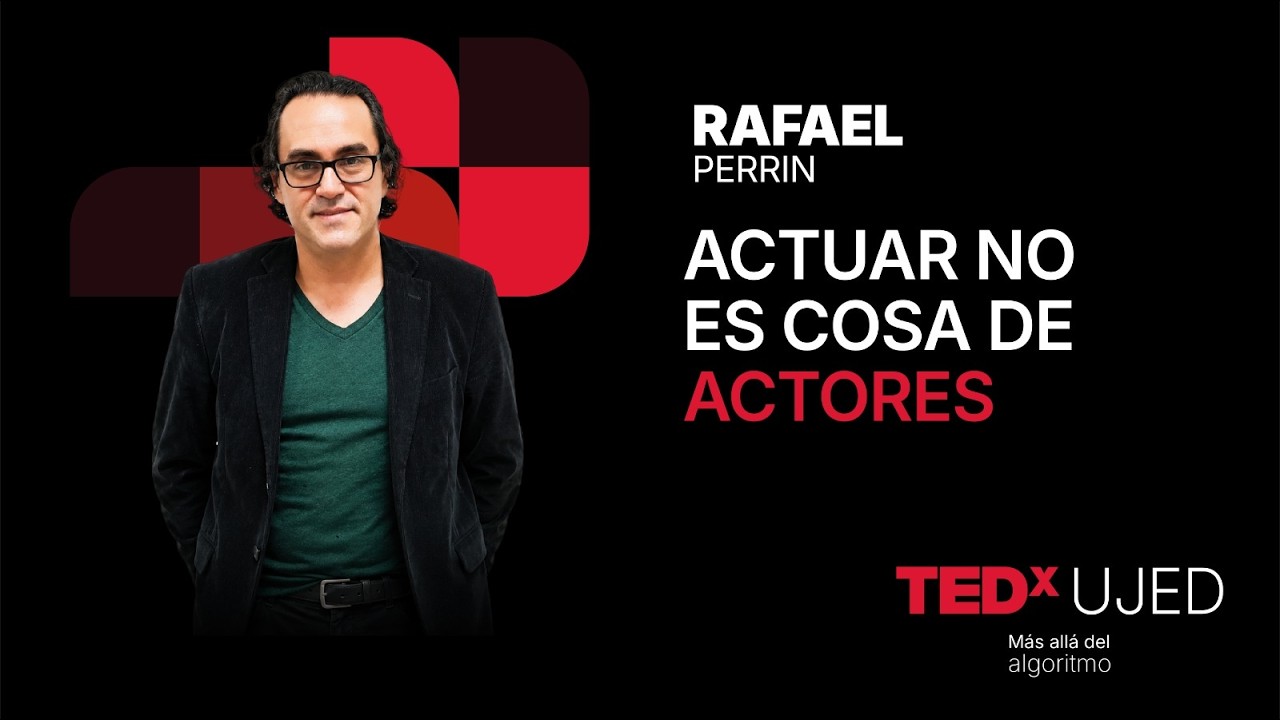
Actuar no es cosa de actores | Rafael Perrín | TEDxUJED
Acting Is Not Just for Actors | Rafael Perrín | TEDxUJED
Title history
- Actuar no es cosa de actores | Rafael Perrín | TEDxUJED — observed on 20261112-0400 UTC (YouTube)
Keywords
Summary
181 words
Critical Evaluation
Value of the Information & Strength of the Argument
The talk provides value as an inspiring and personal narrative, offering a relatable perspective on overcoming self-imposed limitations. The speaker’s argument is based on his own experiences and successes, which he uses effectively to illustrate his points. He employs analogies like the sperm race and the ’extra effort’ to make his message memorable and understandable. However, the argumentation relies heavily on anecdote and personal belief rather than empirical evidence, which limits its scientific value. The reasoning is coherent and persuasive, but it lacks rigorous analysis or consideration of counterarguments, typical for a motivational talk.
Scientific Rigor, Source Quality, Title Accuracy
The talk does not cite external sources or rely on scientific literature, instead drawing exclusively from the speaker’s personal and professional life. This is appropriate for the format but limits its scientific rigor. The title ‘Acting is not an actor’s thing’ is well chosen; it encapsulates the central thesis that taking action in life is for everyone, not only for professional actors. The content aligns perfectly with this title, with the speaker using his acting career as a springboard to discuss broader life lessons.
193 words
Title / Content Match
The title accurately reflects the content: the speaker uses his career in theater to argue that taking action in life is within everyone's reach, not exclusive to actors.
Quality & Reliability
6/10
The talk is a sincere personal account and motivational speech, lacking scientific evidence or citations, but offering coherent and authentic guidance. Its reliability is moderate, appropriate for the genre.
Key Moments
Markers derived by PSI from the transcript: the creator did not define chapters.
- Speaker introduces himself, joking about his absurd first name Rafael Fausto Germán Jorge, and sets the tone for the talk.
- He describes the process of birth as a metaphor for overcoming initial obstacles, comparing the sperm race to an extraordinary achievement.
- Perrín recounts how parents and teachers impose limits, sharing the anecdote of being expelled from school after confronting his director.
- He tells the story of creating 'La Dama de Negro', a play that has run for 33 years, and challenges skeptics in the theater industry.
- The speaker introduces the concept of 'extra effort' and criticizes people who make excuses, urging the audience to take action.
- He concludes with a powerful message: happiness is a decision to put verbs into action, and each person is responsible for their own life.
Cited Sources
- TEDx program — The talk was given at a TEDx event using the TED conference format, independently organized by a local community. This link provides information about the TEDx program.
Contribution & Novelties
The talk offers a personal viewpoint on how acting as a metaphor for life can inspire extraordinary results through an extra effort. It reframes the concept of limits as self-imposed and encourages the audience to take responsibility for their own path. While not scientifically innovative, it presents a compelling narrative that resonates with personal development principles.
Pour aller plus loin :
- Growth mindset — Relevant to the idea of exceeding perceived limits and believing in one’s capacity to improve.
- Motivation — Psychological background on why people make excuses and how to foster intrinsic motivation.
- Theatre — Context of the speaker’s field and the power of live performance to create emotional connection.
111 words
Radar Profile
The profile shows a talk with moderate information quantity and quality, minimal technical depth, and moderate perceived reliability. This is typical for a motivational speech rooted in personal experience, where the strength lies in narrative persuasion rather than empirical evidence.