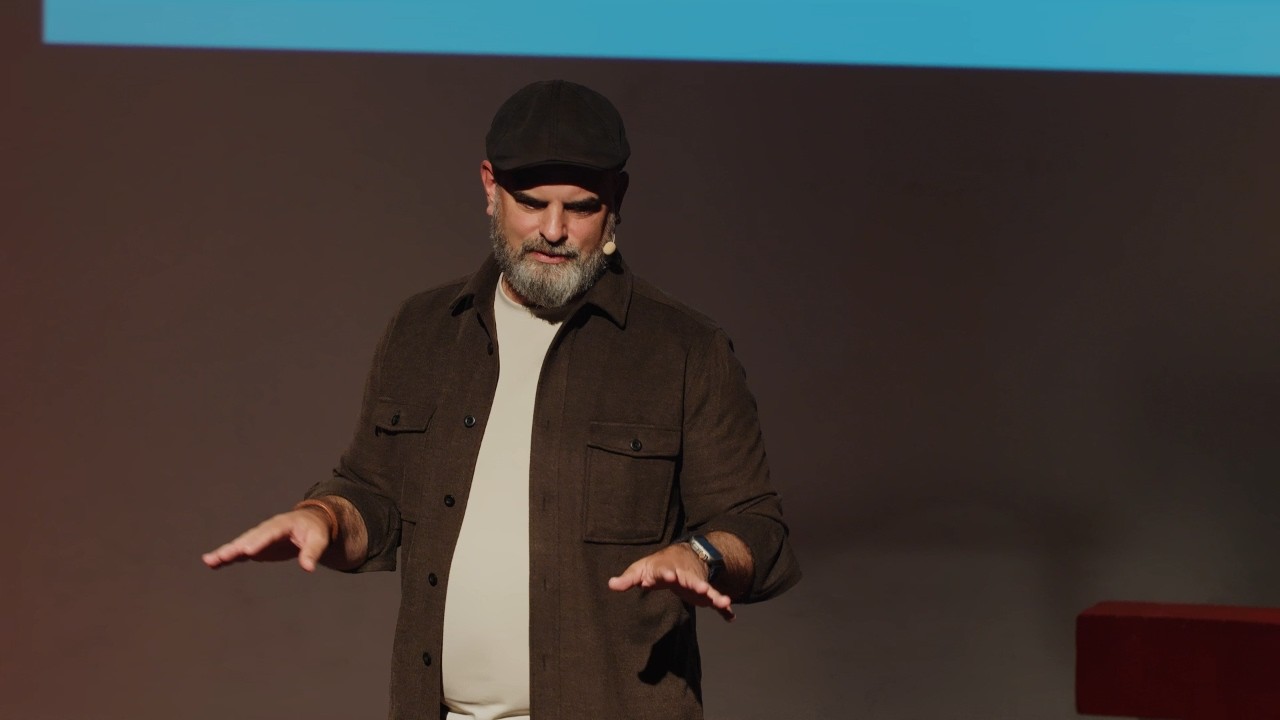
Invest Like an Artist | Martijn Blom | TEDxBreda
Title history
- Invest Like an Artist | Martijn Blom | TEDxBreda — observed on 20261117-0328 UTC (YouTube)
Keywords
Summary
260 words
Critical Evaluation
Value of the Information & Strength of the Argument
The value of the information lies in its provocative reframing of investment as an artistic practice, highlighting blind spots in conventional financial analysis. The argumentation is built on personal stories and analogies, which makes it accessible and emotionally resonant. Blom effectively uses the astronomer metaphor to establish the epistemological limitation of perception, then applies it to finance. The COVID example and the cultural entrepreneur study provide concrete illustrations that support his thesis. However, the reasoning relies on anecdotal evidence and lacks rigorous empirical support. The argument for embracing uncertainty and broader value definitions is compelling but remains at a conceptual level, with few practical prescriptions. The call to action is inspiring but somewhat vague about implementation.
Scientific Rigor, Source Quality, Title Accuracy
The talk does not cite specific academic sources or data; it relies on the speaker’s professional experience and observations. The only reference from the description is the generic TEDx platform link, which does not provide additional scientific backing. The title accurately reflects the content’s theme, though it promises a specific ‘how-to’ that the talk only partially delivers. The speaker, Martijn Blom, has relevant credentials in impact investing, lending some authority, but his claims are not underpinned by formal research. Adequation between title and content is good: the talk indeed explores investing from an artistic viewpoint. However, it is more philosophical than practical, which may subvert expectations of actionable investment advice.
241 words
Title / Content Match
The title aptly captures the core idea of applying an artistic perspective to investing, though the exact phrase is not elaborated as a formal framework.
Quality & Reliability
5/10
The talk presents personal insights and anecdotes rather than rigorous academic data; it offers a thought-provoking perspective but lacks empirical evidence.
Key Moments
Markers derived by PSI from the transcript: the creator did not define chapters.
- Introduction and comparison with astronomers
- Impact investing origins and adoption of mainstream finance
- COVID portfolio example of online education
- Study on cultural entrepreneurs and investor blind spots
- Recap of three key insights
- Critique of measurement and subjective numbers
- Artists' perspective and making invisible visible
- Call to invest like an artist and conclusion
Cited Sources
- TEDx Program — Description link to TEDx platform, confirms the event format.
Contribution & Novelties
The talk contributes a novel perspective by linking artistic perception to investment decisions, emphasizing that blind spots in financial valuation stem from epistemological limitations. It advocates for a broader definition of value that includes intangible and social aspects. The original contribution is the explicit call for investors to adopt an observer’s mindset, borrowing from artistic practice to enhance awareness. The speaker’s personal experiences in impact investing lend authenticity.
Pour aller plus loin :
- Impact investing — Relevant to the core concept discussed.
- Behavioral economics — Explores how psychological biases affect economic decisions, related to the idea of perception shaping value.
- Theory of value — Provides philosophical grounding for the multiplicity of value forms.
- Art-based research — Discusses how artistic methods can generate knowledge, aligning with the talk’s advocacy for artistic observation.
131 words
Radar Profile
The radar profile shows moderate scores in information quantity and quality, low technical level, and moderate reliability. This indicates a talk that is thought-provoking and accessible but not deeply technical or heavily evidence-based. The balance among scores suggests a conceptual exploration rather than a practical guide.