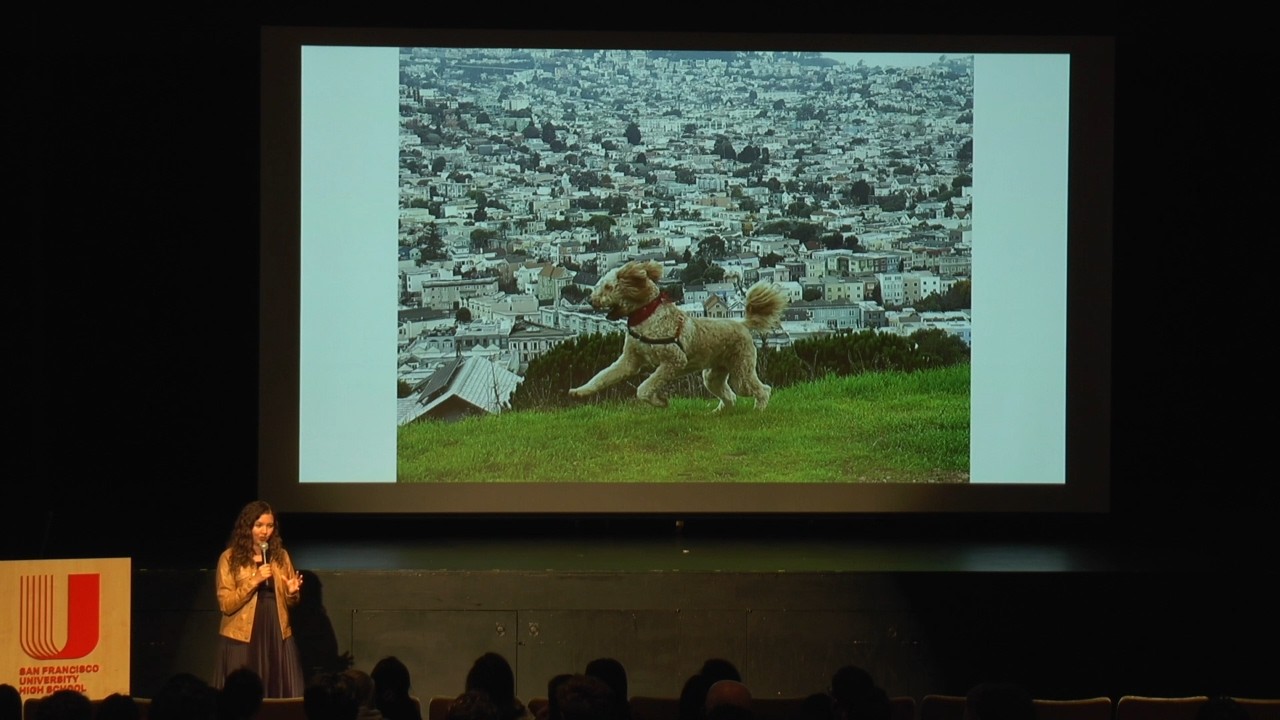
Be More Like Waffle | Jennifer Butterfoss | TEDxSFUHS Youth
Title history
- Be More Like Waffle | Jennifer Butterfoss | TEDxSFUHS Youth — observed on 20261027-0204 UTC (YouTube)
Keywords
Summary
200 words
Critical Evaluation
Value of the Information & Strength of the Argument
The main value lies in the relatable personal narratives and the accessible metaphor of the dog. The argument is coherent: external pressure leads to disengagement, and reclaiming intrinsic motivation is key. However, the reasoning is largely anecdotal, and the research cited (Challenge Success) is not deeply explored. The speaker does not address counterarguments or systemic solutions, limiting the depth of the argument. Yet, the emotional appeal and concrete examples strengthen its persuasive power.
Scientific Rigor, Source Quality, Title Accuracy
The talk references specific survey data from Challenge Success (14% engagement, 400,000+ surveys) and a case study of a student, which lend some credibility. However, no direct citations or links are provided in the description beyond the general TEDx page. The title accurately reflects the content, and the metaphor is consistently used throughout. The absence of detailed sourcing and the reliance on personal testimony moderate the scientific rigour, but the talk remains within the acceptable standards of TEDx communication.
167 words
Title / Content Match
The title 'Be More Like Waffle' effectively captures the core message: pursuing passion without the need to be the best, as embodied by the speaker's dog. It aligns well with the content.
Quality & Reliability
6/10
The talk is based on personal experience and references research from Challenge Success, with specific statistics (14% engagement, 400,000 surveys). However, details are presented anecdotally without direct citations or methodological depth. The reliability is moderate, appropriate for a TEDx talk.
Key Moments
Markers derived by PSI from the transcript: the creator did not define chapters.
- Introduction: the secret lies with her dog Waffle.
- Description of Waffle's awkward but joyful fetch game.
- The problem: pressure to optimize talents and be number one.
- Statistics: only 14% of students are fully engaged; 'doing school' phenomenon.
- Challenge Success surveys and the example of student Joanna.
- How labels like 'the tennis player' shape identity and choices.
- Personal story: becoming a principal, turning down promotion, and the loss of a cousin's son.
- Encouragement to shed identities and ask 'What is my tennis ball?'
Cited Sources
- TEDx Talks — Official TEDx page mentioned in the description, as the talk was given at a TEDx event.
Contribution & Novelties
The talk offers a fresh perspective on student burnout by using a dog’s unconditional passion as a counterpoint to the education system’s obsession with optimization. It personalizes the issue through the speaker’s own career journey, illustrating how even successful professionals can lose sight of intrinsic desires. The call to ask ‘What is my tennis ball?’ is a simple yet powerful introspection tool.
Pour aller plus loin :
- Flow (psychology) — This concept by Mihaly Csikszentmihalyi relates to deep engagement and intrinsic motivation, relevant to the talk’s emphasis on genuine involvement.
- Student engagement — Provides a broader academic framework for understanding the 14% figure and its implications.
- Identity-based motivation — Connects to the talk’s discussion of how labels and identities shape behavior and choices.
123 words
Radar Profile
The profile shows moderate scores in information quantity and quality, low technical level, and reasonable reliability. This aligns with a narrative-driven educational talk that prioritizes emotional impact over technical depth.