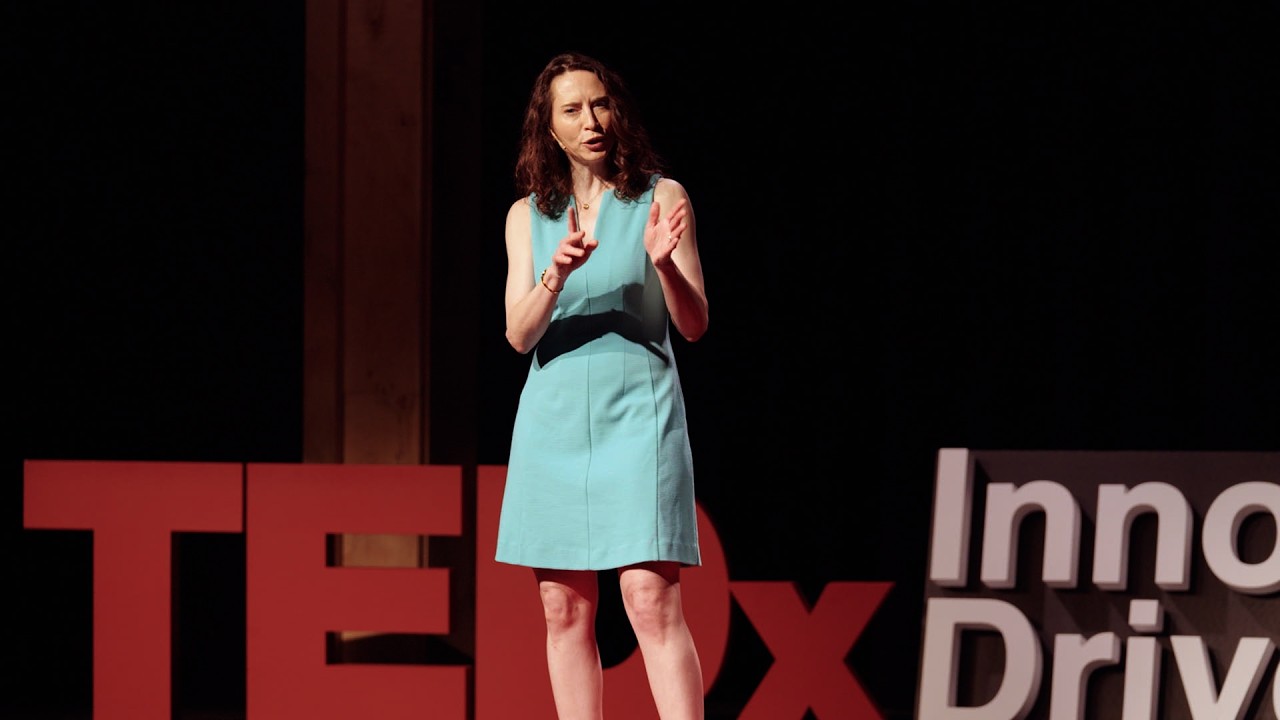
What K-12 education can learn from child care | Jessica Sager | TEDxInnovation Drive
Keywords
Summary
136 words
Critical Evaluation
Value of the Information & Strength of the Argument
The talk offers a compelling and well-structured argument for rethinking educational priorities. The speaker supports her claims with personal experience, a reference to the Perry Preschool Project (a respected longitudinal study), and vivid, relatable examples that logically tie each ingredient to learning outcomes. The reasoning is clear and persuasive, though it relies more on qualitative narrative than quantitative data. The argument that child care educators possess valuable insights often overlooked is both original and timely, especially in the context of AI’s impact on education.
Scientific Rigor, Source Quality, Title Accuracy
The talk references the Perry Preschool Project as a key source, and the speaker’s professional background lends credibility. However, specific statistics (e.g., ‘more than a million new neural connections every second’) are mentioned without direct citation. The description includes a link to TEDx (https://www.ted.com/tedx ) but no additional sources. The title accurately reflects the content, which is central and consistently developed. The scientific rigor is moderate: the argument is evidence-informed but not heavily sourced, and claims are general rather than detailed.
180 words
Title / Content Match
The title accurately reflects the content: the talk argues that K-12 education should adopt principles from child care, and the speaker provides examples to support this.
Quality & Reliability
7/10
The talk is based on the speaker's 25 years of experience in child care advocacy and references the Perry Preschool Project, a well-known longitudinal study. However, it presents anecdotal observations and general claims without detailed citations or quantitative evidence beyond a single study.
Key Moments
Markers derived by PSI from the transcript: the creator did not define chapters.
- Introduction: asks the question of how to make school more like child care, introduces the idea that learning is about becoming a person who can keep learning.
- Anecdote of the little boy needing a hug; the educator gives security, enabling exploration.
- Discusses the Perry Preschool Project and its intergenerational impact.
- Second ingredient: encouraging productive struggle, illustrated with block towers and the entrepreneur cycle.
- Third ingredient: following children's curiosity, exemplified by the snow lesson.
- Call to action: treat child care educators as experts and learn from them to build the future.
Cited Sources
- TEDx Talks — Link to TEDx program where the talk was published.
Concurring Sources
- Perry Preschool Project — Referenced in the talk as evidence for long-term outcomes of early childhood education.
Contribution & Novelties
The talk’s novelty lies in reframing the relationship between child care and K-12 education, arguing that core principles of early childhood education (security, productive struggle, curiosity-driven learning) are essential for all ages, especially in an AI-driven world. It challenges the conventional direction of borrowing pedagogical methods.
Pour aller plus loin :
- Perry Preschool Project — Longitudinal study showing long-term benefits of high-quality early childhood education.
- Self-determination theory — Related to the importance of safety and autonomy in learning.
- Growth mindset — Aligns with the concept of productive struggle and resilience.
90 words
Radar Profile
The radar shows a profile with balanced scores across information quantity, quality, and reliability, but lower technical level due to the non-technical nature of the talk. The strength lies in the clear argumentation and expert experience.