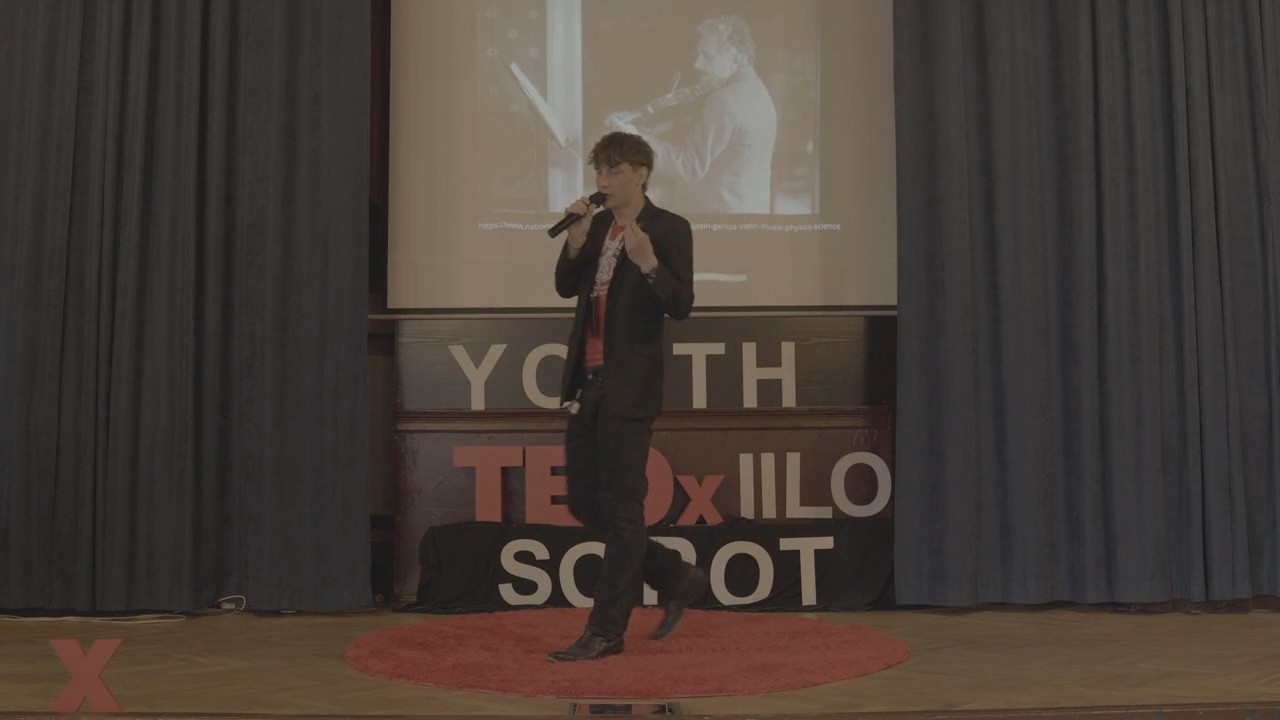
Life-maxxing - become a renaissance man | Teodor Talbot | TEDxII LO Sopot Youth
Keywords
Summary
172 words
Critical Evaluation
Value of the Information & Strength of the Argument
The talk’s value lies in its accessible synthesis of existing ideas about polymathy and personal well-being, making a compelling case that a multi-skilled lifestyle leads to both professional success and personal satisfaction. The speaker’s argument is structured around concrete examples and logical progression: from skill variety to enhanced cognitive flexibility and problem-solving, then to happiness and social attractiveness. However, the argumentation is largely anecdotal and motivational, relying on the authority of famous figures and a few loosely referenced studies without deep scientific backing. The ‘7:3 split’ illustration of learning curves is simplistic and lacks empirical citation. Despite this, the rhetorical power lies in the inspiring, personal tone and the clear call to action.
Scientific Rigor, Source Quality, Title Accuracy
The scientific rigor is moderate at best. The speaker cites several studies (by Michelle and Robert Rubinstein, Brian Uzzi, Britt Frank, and references Lu Ann Cahn’s TED talk) but provides no publication details, dates, or mechanisms for verification. The data points are presented as quick soundbites rather than through rigorous evidence. The description includes only the generic TEDx URL, not specific research links. The title is apt but slightly overstated, as ’life-maxxing’ suggests a systematic optimization yet the talk is more of an inspirational pitch. The content aligns well with the intended audience of a TEDx youth event, and the speaker acknowledges his intent to inspire rather than instruct. No comments were provided to assess public reception.
245 words
Title / Content Match
The title accurately reflects the content: the talk advocates for a balanced pursuit of multiple skills and interests to maximize one's life potential, consistent with the 'renaissance man' ideal.
Quality & Reliability
5/10
The talk presents an engaging argument for polymathy and personal growth, citing some studies (e.g., Nobel laureate patterns, Brian Uzzi's paper analysis) but without specific citations or detailed methodology. The evidence is anecdotal and the reasoning is inspirational rather than rigorous.
Key Moments
Markers derived by PSI from the transcript: the creator did not define chapters.
- Introduction of the concept 'life-maxxing' and his goal to inspire.
- Definition of polymath and distinction between vocational and avocational skills.
- Statistics on Nobel laureates and polymathy, including the 19:1 ratio for economics.
- Examples: Einstein's violin, da Vinci's anatomy, and Dorothy Hodgkin's visual skills.
- The missing piece: happiness and avocational creativity, introducing the 'Yes Man' philosophy.
- Novel experiences, neuroplasticity, and how they improve first impressions and character.
- Conclusion: asking the audience to step out, try new things, and become better and happier.
Cited Sources
- TEDx program and event details — Official TEDx page describing the independently organized TED-like events, as linked in the video description.
Contribution & Novelties
The talk’s originality lies in synthesizing the concept of polymathy with a philosophy of ‘Yes Man’ and well-being, emphasizing that a rich, varied life is both a path to proficiency and to lasting happiness. While the idea of polymathy is not new, the speaker frames it around personal growth and mental health, making it accessible to a youth audience. The arbeit introduces a relatable, step-by-step mindset shift rather than a technical skill-building guide.
Pour aller plus loin :
- Polymath — Comprehensive background on the concept of multi-skilled individuals.
- Neuroplasticity — Explains how novel experiences can rewire the brain, supporting the speaker’s claims.
- Leonardo da Vinci — Classic example of a Renaissance man, relevant to the talk’s core archetype.
118 words
Radar Profile
The radar profile shows a talk that is moderate in information quantity and quality, with low technical depth and moderate reliability. It is a broad, inspirational presentation rather than a rigorous scientific analysis, leaning heavily on personal anecdotes and famous examples. The balance between inspiration and evidence is skewed toward the former, making it fitting for a general audience.