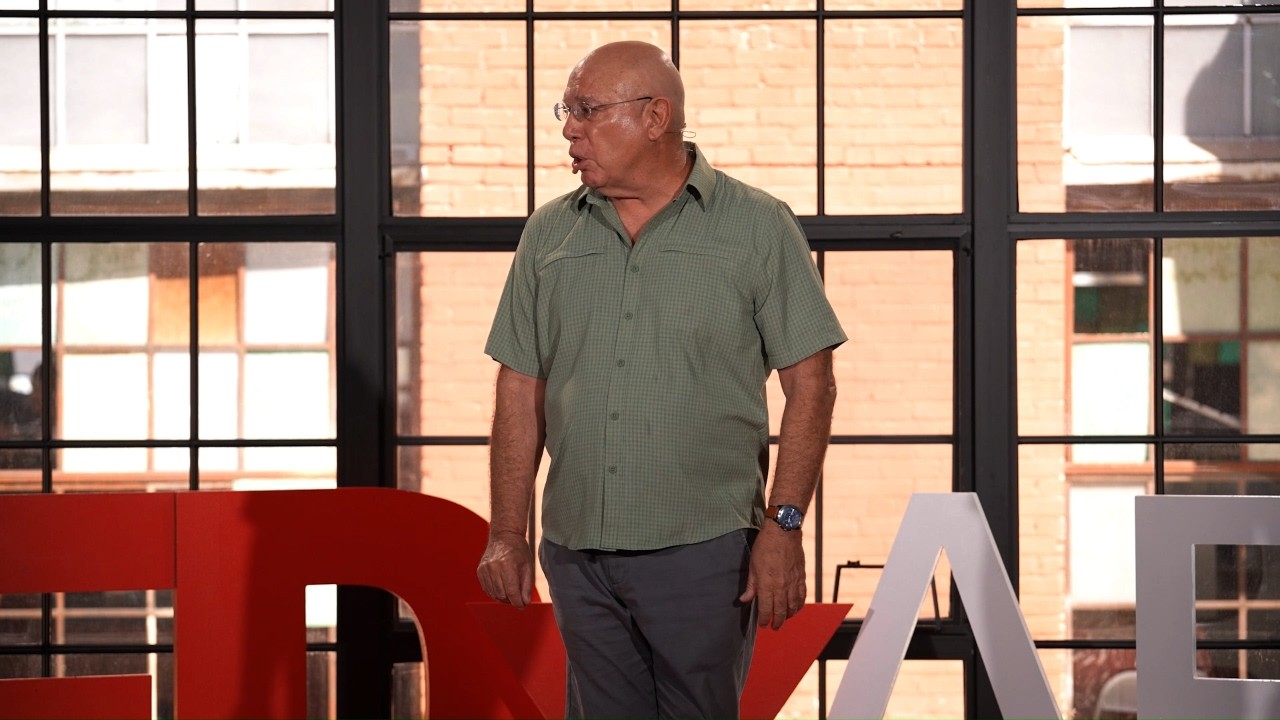
Confessions of a Serial Failure | Eddie Tafoya | TEDxABQ
Title history
- Confessions of a Serial Failure | Eddie Tafoya | TEDxABQ — observed on 20261027-1737 UTC (YouTube)
Keywords
Summary
166 words
Critical Evaluation
Value of the Information & Strength of the Argument
The value of this talk lies in its accessible and humorous framing of a common human experience—failure—and its reframing as a positive force. The argument is built on anecdotal evidence and rhetorical parallels rather than systematic reasoning. Tafoya uses storytelling effectively, but the philosophical claims (e.g., that the universe becomes more conscious through flawed minds) are asserted without empirical or logical support. The reasoning is more inspirational than analytical, relying on metaphor and personal testimony. While engaging, the argumentation lacks rigorous critical examination and may oversimplify complex theological and existential questions.
Scientific Rigor, Source Quality, Title Accuracy
The talk does not cite specific research or scholarly sources; it draws mainly on personal anecdotes and cultural references. The only source mentioned is TEDx itself via the description, which is not a substantive reference. The title accurately matches the content, as the talk is a confessional narrative about serial failures. The scientific rigor is low, as it is an opinion-based talk rather than a documented study. The talk’s value is more emotional and inspirational than academic.
183 words
Title / Content Match
The title accurately reflects the content: Eddie Tafoya shares his personal experiences of repeated failures and reframes them as valuable. The content matches the promised confessional and philosophical exploration.
Quality & Reliability
4/10
The talk is a personal and anecdotal reflection on failure and imperfection, blending humor with philosophical musings. It lacks empirical evidence or rigorous argumentation, relying on rhetorical appeals and illustrative stories.
Key Moments
Markers derived by PSI from the transcript: the creator did not define chapters.
- Tafoya introduces his hand tremor and asks who is perfect, setting the theme.
- Tells the story of the truck driver's rhubarb question and the eventual answer from his father.
- Recalls his 8th-grade confrontation with Sister Anne Pauline about women's ordination.
- Discusses his conversation with a priest and the metaphor of the Liberty Bell and Leaning Tower of Pisa.
- Imagines judgment day with God having his zipper down, and concludes with a call to embrace flaws.
Cited Sources
- TEDx program — Referenced in the video description as the organization hosting the talk.
Contribution & Novelties
The talk offers a fresh perspective on failure by framing it as a necessary driver of cosmic consciousness, blending humor and philosophy. It challenges conventional success-oriented narratives and provides a series of metaphors (e.g., rhubarb, Liberty Bell) that make the idea memorable.
Pour aller plus loin :
- Philosophy of imperfection — Discusses related philosophical concepts about perfection and imperfection.
- Growth mindset — Carol Dweck’s theory on embracing challenges and failures.
- Antifragility — Nassim Taleb’s concept that systems gain from disorder, aligning with the talk’s thesis.
85 words
Radar Profile
The radar profile shows moderate scores in information quantity and quality, low technical level, and low reliability, reflecting that the talk is engaging but not rigorously scientific. The imbalance highlights its inspirational rather than evidence-based nature.