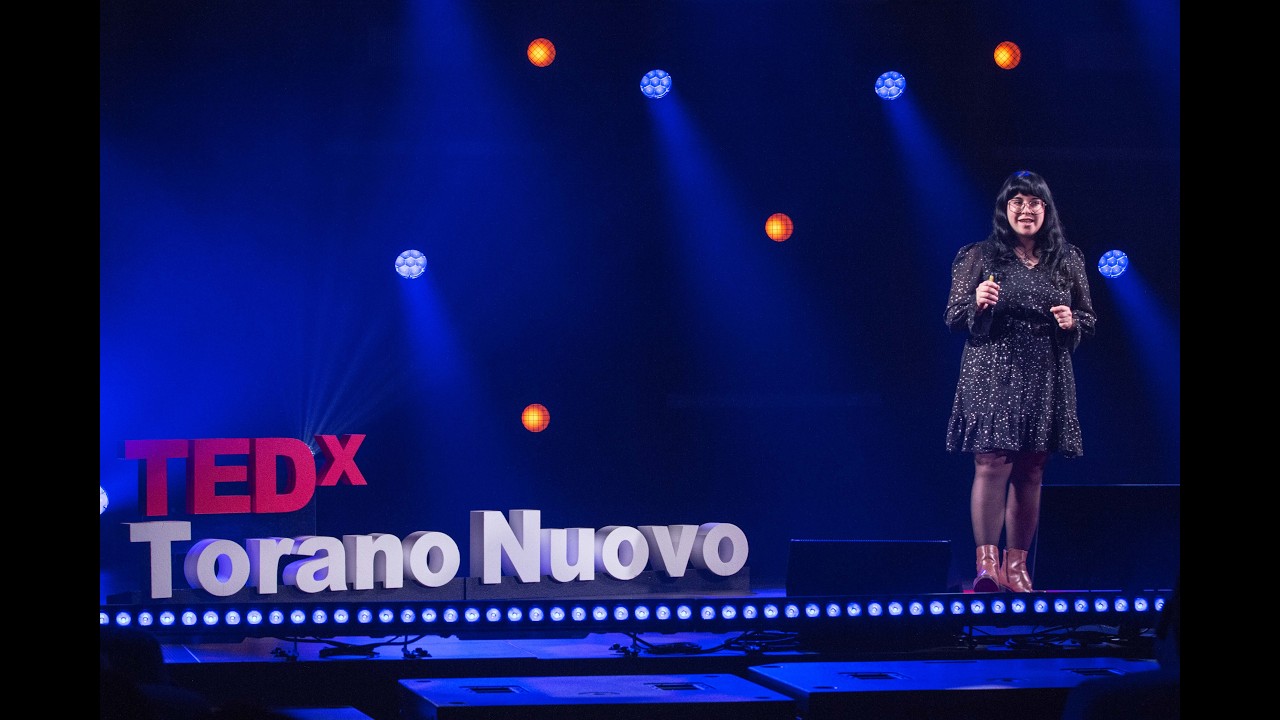
Come ci parla l'universo | Mariasole Maglione | TEDxToranoNuovo
How the universe speaks to us | Mariasole Maglione | TEDxToranoNuovo
Title history
- Come ci parla l'universo | Mariasole Maglione | TEDxToranoNuovo — observed on 20261114-0309 UTC (YouTube)
Keywords
Summary
197 words
Critical Evaluation
Value of the Information & Strength of the Argument
The talk offers genuine value through its clear, step-by-step explanation of multimessenger astronomy. The argument is well-built: starting from the limitation of human eyes, it logically progresses to telescopes, different wavelengths, then non-electromagnetic messengers, and finally the synergy of multiple observations. Each stage builds on the previous, and the 2017 event is presented as a concrete, illustrative case. The speaker avoids jargon without dumbing down, striking a balance between accessibility and scientific rigor. The use of the Crab Nebula as a unified example across four wavelengths is particularly effective, making abstract concepts tangible.
Scientific Rigor, Source Quality, Title Accuracy
The scientific content is rigorous: the speaker, an astrophysicist, correctly presents facts about telescopes, neutrinos, gravitational waves, and the neutron star merger. The description of the Crab Nebula and the nature of its emission in different bands is accurate. The talk mentions specific instruments (Hubble, James Webb, Virgo, Kamiokande) and dates (1609, 2015, 2017) that are verifiable. However, no explicit textual sources are cited during the talk; the only external link is the generic TEDx page. The title directly matches the content and is not misleading. No public comments were provided for analysis, so audience reception cannot be assessed.
207 words
Title / Content Match
The title accurately reflects the core theme of the talk: how the universe communicates through multiple signals beyond visible light.
Quality & Reliability
8/10
The talk is scientifically accurate, well-structured, and avoids overstatement. The speaker, an astrophysicist, correctly describes electromagnetic spectrum limitations, multimessenger astronomy, and the 2017 neutron star merger. Minor simplifications are acceptable for a TEDx audience.
Key Moments
Markers derived by PSI from the transcript: the creator did not define chapters.
- The speaker asks how much of the universe we truly see under a starry sky, answering: very little, because eyes only detect visible light.
- Galileo's 1609 telescope is introduced as the first tool to enhance human vision, followed by the construction of larger telescopes and space observatories like Hubble.
- The Crab Nebula is shown in visible light, infrared (James Webb), X-rays, and radio waves, illustrating how different wavelengths reveal different aspects of the same object.
- Introduction of non-light messengers: cosmic rays and neutrinos, with the example that 60 billion neutrinos pass through a fingernail each second.
- Description of gravitational waves as ripples in spacetime, predicted by Einstein in 1915 and first detected in 2015 by interferometers like Virgo.
- The 17 August 2017 event: a neutron star merger detected in gravitational waves followed 1.7 seconds later by a gamma-ray burst, launching multimessenger astronomy.
- Conclusion: the universe has always emitted these signals; our ability to access them has changed, and future discoveries may rely on new ways of listening.
Cited Sources
- TEDx Talks — The talk was given at a TEDx event, using the TED conference format but independently organized. This is the only explicit link provided in the video description.
Concurring Sources
- NASA's website on multimessenger astronomy — This official resource corroborates the talk's explanation of multiple cosmic messengers and the 2017 discovery.
Contribution & Novelties
The talk’s originality lies in its pedagogy: it takes a well-known object (the Crab Nebula) and uses it as a thread to weave together the entire history of observational astronomy, from visible light to gravitational waves. It bridges abstract physics and concrete astronomical examples, making multimessenger astronomy comprehensible to a general audience. The emphasis on the 2017 event as a paradigm shift is both accurate and inspiring.
Pour aller plus loin :
- Multimessenger astronomy — Directly extends the talk’s core theme, covering the combination of gravitational waves, neutrinos, and light.
- GW170817 — The specific neutron star merger event featured in the talk, with detailed scientific findings.
- Neutrino detector — Elaborates on instruments like Kamiokande mentioned for detecting elusive neutrinos.
- Gravitational-wave observatory — Provides background on interferometers such as Virgo and LIGO, as discussed.
- Crab Nebula — Offers further details on the astrophysical object used as the talk’s example.
148 words
Radar Profile
The profile shows a balanced talk with high scores in information quantity and reliability, somewhat lower in technical depth but still substantial. The neutral radar suggests strong scientific grounding with accessible presentation.