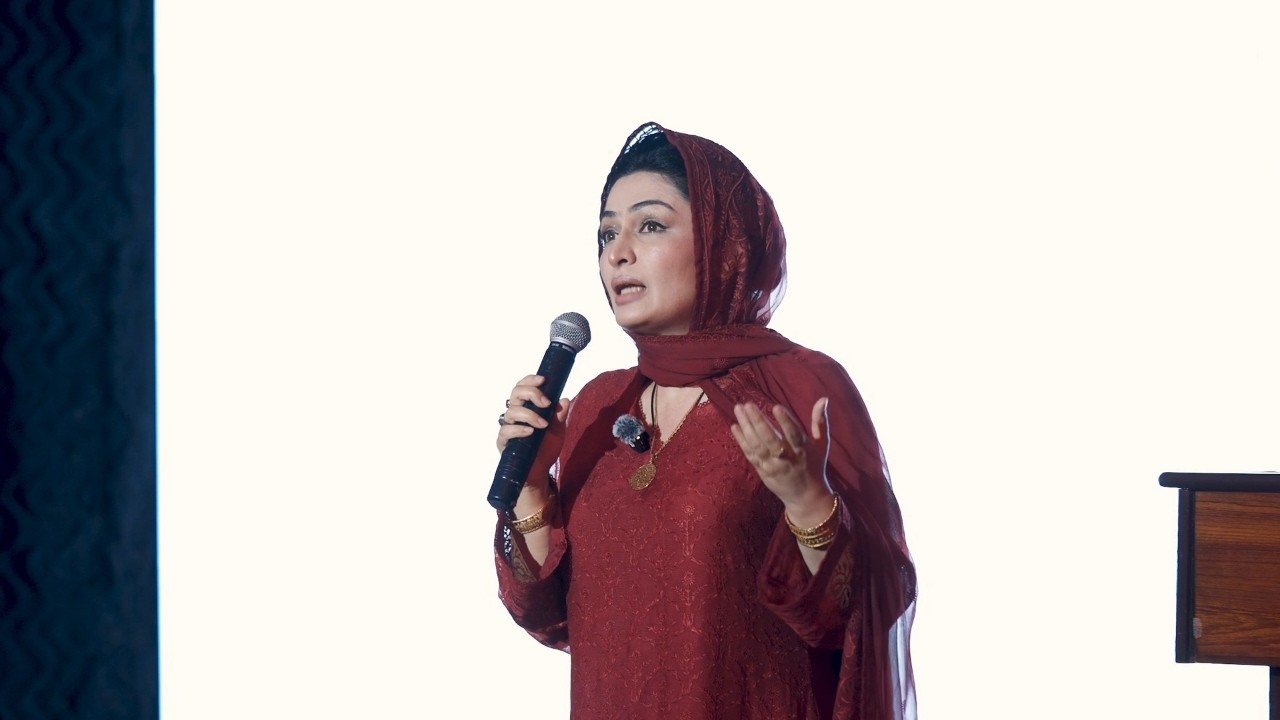
Working Women's Culture & Regional Protective Policies | Dr. Sara Rizvi Jafree | TEDxFCCU Women
Keywords
Summary
117 words
Critical Evaluation
Value of the Information & Strength of the Argument
The value of the talk lies in its bottom-up approach, drawing directly on the experiences and suggestions of women in a specific region. The speaker demonstrates a clear understanding of the complexities of women’s work and social expectations. The argumentation is solid in that she avoids romanticizing resilience, instead advocating for structural support. However, the lack of comparative data or clear methodological framework weakens the scientific rigor. The call for community-owned workspaces and male engagement is pragmatically presented, but the feasibility and broader applicability remain underexplored.
Scientific Rigor, Source Quality, Title Accuracy
The speaker references her own primary data collection but does not provide specific citations or external sources beyond mentioning the Aga Khan Rural Support Programme and the Workplace Harassment Act. The talk’s rigor is moderate; it is a personal account rather than a peer-reviewed study. The title aligns well with the content, promising a discussion on women’s culture and protective policies, which is delivered.
165 words
Title / Content Match
The title accurately reflects the content, focusing on working women's lived experiences and the need for region-specific protective policies.
Quality & Reliability
7/10
The talk presents primary qualitative data from interviews and focus groups conducted by the speaker, who is a researcher. While the context is clearly explained and the insights are valuable, the presentation lacks external citations and methodological details, relying mainly on anecdotal evidence from a small sample. The scope is limited to specific regions and may not be broadly representative.
Key Moments
Markers derived by PSI from the transcript: the creator did not define chapters.
- Introduction to the research in Gilgit-Baltistan, highlighting high female literacy rates.
- Interviews with female tourist guides revealing low earnings, dangerous travel conditions, and lack of insurance.
- Discussions with women at the first Women Trade Center in Gakuch about rent, seasonal income, and limitations.
- Focus group recommendations for community workspaces near home, with childcare and elderly care.
- Women's preference for informal insurance networks and the involvement of male relatives as intermediaries.
- Calls for legal recognition of community-based reputational harassment and joint councils for speedy trials.
- Researcher's reflection on the importance of listening and continuous, context-specific policy development.
Cited Sources
- TEDx Talks — The talk was given at a TEDx event and the official TEDx page provides general information about the program.
Contribution & Novelties
The talk contributes a rare bottom-up perspective on women’s economic participation in a culturally specific region, highlighting women’s own proposed solutions rather than external impositions. It challenges common assumptions about resilience and development policy, advocating for community-owned and state-supported mechanisms.
Pour aller plus loin :
- Gilgit-Baltistan – Provides geographical and cultural context for the region discussed.
- Protection against Harassment of Women at the Workplace Act, 2010 – The speaker references this law and its limitations.
- Aga Khan Rural Support Programme – The organization that funded the trade center mentioned in the talk.
- Microfinance – Discusses the small loan schemes mentioned as insufficient for women’s larger ambitions.
106 words
Radar Profile
The profile shows high scores in information quantity and quality, reflecting the detailed qualitative data presented. Technical level is low, making it accessible to a general audience, while reliability is moderate due to the anecdotal basis of the talk. The overall balance suggests an engaging, data-informed presentation.