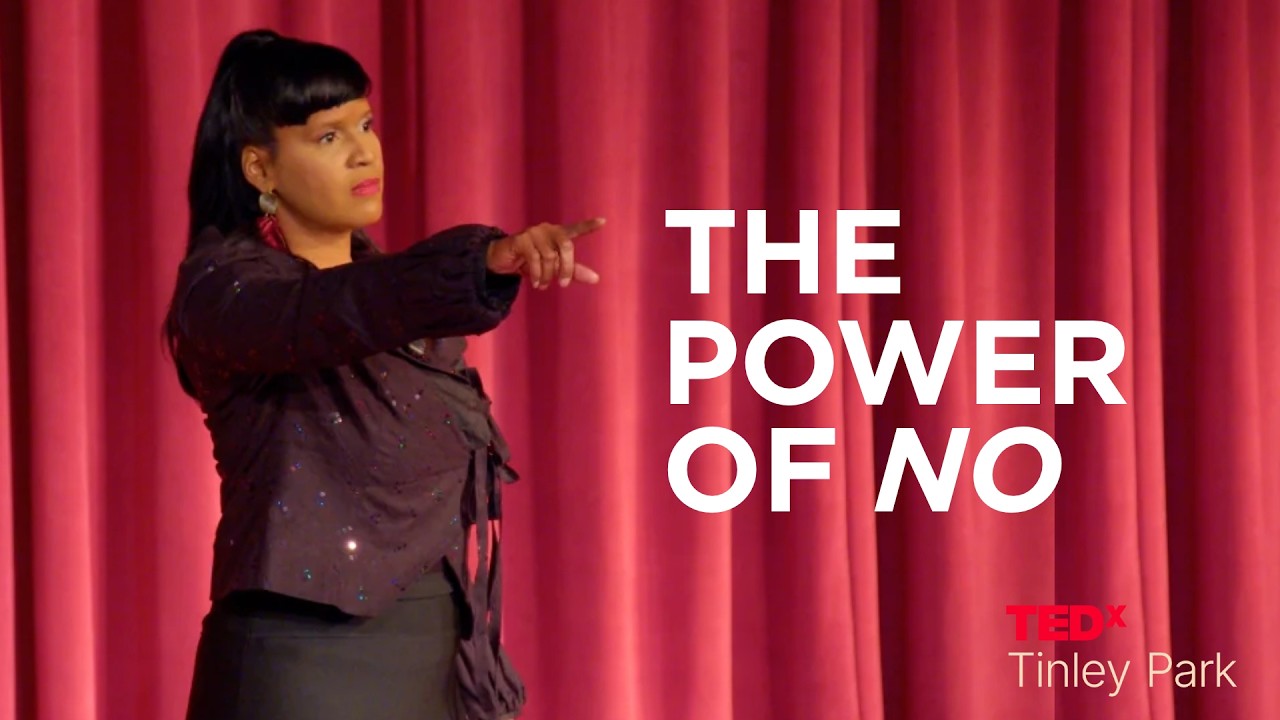
The Power of No | Ericka Glorious Moore | TEDxTinley Park
Title history
- The Power of No | Ericka Glorious Moore | TEDxTinley Park — observed on 20261114-0303 UTC (YouTube)
Keywords
Summary
145 words
Critical Evaluation
Value of the Information & Strength of the Argument
The value of the information lies in its authentic, personal narrative that resonates emotionally and offers a relatable framework for self-improvement. The argument is built on the speaker’s lived experience, illustrating how accumulated stress and low self-worth can lead to crisis. The reasoning is coherent: she traces the origins of her people-pleasing behavior, connects it to her later breakdown, and presents a compelling case for boundary-setting as a catalyst for positive change. However, the argument relies solely on anecdote and lacks empirical support or psychological research, which weakens its scientific rigor. The persuasive power comes from emotional connection rather than data or citation.
Scientific Rigor, Source Quality, Title Accuracy
Rigor is limited: the talk is a personal story with no external sources, citations, or data. The only source provided is the generic TEDx link, which does not offer specific references. The title accurately matches the content, which explicitly discusses the power of saying ’no’. There is no formal scientific methodology, and any claims about psychological effects are not substantiated. The adéquation between title and content is high, but the scientific quality is low. No comment data was available for analysis.
199 words
Title / Content Match
The title accurately reflects the talk's focus on the importance of setting boundaries and saying 'no' as a pathway to personal empowerment.
Quality & Reliability
6/10
Personal testimony with emotional depth but lacks empirical evidence or verifiable sources; the scientific reliability is moderate at best, as it relies on anecdotal experience.
Key Moments
Markers derived by PSI from the transcript: the creator did not define chapters.
- Speaker recounts her hospital admission after a suicide attempt.
- Childhood memory of being ridiculed in a third-grade concert, silencing her voice.
- Guatemala trip where she sings an original song for a worship leader, rediscovering her voice.
- List of painful life events leading to burnout and the realization that she must take control.
- Climactic message: 'No' is a door to courage, worth, and purpose.
Cited Sources
- TEDx Program — Disclaimer that this is an independently organized TEDx event.
Contribution & Novelties
The talk contributes a raw, personal testimony that illustrates the psychological toll of chronic people-pleasing and the liberating effect of setting boundaries. It frames ’no’ as a positive, empowering choice rather than a rejection. While not scientifically novel, it provides an accessible, anecdotal framework for understanding self-worth and agency.
Pour aller plus loin :
- Personal boundaries — Relevant psychological concept underlying said ’no’ and self-protection.
- Assertiveness — Communication skill central to expressing one’s needs and refusing others.
- Self-esteem — Linked to the speaker’s journey from low self-worth to confidence.
89 words
Radar Profile
The profile shows higher scores in information quantity and moderate quality, but very low technical level and reliability, reflecting the talk's emotional and anecdotal nature rather than scientific depth.