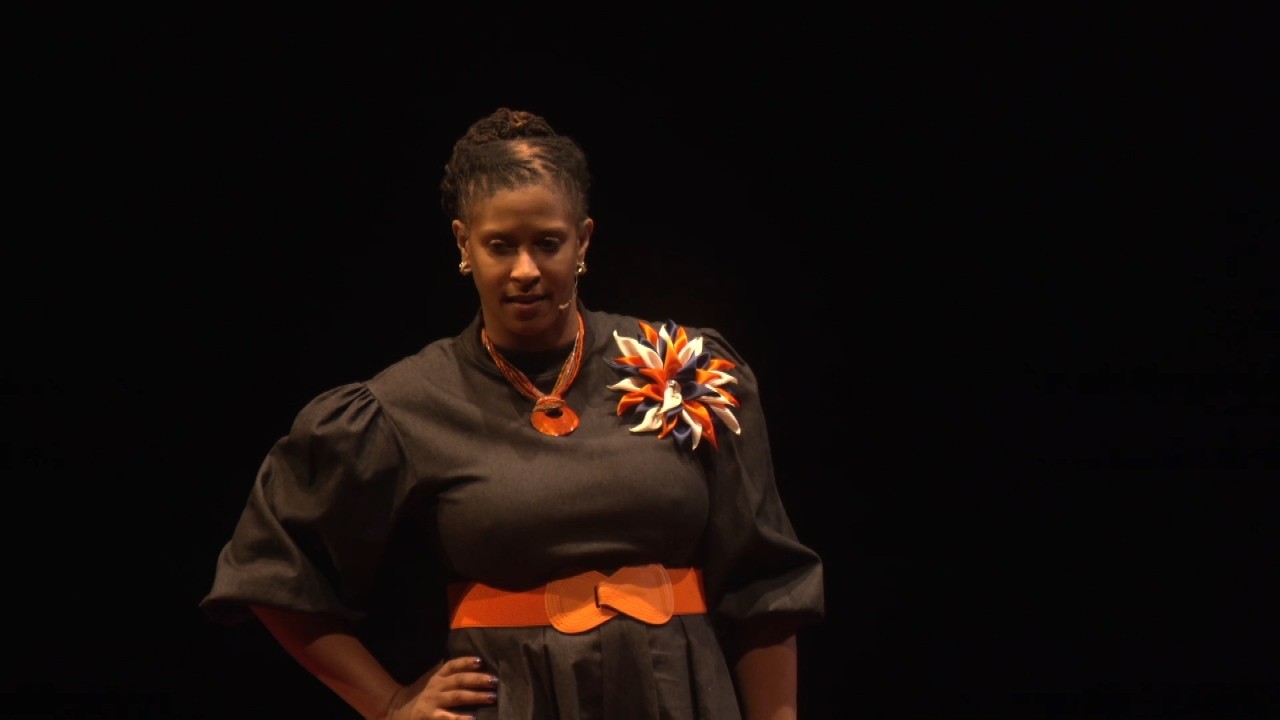
Teaching a Generation to Speak Before Silence Is Their Only Language | Angel Henry | TEDxUTulsa
Keywords
Summary
135 words
Critical Evaluation
Value of the Information & Strength of the Argument
The talk provides valuable insights into how systemic power dynamics can mute voices, especially those of minorities. Henry’s argument is well-structured, using personal anecdotes and a clear pattern to illustrate how silence is enforced. She effectively contrasts harmful silence with genuine maturity and resilience, and offers practical advice for both young and experienced individuals. The argument is persuasive due to its emotional resonance and the speaker’s credibility, though it relies more on storytelling than on empirical evidence.
Scientific Rigor, Source Quality, Title Accuracy
The talk does not cite specific scientific sources; it is a personal narrative rather than a research-based presentation. The only external reference is the general TEDx link. The title accurately matches the content, which focuses on proactive speaking and breaking silence. The lack of formal citations reduces the scientific rigor, but the personal experiences are presented transparently, making the talk reliable as an expert opinion. The public reception (only 8 views) is too small to infer trends, so no comment analysis is provided.
175 words
Title / Content Match
The title accurately reflects the central theme: teaching a generation to speak up before silence becomes their default, which is the core message of the talk.
Quality & Reliability
7/10
The talk is grounded in personal experience and anecdotal evidence, which gives it authenticity, but it lacks empirical research or verifiable references. The arguments are compelling and consistent, though not scientifically rigorous.
Key Moments
Markers derived by PSI from the transcript: the creator did not define chapters.
- Introduction: Silence is often misperceived as shyness or introversion, but it is shaped.
- Personal background in tech during Y2K and the role as liaison between departments.
- Comparison of technical systems to 'people systems' and how broken systems affect minorities.
- Encounter with student Denise; her near-withdrawal from the program due to subtle discouragement.
- Meeting with Chris, the senior architect, who dismisses the speaker's role, highlighting power imbalance.
- Explanation of learned silence as conditioning, not a fixed trait, and examples of its manifestations.
- Call to action: speak up early and often, believe truth-tellers, and stop rewarding harmful silence.
- Interactive moment: the audience yells 'speak' together, symbolizing collective action.
Cited Sources
- TEDx Program Page — General link to TEDx, the organizing platform for this talk.
Contribution & Novelties
The talk offers a fresh perspective by framing silence as a learned coping mechanism rather than an innate trait, specifically highlighting how systemic inequities mute marginalized voices in professional and educational environments. It emphasizes the role of witnesses and collective action in breaking these cycles.
Pour aller plus loin :
- Learned helplessness — Relevant to how repeated discouragement can lead to passivity.
- Impostor syndrome — Often experienced by minorities in tech; aligns with Denise’s story.
- Workplace discrimination — Provides context for the systemic barriers discussed in the talk.
88 words
Radar Profile
The radar profile shows moderate scores on information quantity and fiabilité, with higher marks for information quality and a lower score for technical level, reflecting the talk's focus on qualitative insights and personal experience rather than technical or data-driven content.